A day at the Michigan State University Dairy Cattle Teaching and Research Center
 Print
Print Email
EmailLife and science at the new facility with Jerry Kehr, DVM.
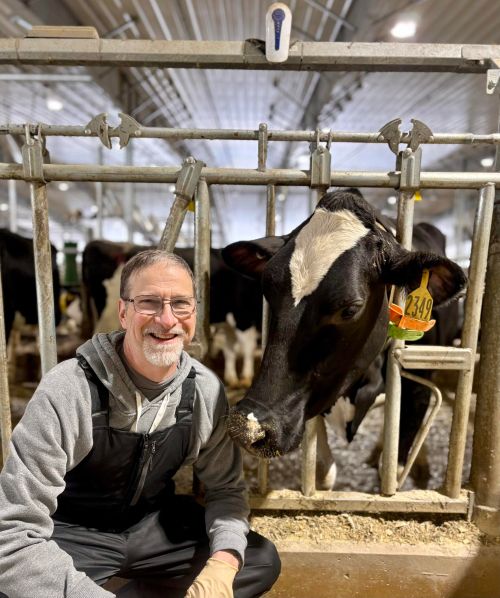
Farm staff teach student employees to milk the cows. Veterinary students practice exams. Undergraduates learn animal care, handling, reproduction and farm management. Graduate students conduct research for their theses or dissertations. All these groups care for the cows, but who is ultimately responsible for animal health? This interview with Dr. Jerry Kehr, DVM, campus veterinarian, describes his role and responsibilities at the new Michigan State University Dairy Cattle Teaching and Research Center.
I like to ask people for a fact about themselves: What is something people should know about you?
Having grown up with a variety of animals, I enjoy having a few around even now. I have a few sheep that I keep around as a hobby flock to raise a few lambs every year. I find satisfaction in taking care of my own animals.
Why did you choose large animal practice as a veterinarian?
After graduating from veterinary school, I practiced in a mixed animal practice in Western New York for 1.5 years. I soon gravitated toward the large animal side of the practice. I always thought that would be my career path because I have fond memories of a veterinarian visiting our small farm when I was younger and then shadowing them on farm calls as I became more interested. I think working outside and the relationships built with the farm owners and workers suited my lifestyle better.
What does a typical day look like for you?
I have a more typical work week than a typical day since I have a variety of responsibilities. Generally, I do routine work at the campus farms on Monday and Friday mornings. Although always available for emergencies between visits, the farm managers and staff know my routine and will have cases to check banked on those days. For things that arise between farm visits, I will often talk with or text farm staff who may only need advice about an animal.
I also do rounds at our biomedical facilities that house livestock species. These are generally done on the days that I ordinarily don’t visit the livestock farms as an extra precaution for biosecurity. Finally, I spend office time reviewing the protocols for MSU-owned animals used for research and teaching to make sure they are keeping the health and well-being at the forefront. This also includes consulting with those investigators using the various animals.
How has your job changed since moving to the new dairy cattle teaching and research center?
The biggest change is simply related to a larger population of animals being housed in the new dairy. The issues that affect cattle have not changed much, but with more animals, there will certainly be (numerically but not incidence-wise) more health events in some areas. However, with the more modern facility, there is a much greater emphasis on the comfort of the cattle, and this has helped tremendously to reduce stressors from heat and injury. Along with that, we also now have a larger hospital and treatment area set aside for cows that have special needs so they are in an area where extra attention may be given.
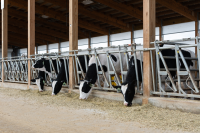
The electronic health monitoring system has also expanded after moving to the new farm. This allows me, along with the farm herdspersons, to examine each animal every day from afar. Of course, this doesn’t take the place of visual inspection, but it allows much more information to be gathered as well to help identify animals in need of closer examination. Finally, because cows are almost entirely housed in a modern free stall arrangement, we can manage them easily using self-catching headlocks when needed. This allows them to be relatively briefly restrained in small groups and then released with the ability to eat, roam or lie down as they choose.
Obviously with the larger barn, the cows are spread out over a much larger footprint. Just like all the farm staff, it means I walk many more steps during the day when I am on farm.
What challenges do you face in managing herd health at the MSU dairy?
At the time the animals were moved into the new barns, MSU also purchased another herd of cattle to bring on board as well. I, along with a team of experts in a variety of fields, worked to successfully merge these two herds of cattle using the best practices to reduce risk and make the transition as smooth as possible to maintain animal well-being. Commingling animals with different histories, past exposure and health profiles does mean some new challenges with pathogens we had not dealt with before in our closed herd.
What does it mean to coordinate clinical care for the dairy farm?
I coordinate the care, and fortunately, there is a large team of people in a variety of roles who work together to ensure that the animals are taken care of in the best way possible. Like any successful operation, it wouldn’t happen without dedicated people all around.
I work with the farm managers and staff to develop and regularly review standardized veterinary care guidelines that can be used for specific health conditions seen in the cows and calves. When standard treatments are ineffective or there are concerns about a particular case, I provide alternatives or revise the standard treatments as necessary. I also spend time reviewing the health records, consulting with the team leaders and assisting with training any employees when necessary.
I am the point person responsible for animal care, but I certainly need a team of other professionals to pull it all together. I have never practiced alone in my 30 years of private practice for this very reason.
What is your favorite thing about being a veterinarian?
I really enjoy working with large animals and the people who care for them. The people with whom I have the privilege to work with have been outstanding. People take great pride in providing care for their livestock and it really is a lifestyle. Helping producers make good decisions to achieve optimal animal health and remain profitable in business is very satisfying. The opportunity as the farm’s veterinarian here at MSU also allows me to see how research and teaching is bringing on a new generation of skilled professionals.
What advice do you have for students interested in the dairy industry?
For undergraduates, if you have had little or minimal exposure to livestock, don’t be dissuaded from pursuing a career in agriculture. Explore all the options available in modern agriculture and familiarize yourself with what makes progressive animal farms function at a high level.
For those in veterinary school, remember that some very good large animal veterinarians and industry professionals have come from a non-rural background. It’s ok to take some calculated risks, especially early in your career. Challenges and problems will arise just like they do in any part of life. Take those as opportunities and move forward. Veterinary practice is a lifelong opportunity to learn, but you have to be willing to get out of the boat if you want to walk on the water.