Alternatives to newly restricted invasive plant species
 Print
Print Email
EmailMichigan added six species to its invasive species list and MDARD has developed an alternative species list.
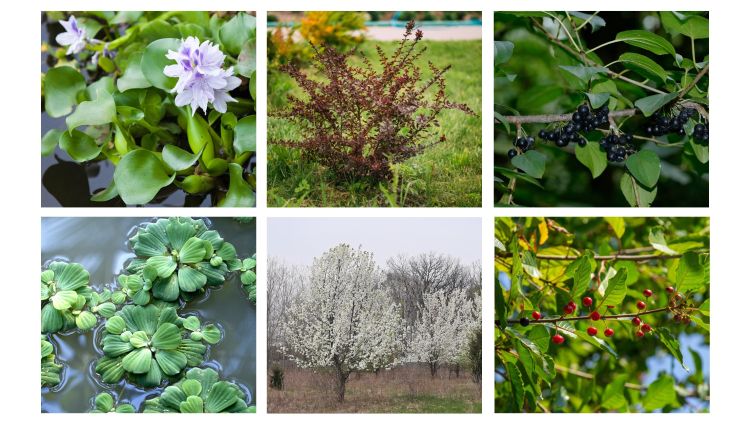
In “Michigan expands invasive plant list: What retailers and homeowners need to know,” Michigan State University Extension covered the six species that were newly added to the invasive species list in Michigan. An invasive species is defined as one that is not native and whose introduction causes harm — or is likely to cause harm — to Michigan's economy, environment or human health.
Effective June 19, 2026, the following aquatic plants and their cultivars will be considered prohibited:
- Water hyacinth (Eichhornia crassipes)
- Water lettuce (Pistia stratiotes)
Effective January 1, 2028, the following plants and their cultivars will be considered restricted:
- Common buckthorn (Rhamnus cathartica)
- Glossy buckthorn (Frangula alnus)
- Callery pear (Pyrus calleryana)
- Japanese barberry (Berberis thunbergii)
The year and a half buffer time allows nurseries to ramp down production of the affected species. It will be illegal to introduce, import, sell, possess with intent to distribute or intentionally propagate these species in Michigan.
Will there be sterile cultivar exceptions?
There are sterile cultivars considered not to be invasive. A couple examples of these sterile cultivars are Proven Winner’s barberry Sunjoy series and Fine Line fern-leaf buckthorn (Photo 1).
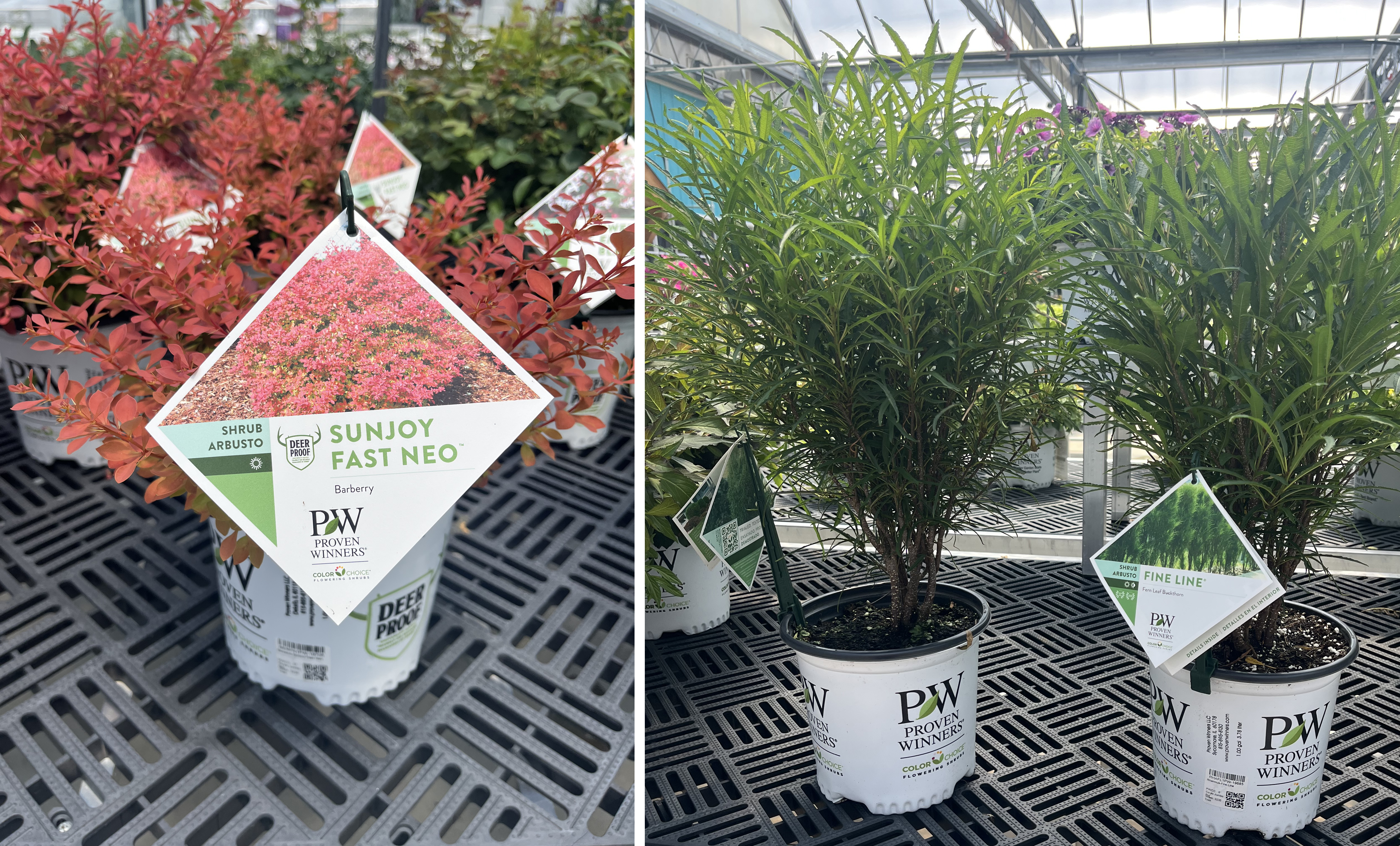
At this time, there will be no cultivar exceptions in Michigan. To get cultivar exceptions, it would require changing the law of Part 413 of Act 451 to the state’s Natural Resources and Environmental Protection Act (NREPA).
Michigan State University Extension recommends nursery growers keep abreast of the news because this could change prior to enforcement of the Jan. 1, 2028, deadline. Other Midwest states have already added these six species to their invasive species lists but do allow for the sale of sterile cultivars. For example, Pennsylvania has cultivar exceptions to their Controlled Plant and Noxious Weed Act.
What about alternatives to the restricted species?
To help with the transition, the Michigan Department of Agriculture and Rural Development (MDARD) developed a website that provides landscape alternatives for invasive plants in Michigan. Here are some listed alternatives to the newly defined invasive species.
Autumn olive
Autumn olive is a shrub native to Asia and was established in Michigan in the 1830s for wildlife food, erosion control, and cover. It spreads rapidly through prolific seed production, forming dense thickets that outcompete native vegetation and reduce wildlife habitat quality. As a nitrogen-fixing plant, it can also alter soil chemistry and ecosystem processes by leaching excess nitrogen and impacting water quality in nutrient-poor habitats.
Here are five Great Lakes native plants to replace it with:
For more information, check out the Autumn Olive invasive species website.
Common and glossy buckthorn
Common buckthorn and glossy buckthorn are deciduous small trees or shrubs native to Europe and Asia. They tend to out-compete other species by leafing out very early in the spring and losing their leaves late in the fall.
MDARD has identified eight landscape alternatives:
- American arborvitae/eastern white cedar
- Blackhaw viburnum
- American hazelnut
- Vernal witch-hazel
- Blood-twig dogwood
- Buttonbush
- Common/black or red elderberry
- Northern spicebush
For more information, check out the Common Buckthorn and Glossy Buckthorn invasive species website.
Callery pear
Callery pear is a medium-sized, fast-growing tree common in the suburban landscape and native to China, Japan and southeast Asia. It is commonly planted as a street tree but can create thickets within local forests.
Here are some alternatives:
- Allegheny or common serviceberry
- Black gum/tupelo
- Green hawthorn
- Little-leaf linden
- Eastern redbud
- American smoke tree
For more information, check out the Callery Pear invasive species website.
Japanese barberry
Japanese barberry is a small, thorny shrub with small, oval-shaped leaves native to Japan, originally introduced as a disease resistant alternative to common barberry (B. vulgaris). It should not be confused with native American barberry (B. canadensis), which has toothed leaves.
Japanese barberry produces abundant seed and can also spread horizontally by a process called layering, allowing it to form dense, nearly impenetrable thickets that outcompete native shrubs and herbaceous plants. These infestations can alter soil chemistry by increasing nitrogen and carbon cycling rates and raising soil alkalinity, further disrupting native plant communities.
Dense barberry thickets also provide ideal habitat for rodents, including white-footed mice, which are important hosts of black-legged ticks. The shrub's thick growth creates a humid microclimate near the ground that improves tick survival and feeding activity, often resulting in larger tick populations and an increased risk of Lyme disease transmission in invaded areas.
Consider these alternatives:
- Ninebark
- Black chokeberry
- Winterberry/Michigan holly
- Bayberry
- Bush-honeysuckle
- New Jersey tea
- Carolina rose
- Fragrant sumac
For more information, check out the Japanese barberry invasive species website.
Japanese knotweed
Japanese knotweed is an herbaceous medium-sized shrub that has white spikes of flowers in August and September in Michigan. It is native to Asia and spreads quickly in disturbed areas. Once established, this plant is very difficult to control with its extensive network of thick, underground stems called rhizomes.
Here are some alternatives:
For more information, check out the Japanese Knotweed invasive species website.
Purple loosestrife
Purple loosestrife is an aquatic perennial herb 4–10 feet tall with large purple spiked flowers. It is native to Europe and Asia and can take over lakeside habitats, replacing native species and biodiversity.
Here are some alternatives:
For more information, check out the Purple Loosestrife invasive species website.
Water hyacinth and water lettuce
Water hyacinth is an attractive bulbous perennial herb that grows in mats on water surfaces. The flowers are lavender with a yellow and blue spot on the inside. It is native to the Amazon water basin and can reproduce quickly. It can prevent boats from passing and reduce water flow in rivers.
Water lettuce forms rosettes of thick leaves on feathery roots in the water. It forms dense mats and blocks sunlight and has negative effects on other aquatic species.
Here are some alternatives:
- Pickerelweed
- American white waterlily
- Water smartweed
- Water shield
- Greater duckweed
- Common duckweed
- Star duckweed
- American pennywort
- Yellow pond-lily or bullhead pond-lily
- Floating pondweed
For more information, check out the water hyacinth and water lettuce invasive species websites.
Determining which alternative species are the right for your business and customers is not an easy task, especially when many of these exotic species were introduced because of their propensity to propagate easily, grow rapidly, and resist common pests and diseases in the landscape.
Stay tuned for a future article where we’ll dive deep into alternative options and look at details such as production scheduling and landscape application, among other factors. We also encourage you to explore the resources offered by the Woody Invasives of the Great Lakes Collaborative, which has detailed information on alternative landscape options and management resources for those who would like to remove any of these newly listed invasive species from their landscape at home.
This work is supported by the Crop Protection and Pest Management Program (grant no 2024-70006-43569) from the USDA National Institute of Food and Agriculture. Any opinions, findings, conclusions, or recommendations expressed in this publication are those of the author(s) and do not necessarily reflect the view of the U.S. Department of Agriculture.