Print
Print Email
Email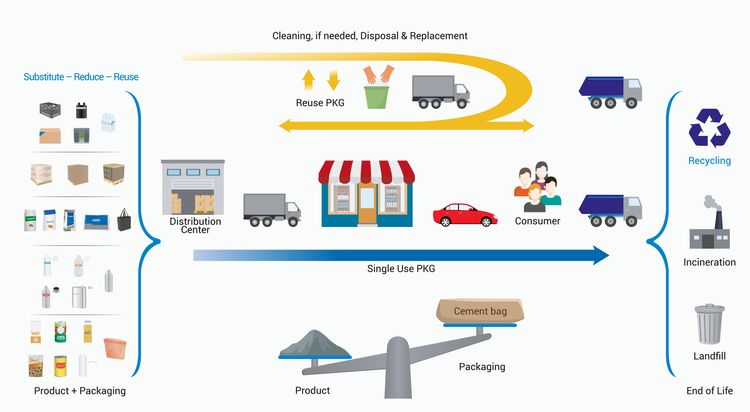
An assessment of PE packaging systems and alternatives in the United States: Understanding impacts of substitute, reduce, reuse and recycle strategies
, , , , , , Rafael Auras
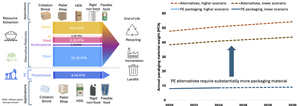
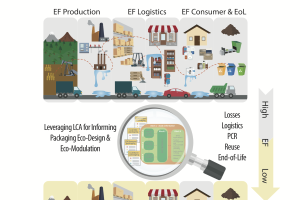
- This comprehensive life cycle assessment (LCA) compared single-use polyethylene (PE) packaging with alternatives (paper, metals, glass, and reusable formats) in the United States. The study assessed single packaging formats, which are referred to as the packaging under consideration (PUC), the entire packaging system (PS) comprising of different packaging levels, and the packaging and product system (PPS) to understand the effect of multi-level and systems assessments. This attributional LCA follows the cut-off approach, utilizes ecoinvent 3.10, and applies a 10% significance threshold for comparisons, and findings are application-specific, indicator-dependent, and assumption-bound. Following a cradle-to-end-of-life approach, the potential environmental impacts were assessed using ten indicators covering global warming potential, resource use, water scarcity, air and water quality, and land use. For each indicator evaluated at the PUC level, the results show that single-use PE packaging had lower environmental impact in at least 74% of 19 comparisons with single-use alternatives (paper, glass, and metal) and in at least 53% of 15 comparisons with reusable formats. The results varied for the PS and PPS, depending on the materials used at the additional packaging levels and the relative impact of the product to the packaging. Whereas substituting PE with single-use alternatives (substitute) or reusable options (reuse) can have unintended consequences, other strategies like reduce (lightweighting materials), and recycle (increasing recycle rates and recycled content) can reduce environmental impacts. For example, a hypothetical, “what if” scenario model of standalone pyrolysis showed that recycling waste plastic can mitigate the potential environmental impacts of PE packaging in impact categories such as fossil fuel use, water scarcity, and land transformation. These insights are valuable for quantifying potential trade-offs of plastic packaging strategies and supporting sound decision-making anchored on holistic analysis.
Affiliations:
- a Trayak, Inc., 5700 Gateway Blvd, Suite 400, Mason, OH 45040, USA
- b ExxonMobil Technology and Engineering Company, 22777 Springwoods Village Pkwy Spring, TX 77389, USA
- c Exxon Mobil Corporation, 22777 Springwoods Village Pkwy Spring, TX 77389, USA
- d School of Packaging, Michigan State University, East Lansing, MI 48824, USA