Can you safely store perishable food outside during winter months?
 Print
Print Email
EmailStoring food outside increases potential health risks.
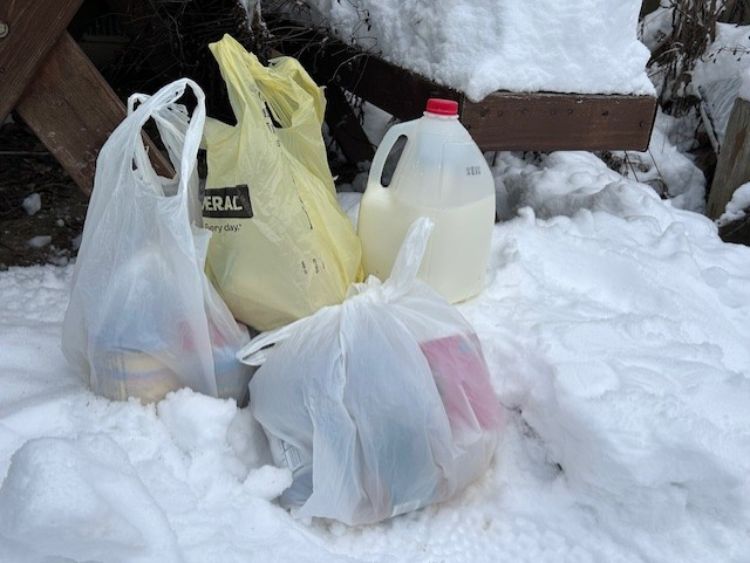
Mealtime in your home can mean menu planning, shopping, cooking and safely storing food for a group of people. A larger family increases the need for refrigerator space to store food at the recommended temperature of 40 degrees Fahrenheit, or below. And if there are leftovers, the space to safely store cold foods before and after meals becomes an important concern.
So, what is a person to do when the fridge is full and leftovers are plenty? During the winter months when outdoor temperatures are low, the idea of storing some foods outdoors may seem like a logical solution. But Michigan State University Extension urges you to understand the potential health risks of improperly chilling food outside even if there is snow and cold temperatures. There are true foodborne illness risks to you and others if food is stored outdoors.
A refrigerator and freezer provide a controlled, protective environment for food. These appliances maintain a constant temperature which protects food best. Cold food needs to stay cold. Bacteria begins to grow and multiply quickly in food when temperatures rise above 40 degrees Fahrenheit. When bacteria are active in food, their growth compromises the safety of the food. Remember, bacteria do not change the look, smell or taste. Even if foods are reheated, they need to be at a consistent cold temperature to maintain safety. The refrigerator is the only safe option. Use a thermometer to ensure the refrigerator maintains a temperature of 40 degrees Fahrenheit or below.
Storing perishable foods outdoors, like in a garage, on a balcony or on a patio exposes the food to unpredictable temperatures. Exposing food to inconsistent temperatures increases the risk of foodborne illness when food is later eaten. Sunlight is another threat to safely maintaining temperature control for foods – especially on a patio or balcony. Frozen food can thaw when exposed to sunlight, even in very cold temperatures.
Having a protective environment for food includes keeping it away from contamination. Curious pets and other animals could get into food that is left outside, even if it is wrapped tightly. When food is out of sight you cannot easily monitor it. Rodents and other pests pose health concerns if they come in contact with food left outside.
Food stored in a garage can be ruined by fumes from cars, trucks, tractors, and snow blowers. A garage provides additional chances for contamination if food is stored near liquids or comes in contact with dust and grime.
Don’t compromise when it comes to chilling and storing food safely. Utilize food storage bags or stackable plastic containers to maximize the interior storage space of your refrigerator. Use a cooler with ice packs if more storage space is needed. Plan your menu so leftovers are minimal. The best plan is to make your winter worry free when you keep safe food storage practices a priority.
For answers to your safe food and water questions, call MSU Extension's Food Safety Hotline at 1-877-643-9882. For more information on food safety, visit MSU Extension's Safe Food & Water website.