Equine History at MSU: Part 2 – Percheron draft horses
 Print
Print Email
EmailThis second article in this series focuses on draft horse history at MSU.
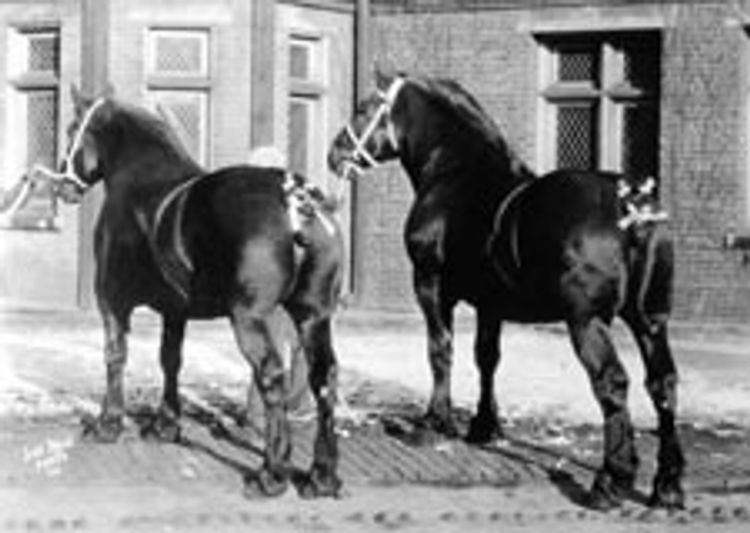
In Part 1 of this Michigan State University Extension series, we explored the general history of horses at Michigan State University. This article will take a deeper dive into the draft horse program at the university, starting with the Percheron breed.
In the early 1900s, MSU produced some of the finest draft horses, not only in the state but in the country. Between 20 state fairs and eight international competitions, the university’s horses received over 200 first place finishes and 155 championships from 1910-1930. While the Clydesdale horse was the first draft breed on campus, they were not the most popular horse for labor among farmers, so the herd was sold in 1923.
The second breed to arrive at MSU were Percherons and they would go on to have a much longer reign at the college. There is disagreement about the exact historical origin of this breed, but modern Percherons can be traced back to two time points when mares from the Le Perche region of France were mated with Arab stallions. The first recorded wave of matings took place in the eighth century, then again in the Middle Ages, and by the 11th century, the breed was known for being sound and stylish. Over time, the size and scale of Percherons varied, starting as a smaller-bodied animal (15-16 hands) to the current size of 16-17 hands or taller. The breed was originally imported to the United States in 1839; it was not until 1907 when two mares made it the campus of Michigan State College.
Arlene, one of the original mares, was the foundation of the Percheron breeding program at MSU, known as Michigan State College (MSC) at that time. Her daughter, Arlie, was the first purebred foal to be born at the MSC and followed in her dam’s hoof-prints as a brood mare into the 1930s. Other famous Percheron mares included Maplegrove Leila, winning a total of 23 national and international championships during her lifetime; and Coreen, who earned the university considerable prize money from her years in competition.
Outstanding Percheron stallions to have graced the MSC campus included Treviso, who was ranked fifth in 1928 and third in 1929 by the Percheron Society of America as a superior sire; and Sir Laet, who was grand champion at the Michigan and Ohio State Fairs and on the international stage. Many of the competing draft horses today carry genetics that go back to MSU bred champions like Sir Laet!
The Percherons were not the only long-standing draft horse breed at MSU, Belgians also played an important role for MSU as teaching, breeding and showing stock. Stay tuned for Part 3 of this series to learn more about the history of Belgian draft horses at MSC.