


How to safely store and preserve pawpaws
 Print
Print Email
EmailPawpaws are nutritious, delicious and unique. Learn about safe storage and preservation methods for best quality.
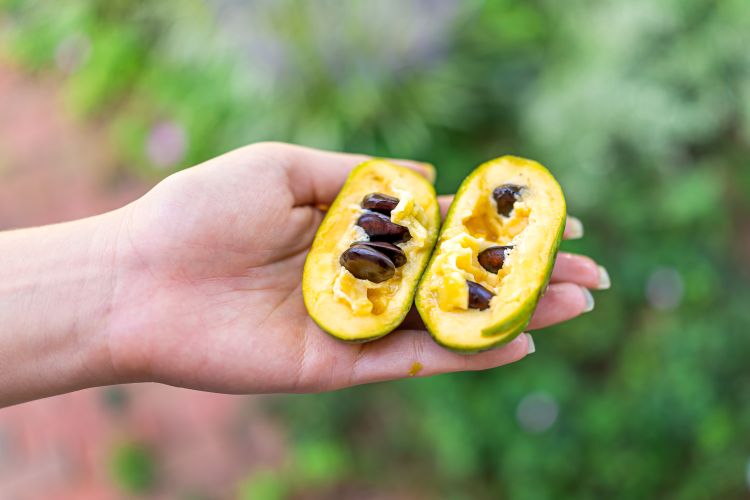
If you have never heard of a Pawpaw, and you like the sound of a fruit that is creamy and tropical, you have come to the right place. Did you know Pawpaw (Asimina triloba) is the largest edible tree fruit native to the United States? The native range is most of eastern North America, from Ontario and Michigan and Wisconsin, south into Florida, and west into Nebraska, Kansas, Oklahoma and Eastern Texas. The tree can grow to 40ft, and it has adapted to diverse climate changes in these regions. The short harvest season is late summer to early fall.
Pawpaws can be a great source of nutrition. According to the United States Department of Agriculture (USDA), pawpaws are high in folate, potassium, vitamin C and other minerals that can be an excellent addition to your diet. Besides their nutrient-dense nature, they are unique and delicious. The exotic flavor is comparable to a mix of banana and mango with a hint of passion fruit and the smooth custard consistency of a ripe avocado. There are many great recipes for pawpaw fruit as an ingredient, including quick breads, juice, puddings, smoothies and even cheesecake. Because of the short season of availability, let's focus on preserving pawpaws for use in these recipes.
Preparing
Pawpaws are a very sensitive fruit. They can be picked off the tree when they are slightly soft to the touch, as they will continue to ripen after being picked. Ripe pawpaws are brown or yellow. Do not wash fruit before storing it, because introducing moisture encourages early spoilage. Rinse the pawpaw under cool, running water just before consuming. Scrub the skin with your hands or a vegetable brush. Place the pawpaw on a cutting board and cut it in half. Remove the seeds and separate the flesh of the pawpaw from the skin. This can be scooped out, as the consistency of the fruit is very mushy. The outside of the pawpaw may be discolored and bruised, but the fruit inside is usually still good. Prepare the pawpaw according to your recipe or even eat it right out of the shell with a spoon. Do not consume the skin or seeds.
Storing
Pawpaws are very delicate and have a short shelf life. This is one of the main reasons large grocery chains do not sell them. They bruise easily and need to be handled carefully. Pawpaws will continue to ripen after being picked. This makes the shelf life at room temperature only about 3 days before they become too brown, mushy and unappealing. Refrigeration can help slow down the ripening process. Once ripened, you may store the whole pawpaw in the refrigerator at 35-40 degrees Fahrenheit to slow down further ripening. Store the pawpaw in a crisper drawer or moisture-resistant bags or wraps in the refrigerator. Wrap the pawpaws to prevent nutrient loss. You may squeeze lime or lemon juice to assist in preventing browning. They will keep for three to four days in the refrigerator if already cut or up to a week if left whole.
Preserving
Pawpaws can be safely preserved by freezing to help extend the shelf life. Whole pawpaws do not maintain the best quality, so it is not recommended to freeze them whole. Instead, it is recommended to freeze pawpaws as a puree. Wash, peel, slice and remove the seeds of the pawpaw. They can now be blended in a blender or food processor until smooth or mashed with a potato masher if that consistency is preferred. Pour the puree into ice cube trays and freeze overnight. Once frozen, place the ice cubes in a freezer bag, leaving ½ inch headspace. If using a freezer-safe container instead, leave ½ inch headspace while packing the freezer-safe container. Seal, date and freeze at 0 degrees Fahrenheit. Use within 6-12 months. This frozen or fresh pulp can also be used in place of bananas, applesauce or pumpkin in almost any recipe.
Purdue University Extension has a great recipe for Pawpaw Oatmeal bars on FoodLink.
There are no research-tested recipes for canning pawpaws at this time.