Keep the fun, skip the germs: rethinking bobbing for apples
 Print
 Email
Traditional apple bobbing in a shared tub of water is not very sanitary and can spread germs, so modern safety practices recommend either eliminating the shared water or adding strict hygiene measures.
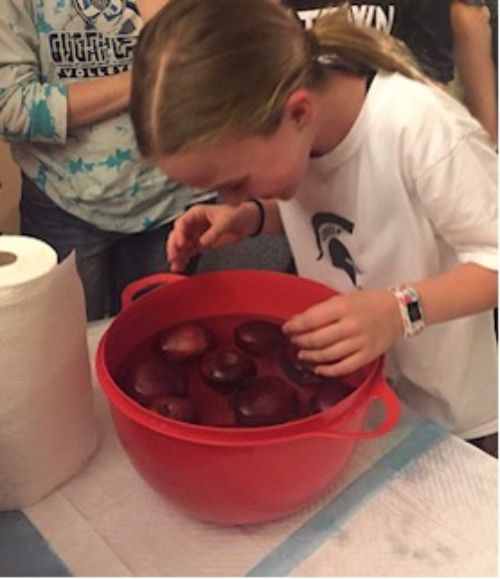
Bobbing for apples may be a traditional fall activity, but the traditional method, where several people put their faces and mouths into the same container of water with the goal of catching an apple in their mouth can create opportunities for germs to spread. Germs can move between people through contact, shared objects, food and liquids. For schools, childcare settings, community programs and other group events, a safer choice is to avoid communal apple bobbing and use an activity that does not involve participants sharing water.
Safer Apple-Bobbing Alternatives
Instead of traditional communal apple bobbing, consider these options:
- Give each participant their own container.
If you want participants to experience traditional bobbing, provide each person with an individual bowl or container, clean water and their own apple. Do not reuse the water or apples for another participant. - Try a no-contact activity.
The Partnership for Food Safety Education suggests making paper apples, attaching paper clips to them and allowing children to "bob" for them using a magnet attached to a string. Participants can receive a fresh apple afterward. Another suggestion is to tie an apple to a string, so players bite it without hands or water. - Use utensils instead of mouths.
Turn the activity into a game in which participants retrieve apples using clean tongs or other designated utensils. Avoid sharing utensils unless you clean them thoroughly between participants. - Start with clean, undamaged apples.
Choose apples without significant bruising or damage. Do not use apples that have already fallen to the ground. - Do not wash apples with soap or household cleaners.
Do not use soap, detergent, bleach or household disinfectants on fresh produce. Rinsing fresh produce under clean running water is recommended. - Wash hands before the activity.
Participants and anyone handling the apples should wash their hands with soap and running water for at least 20 seconds. Michigan State University Extension supports proper handwashing that helps prevent the spread of illness. - One person, one apple.
Once an apple has touched a participant's mouth or been handled during an individual bobbing activity, it should belong to that participant. Do not return it to a container where someone else could select or eat it.
After the Activity
- Do not serve an apple to another person after it has contacted someone's mouth.
- Discard water used for individual bobbing after each participant.
- Clean and sanitize reusable food-contact equipment appropriately before using it again.
- Wash hands after the activity, particularly before preparing or eating other foods.
- Never use soap, detergent, bleach or household disinfectants to wash apples.
Bottom Line
The safest approach for group events is to skip traditional communal apple bobbing. Choose an individual or no-contact version of the game instead. Whatever activity you choose, start with clean apples, clean equipment and properly washed hands.
Check out the Michigan State University factsheet on Michigan Apples for additional information on using, storing and preserving apples.