Michigan hop crop report – July 16, 2026
 Print
Print Email
EmailEnsure plant water demand is met during this time of elevated evapotranspiration.
Weather review
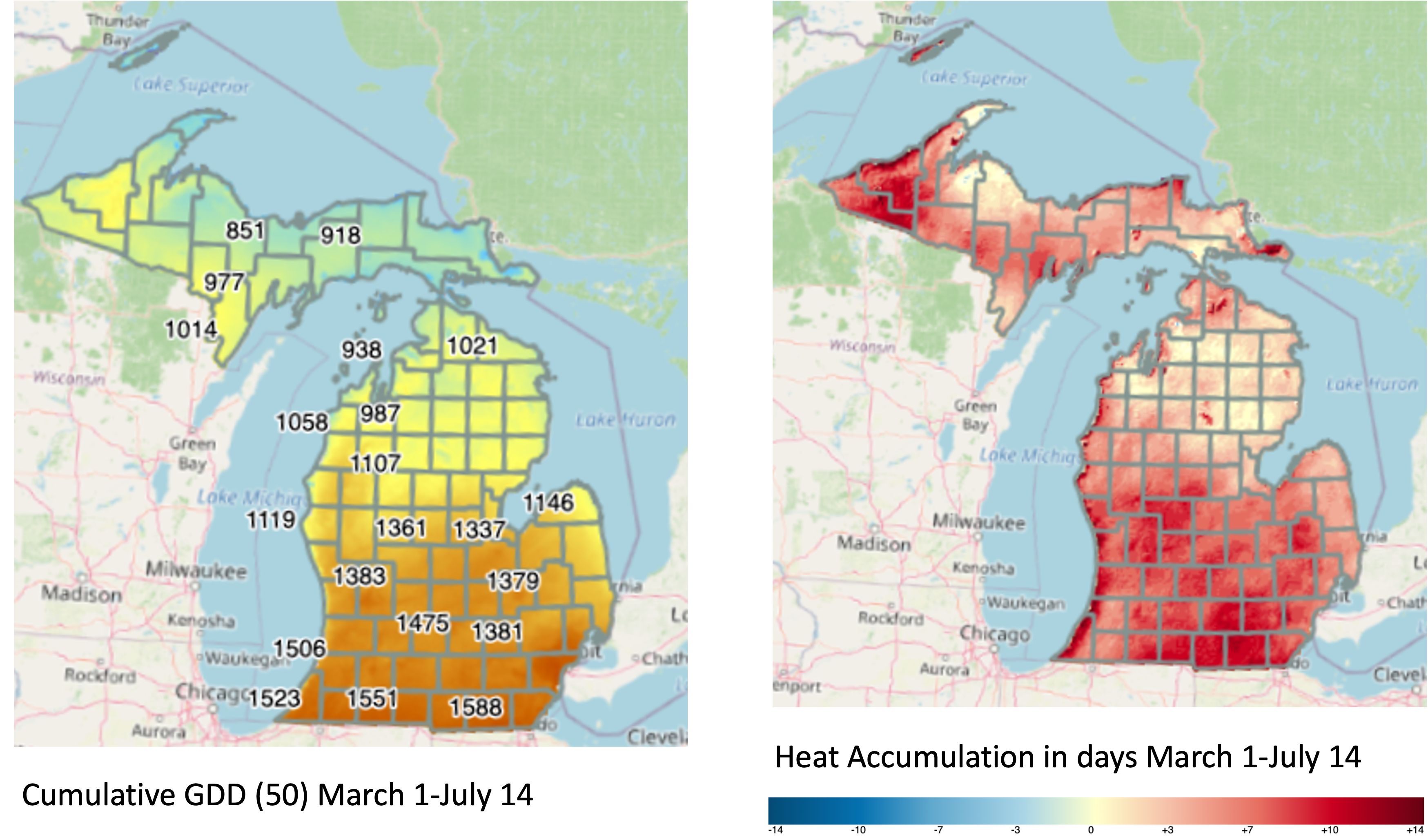
The last few days have been very warm, with National Weather Service’s major heat risk across the entire state. Several high temperature records were set across Michigan on July 13 and 14. Growing degree days (GDD) base 50 are ahead of normal in southern Michigan and the western Upper Peninsula, and slightly above normal in the northern lower and eastern Upper Peninsula.
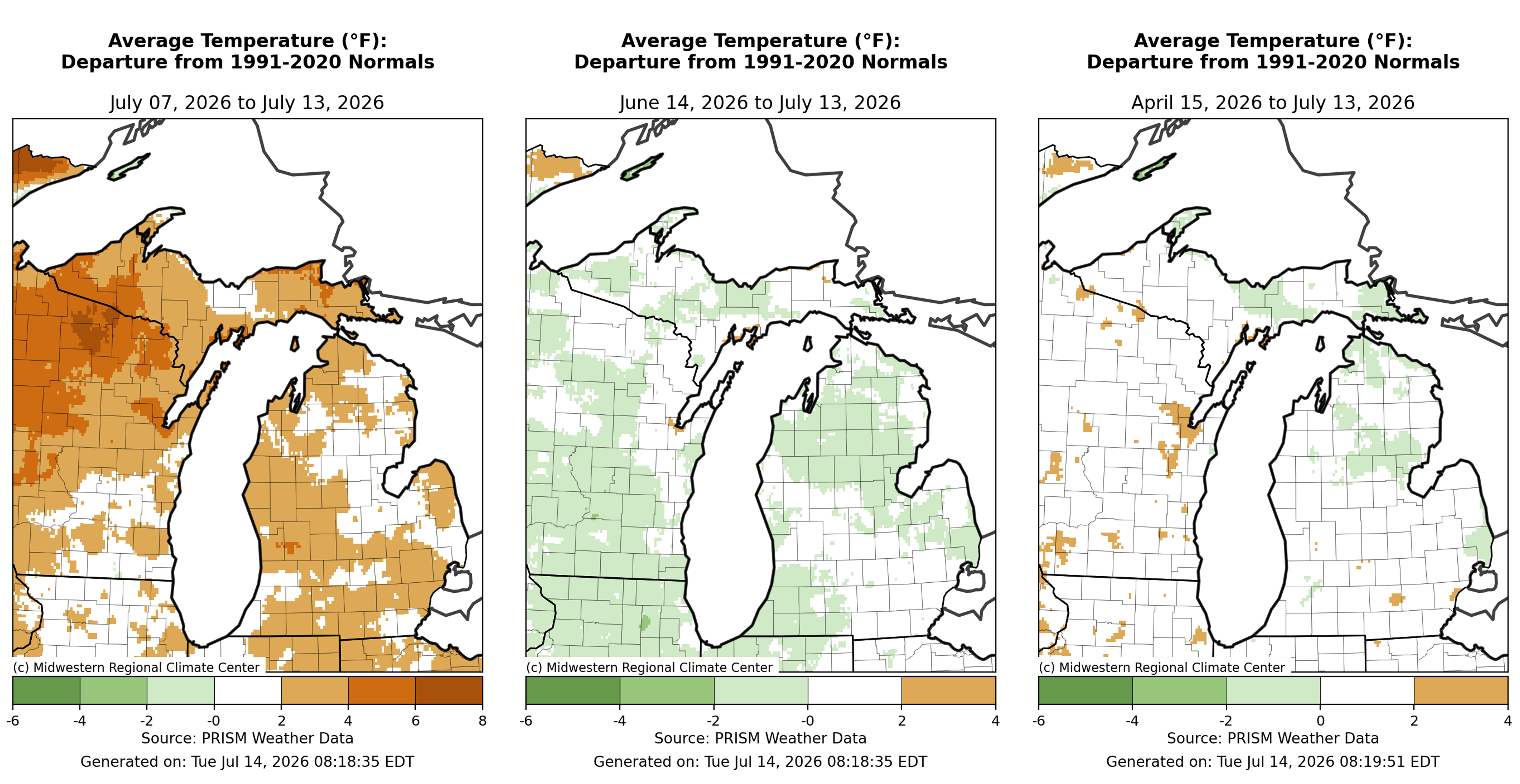
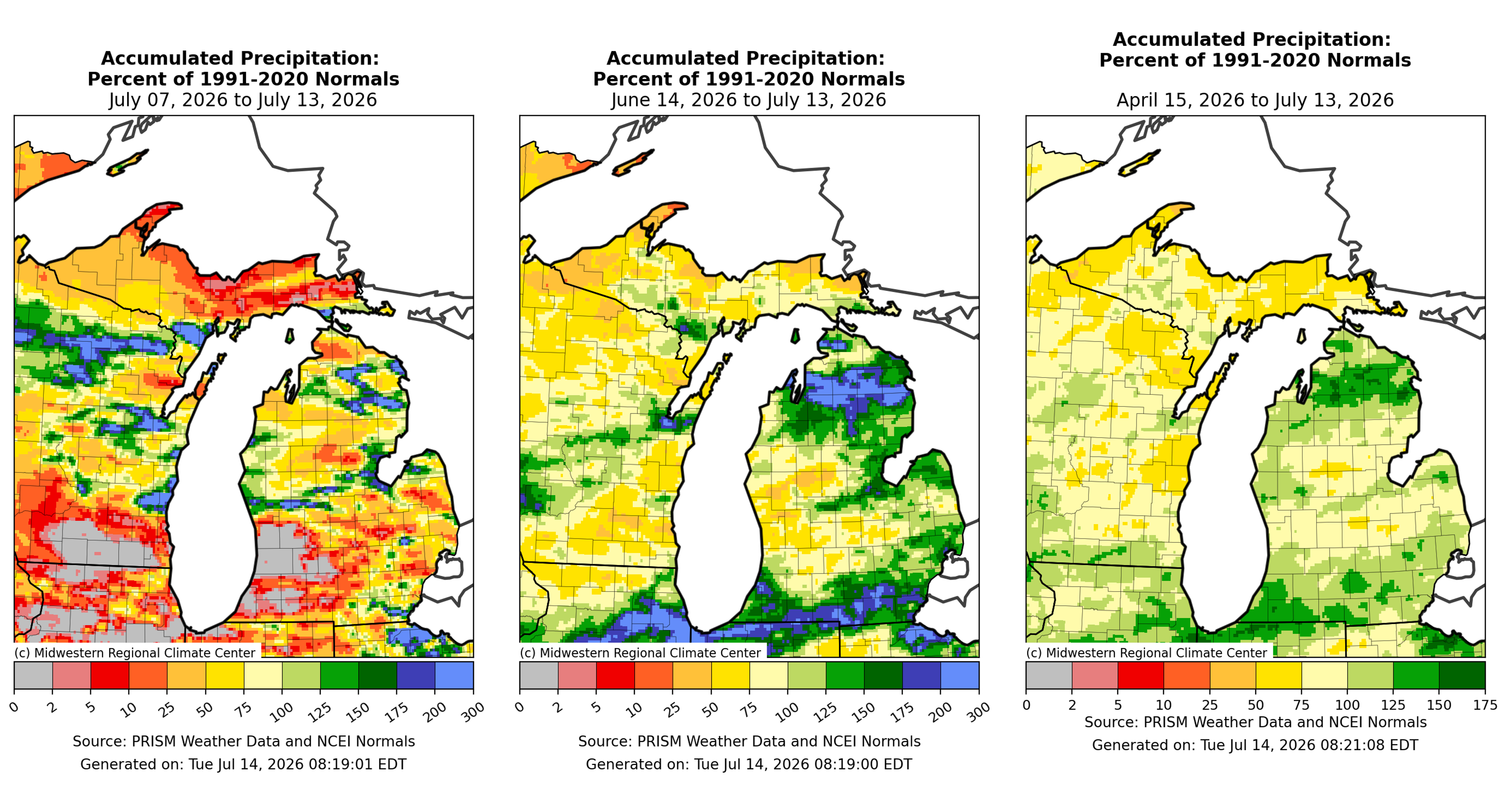
Accumulated precipitation over the last week was below normal throughout much of the state. Over the last 30 days, precipitation is normal across central Michigan to above normal in northern lower and southern Michigan. Over the last month, the Upper Peninsula has been dryer than normal. The 90-day average is close to average for most of the state.
Looking ahead
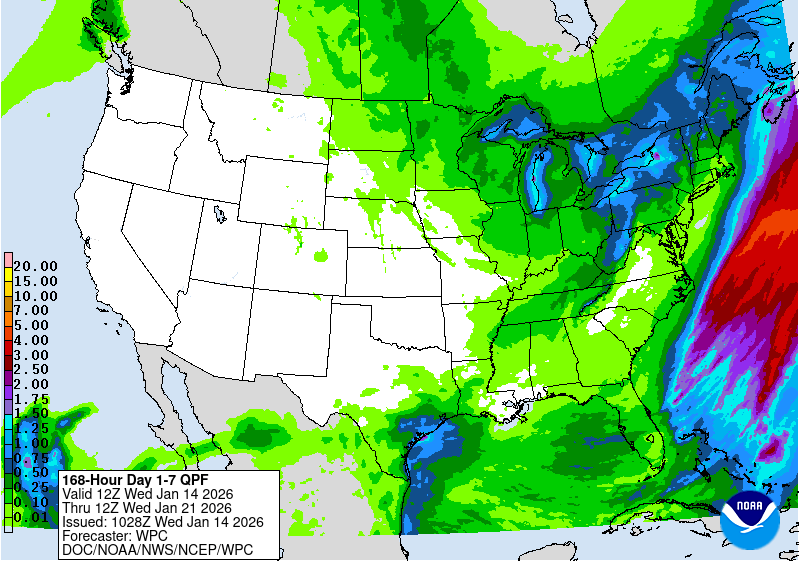
Compared to the excessive heat we’ve been experiencing, it will be a bit cooler this weekend and into next week. The 6-10 day forecast model is predicting slightly cooler than average temperatures and slightly wetter than normal conditions.
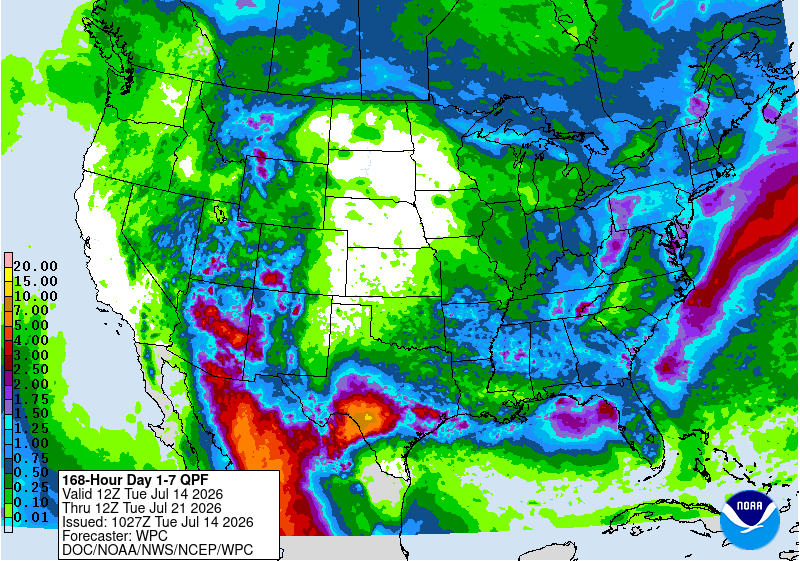
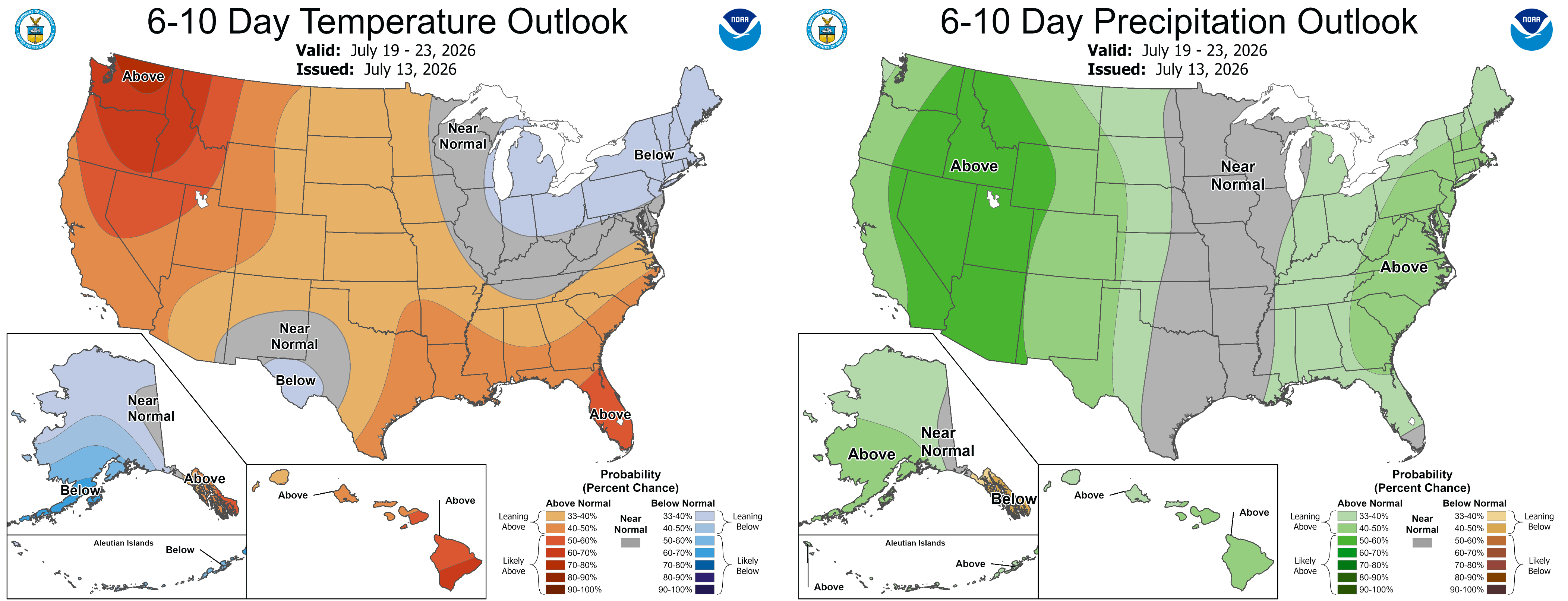
Visit MSU Extension’s Agriculture Weather page for the most recent agricultural weather forecast.
Stage of production/physiology
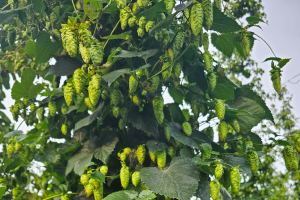
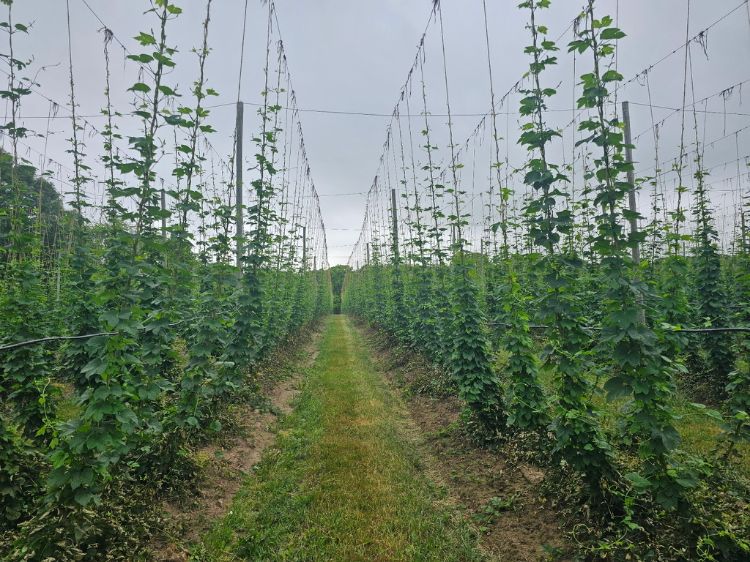
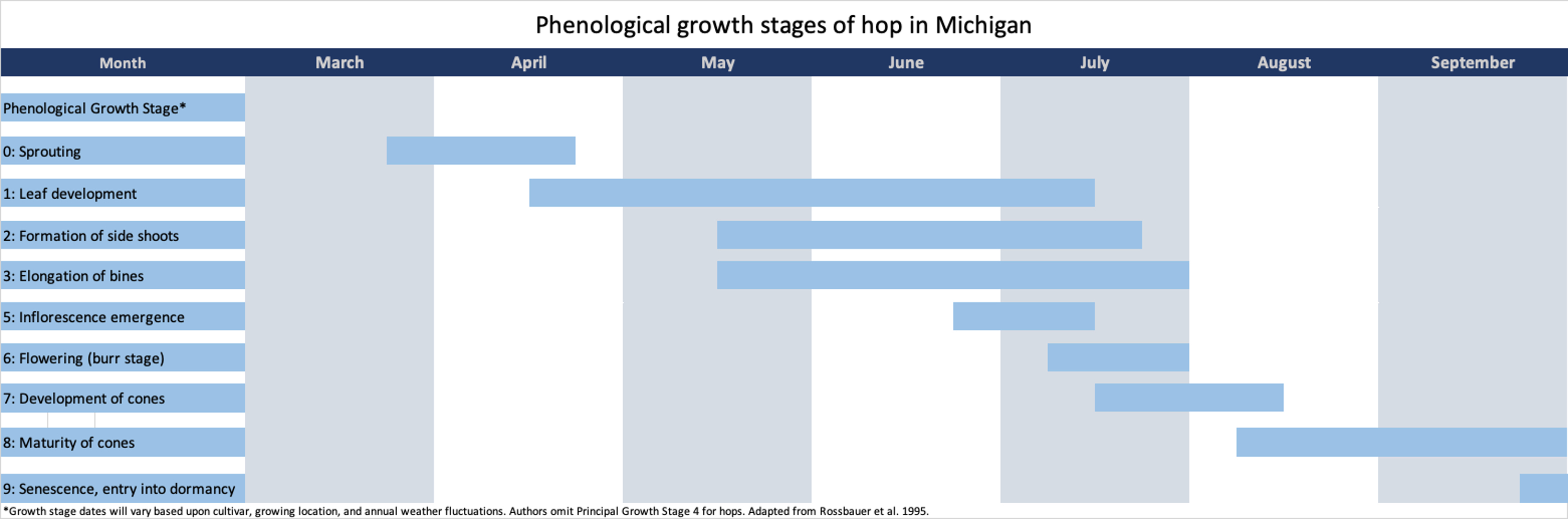
Hops across Michigan are in Principal Growth Stage 2: Formation of Side Shoots, 3: Elongation of Bines, 5: Inflorescence emergence, 6: Flowering (burr stage) and 7: Cone Development depending upon growing location.
In the field
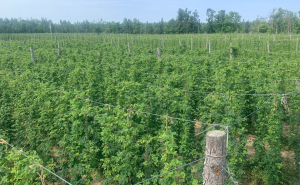
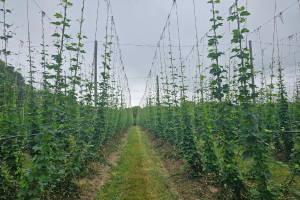
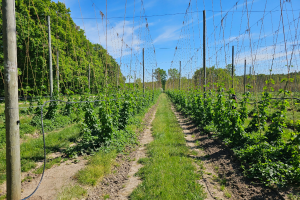
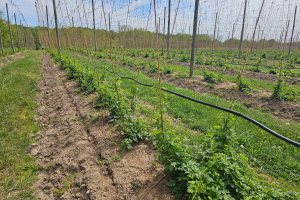
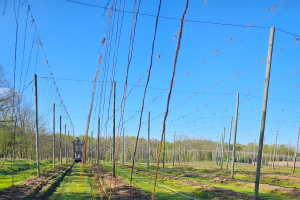
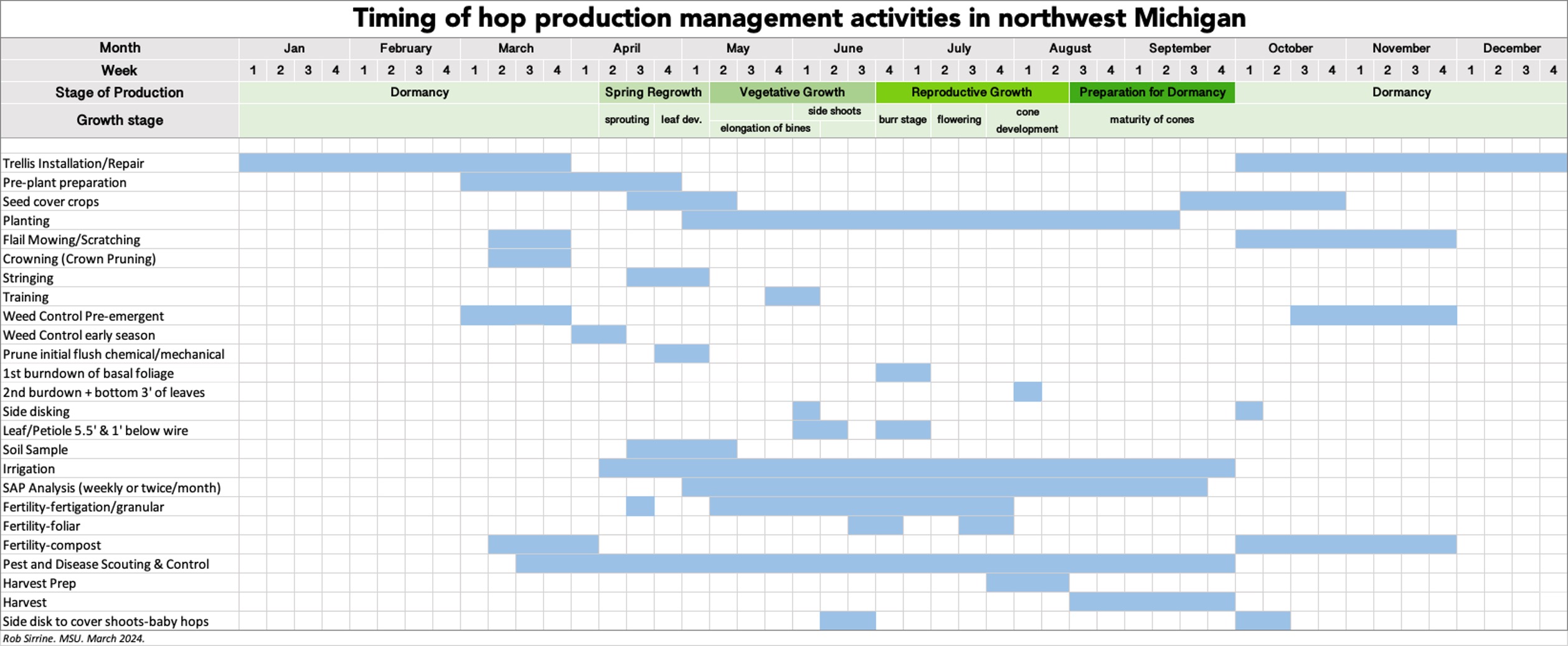
Hop plants are transitioning into reproductive stage and cone development in southern Michigan. Growers are actively fertigating, applying micronutrients based upon leaf/petiole sample lab results and sufficiency ranges (below), and dialing back nitrogen applications as plants begin developing cones. Although pest pressure has been low most of the season, growers are scouting for mites, European corn borer and Japanese beetles if necessary. Recent rainfall and high humidity have growers continuing a tight plant protection schedule. Potential Evapotranspiration levels will be high and will continue to be elevated, so growers should ensure plants are receiving sufficient irrigation.
Growers in southern Michigan have pulled leaf plus petiole samples for nutrient analysis and those in northern Michigan should consider doing the same as plants reach the wire. The following table shows optimum leaf plus petiole nutrient ranges for hop.
| Nutrients | John I Haas | Plant Analysis Handbook III: Vegetative Stage - Pre-Bloom |
Plant Analysis Handbook III: Reproductive Stage and Full Bloom |
Western Labs 5.5 ft above aground |
|---|---|---|---|---|
| Nitrogen (%) | 3.2 - 5.6 | 2.13 - 3.93 | 4.0 | |
| Potassium (%) | 1.49 - 2.5 | 1.6 - 3.4 | 0.97 - 2.55 | 3.0 |
| Phosphorus (%) | 0.29 - 0.6 | 0.27 - 0.54 | 0.18 - 0.43 | 0.4 |
| Calcsium (%) | 0.79 - 1.2 | 1.03 - 2.57 | 3.09 - 6.05 | 2.5 |
| Magnesium (%) | 0.24 - 0.8 | 0.29 - 0.67 | 0.55 - 1.71 | 0.4 |
| Manganese (ppm) | 25 - 150 | 45 - 125 | 50 - 150 | 85 |
| Iron (ppm) | 30 - 60 | 44.3 - 97.9 | 35.4 - 151 | |
| Copper (ppm) | 10 - 25 | 8 - 29 | 5.7 - 16.6 | 10 |
| Boron (ppm) | 24 - 75 | 17.6 - 63.2 | 48 - 150 | 55 |
| Zinc (ppm) | 24 - 50 | 23.2 - 108 | 19.4 - 57.1 | 60 |
| % Sulfur Sampled Basis | 0.16 - 0.32 | 0.2 - 0.34 | 0.18 - 0.30 | 0.25 |
| % Sulfur Dry Matter Basis | 0.16 - 0.32 | 0.2 - 0.34 | 0.18 - 0.30 | |
| Mo | 0.5 - 3 | 1 - 5 | ||
| Na | 0 - 1400 | |||
| NO3 ppm | 4000-12000 |
Leaf plus petiole testing is offered at the following Labs:
- Agro-Liquid, St. Johns, MI
- A&L Great Lakes, Ft. Wayne, IN
- New Age Laboratories, South Haven, MI
- Western Labs, Parma, ID
Pest management update
For pest information, see the July 16 Hop Pest Report.
MSU Hop Chat Series update
The following recordings are now available on MSU Mediaspace:
- May 8 Hop Chat Series, featuring Erin Lizotte and Rob Sirrine
- May 21 Hop Chat Series, featuring MSU irrigation specialist Younsuk Dong
- June 4 Hop Chat Series, featuring Tim Miles
- June 18, Hop Chat Series, featuring Erin Lizotte and Rob Sirrine
Sincere thanks to the Michigan hop producers who provided timely input for the Michigan Hop Crop Report.
Stay connected!
For more information from Michigan State University Extension on hop production practices, sign up for the Hops & Barley MSU Extension Newsletter, attend the free MSU Hop Chat Series and continue to visit the MSU Extension Hops website or MSU Hops News Facebook.
If you are unsure of what is causing symptoms in your field, submit a sample to MSU Plant and Pest Diagnostics. Visit the webpage for specific information about how to collect, package, ship and take pictures of plant samples for diagnosis. If you have any doubt about what or how to collect a good sample, please contact the lab at 517-432-0988 or pestid@msu.edu.
Become a licensed pesticide applicator
All growers using pesticides can benefit from getting a pesticide applicator license, even if not legally required. Understanding pesticides and the associated regulations can help you protect yourself, others and the environment. Michigan pesticide applicator licenses are administered by the Michigan Department of Agriculture and Rural Development. You can read all about the process by visiting the Pesticide FAQ webpage. Michigan State University offers a number of resources to assist people pursuing their license, including an online study/continuing education course and study manuals.
This work is supported by the Crop Protection and Pest Management Program (grant no 2024-70006-43569) from the USDA National Institute of Food and Agriculture. Any opinions, findings, conclusions or recommendations expressed in this publication are those of the author(s) and do not necessarily reflect the view of the U.S. Department of Agriculture.