Michigan Rep. Jerry Neyer says MSU agriculture research is ‘a small investment with a great return’
 Print
Print Email
EmailFrom a farming background to his role as chair of the Michigan House Agriculture Committee, Rep. Jerry Neyer is passionate about moving the agriculture industry forward.
This story is part of a series highlighting the impact of MSU AgBioResearch’s work with Michigan agriculture and natural resources told through our stakeholders' perspectives. Through partnerships with the State of Michigan and industries, MSU AgBioResearch is finding solutions to some of the most timely problems facing our state. To view the entire series, visit agbioresearch.msu.edu.
In addition to the written story, listen to the below podcast with MSU AgBioResearch Director George Smith and Michigan Rep. Jerry Neyer, 92nd District, on Spotify, Apple Podcasts and YouTube.
LANSING, Mich. — Operating a farm today requires resilience and determination. Challenges abound, from extreme weather and high input costs to commodity price fluctuation, labor shortages and much more.
According to the U.S. Department of Agriculture’s National Agriculture Statistics Service, the number of Michigan farms decreased from 45,300 in 2023 to 44,000 in 2024, a 3% decline. Land used for farming shrunk by 100,000 acres in that time.
Despite what may appear as a gloomy outlook, Michigan State University AgBioResearch and MSU Extension leaders see promise. The organizations have made it a core part of the mission to assist farmers with navigating tumultuous circumstances. Through partnerships with the State of Michigan, farmers and agriculture industry organizations, MSU researchers and Extension educators seek to uncover and deliver real-world solutions.
“Our producers, growers and ranchers are facing real challenges,” AgBioResearch Director George Smith said. “We want to ensure that our farmers can make a living, including the ability to pass down their farms to the next generation. It’s our responsibility as a land-grant institution to do the research that leads to answers. Working with MSU Extension, we can get that information into communities where it makes a difference.
“We truly believe there are tremendous opportunities in agriculture to solve some of the world’s major issues around nutrition, food access, food safety, and human health and diseases. We can’t do this without partnerships with farmers, industries and the State of Michigan.”
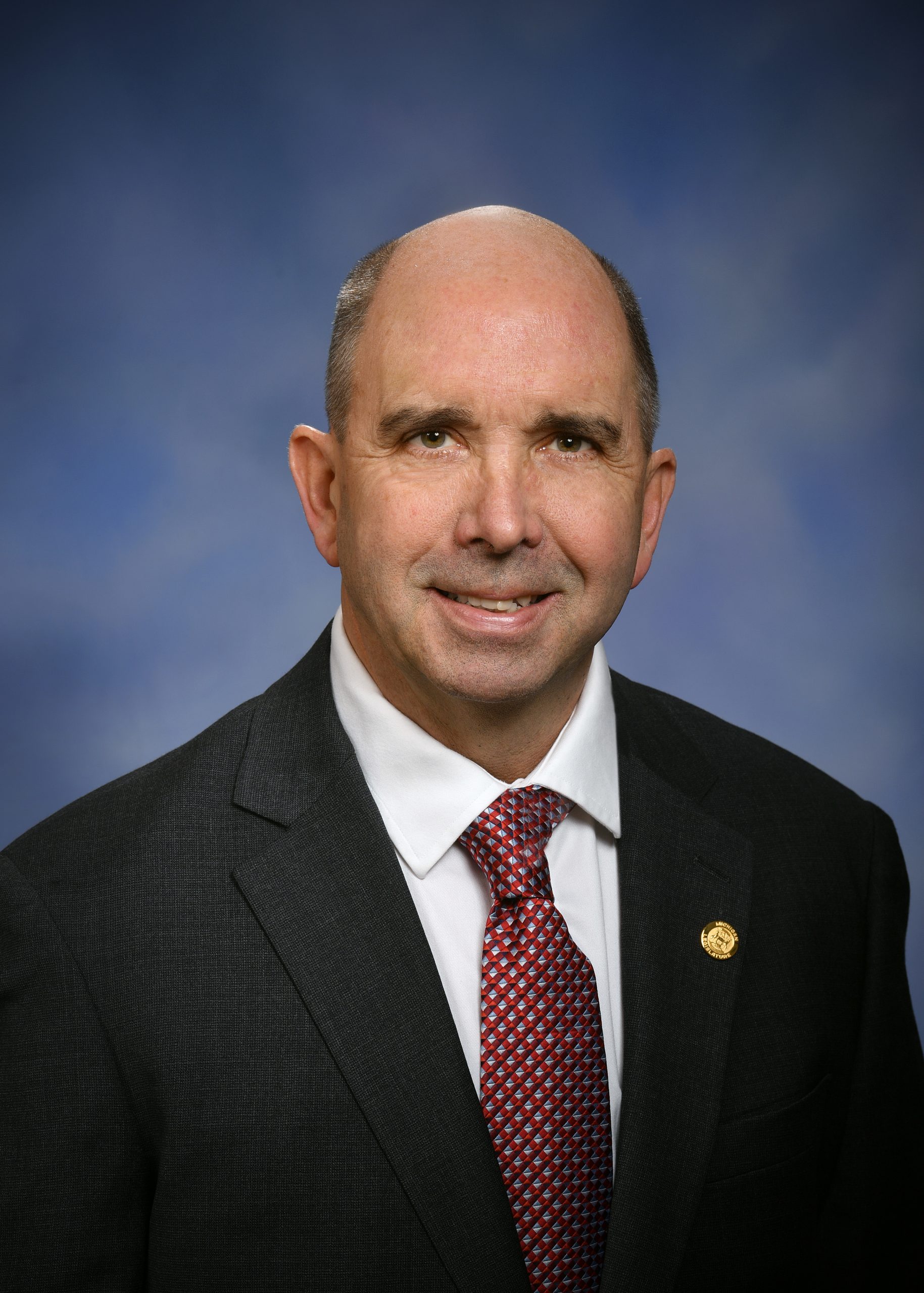
Michigan Rep. Jerry Neyer, 92nd District, understands the myriad issues confronting farmers better than most. Prior to his 2022 election, he spent three decades working on his family’s dairy farm.
“I was born and raised on a dairy farm in the Mount Pleasant area, and I still live here just a couple miles away from the farm,” Neyer said. “I farmed right up until the day I got sworn into the House of Representatives a little over three years ago. It’s a reason why I’m there because I’ve been a strong advocate for agriculture and the industry over the years.”
As chair of the House Agriculture Committee, Neyer helps establish policy for the state’s second-largest economic contributor. According to the Michigan Department of Agriculture and Rural Development, the economic impact of the food and agriculture industry is more than $125 billion annually.
Research can act as a driver for innovation and problem solving in agriculture, Neyer said. He highlighted the personal relationships developed by MSU researchers and Extension educators with farmers through open dialog and in-person interactions as an important component of the process.
“When it comes to MSU research and Extension with agriculture, I grew up in that environment where you’re always partnering,” Neyer said. “MSU being out in the field as opposed to just being on campus, providing that boots-on-the-ground information by looking at each farmer’s problems individually is really what stands out and makes MSU unique. It’s not a paper you hand us. You come out and help us do research and find real solutions that we can afford to implement. To me, that’s what makes the relationship unique.”
Programs such as Project GREEEN, the Michigan Alliance for Animal Agriculture and the Agricultural Resiliency Program — joint efforts among MSU, MDARD and industries — have been critical state investments that provide agricultural advancements in the short- and long-term. The programs provide funding support for research dealing with emerging and enduring issues, from invasive insects and diseases to water quality and water use efficiency.
Alongside field trials and work in laboratories, Neyer said the efforts to explore the various economic aspects of farming have proved beneficial.
“Now it’s been taken a step further where MSU is looking at it from an economic standpoint,” he said. “You don’t just grow the products. We’ve got to find a market for these products to make sure that what we’re producing is what the customer wants and needs. Everyone likes to talk about ‘the good old days,’ but I don’t recall the days when you just grew a crop and didn’t worry about anything else. And it’s much more important these days, given the markets we’re facing, that farmers take an interest in the end game and who they’re serving. MSU is a conduit to that by connecting farmers directly to processors and everyone else across the supply chain.”
In addition to recurring research funding, Neyer was a staunch supporter of the state’s $30 million investment in the new MSU Dairy Cattle Teaching and Research Center. The state-of-the-art facility is a model for agricultural sustainability, hands-on teaching and leading dairy science research.
The center, which will expand its herd size to nearly 700 cattle, enables the growth of new and continuing research, expanded training opportunities for students, and providing community outreach on the dairy industry’s value to Michigan.
“We appreciate Rep. Neyer and our other elected officials who were supportive of this transformational funding for the dairy,” Smith said. “Dairy is the largest contributor to the state’s agricultural economy, and this investment will reap rewards for the industry for generations to come. It doesn’t happen without legislative support, and we recognize that our partnership with the State of Michigan has been invaluable.”
Neyer said a primary reason for his research funding advocacy is that farmers simply can’t afford to try new strategies without understanding cost and effectiveness.
“Agriculture, like everything else, isn’t static,” he said. “A farmer doesn’t have the room to gamble on trying something without having some type of support. We need the legislature to continue to step up like it has been to provide that steady environment for research that MSU does, being able to give that stability to the market.
“It’s the second largest industry in the state, and I think it’s a lot closer than some people think. It’s not just food. It’s travel, tourism and it ties into our energy sector. Looking at those research dollars overall, it’s a relatively small portion of our budget. But it’s an important part of it because it’s giving almost immediate results sometimes year over year. It’s a small investment with a great return on the public dollar.”
Neyer encourages farmers and researchers to contact legislators to make their voices heard about the significance of research funding. He said providing examples of how research has translated to direct impacts on the farm is a powerful message, and it’s especially important for those who don’t come from an agricultural background.
“The best thing to do is keep telling your story,” he said. “Don’t be afraid, whether you’re a farmer or a researcher, to engage with legislators and let us know about the benefits these public dollars are providing. It’s not just research for the sake of research. This is what the folks out here in the field are asking for and what the industry is asking for. The partnerships MSU forms with the industry is the key to success, basing research on what the industry needs. We need to keep telling that story.”
Michigan State University AgBioResearch scientists discover dynamic solutions for food systems and the environment. More than 300 MSU faculty conduct leading-edge research on a variety of topics, from health and agriculture to natural resources. Originally formed in 1888 as the Michigan Agricultural Experiment Station, MSU AgBioResearch oversees numerous on-campus research facilities, as well as 15 outlying centers throughout Michigan. To learn more, visit agbioresearch.msu.edu.