Michigan vegetable crop report – June 24, 2026
 Print
Print Email
EmailEarly vegetable harvest underway, rainy and stormy conditions increase disease and insect risks.
Weather
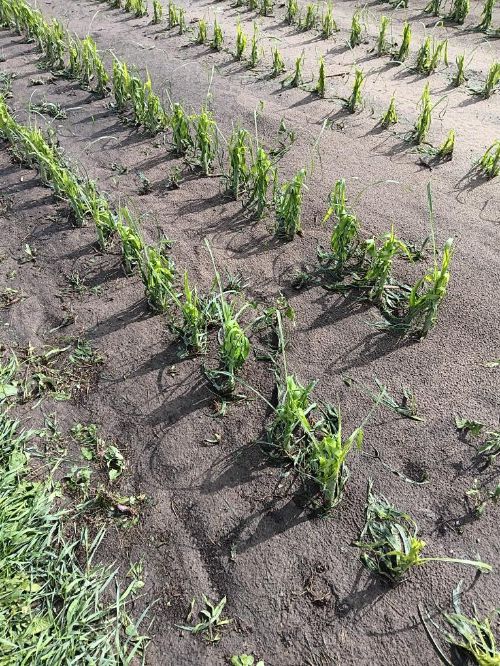
There have been many reports of hail damage over the past week, ranging from Sodus to Decatur and up towards Midland. Protectant fungicides, including chlorothalonil, mancozeb and copper, applied as soon as possible, can help reduce infection of all the broken tissue. In some cases, herbicide applications were being scheduled. Many herbicide labels indicate that they will do damage to stressed plants, and it might be a good idea to withhold any over-the-top herbicide applications until plants begin pushing new healthy growth.
- Showers and thundershowers West Wednesday, spreading East during the day, evening and overnight hours. Lingering showers East Thursday morning, otherwise fair and breezy elsewhere. Fair and dry most areas Friday with a few isolated showers possible South. Fair, dry and warmer this weekend. Hot and humid early next week with scattered rain possible Northwest late Sunday spreading Southeast Monday and Tuesday.
- High temperatures generally from the upper 60s South to upper 70s South Wednesday through Friday warming to the low to mid 80s by Sunday and to the low 90s early next week. Low temperatures in the upper 40s N to low 50s South Thursday warming into the 50s through Saturday and into the 60s by early next week.
- Medium range outlooks call for warmer and wetter than normal weather for early July. New seasonal outlooks call for the equal odds scenario for both mean temperatures and precipitation totals during July and for near to below normal mean temperatures and precipitation totals for the July – September time frame.
Michigan adopts the new National Pesticide Applicator Certification Core Manual
The new national pesticide applicator certification core manual in English version is available for purchase. The manual will serve as the primary study guide for pesticide applicator certification in Michigan. The MDARD will begin using for certification exams starting August 1, 2026. The manual provides essential knowledge for the safe, legal, and effective use of pesticides. Read more about the new core manual here.
Crop updates
Periodically, questions about the use of sugar or sugary substances to control insect pests come up. The idea is appealing: sugar is inexpensive, readily available and generally considered safe. However, growers should be aware that sugar is not an insecticide and should not be expected to provide reliable pest control. The belief that sugar can control insects likely comes from a combination of anecdotal observations and confusion about how insects respond to carbohydrates. Many insects feed on plant sugars naturally, and some beneficial insects, such as ladybeetles, parasitoid wasps and predatory flies, can benefit from access to nectar and other sugar sources. However, feeding insects sugar is very different from controlling them with sugar. To date, there is no scientific evidence that spraying sugar solutions on crops provides consistent control of insect pests. For example, this study tested different sugary solutions for thrips control and found no effect on their numbers. There are also potential downsides to applying sugar to crops. Sugar residues can encourage the growth of fungi and other microorganisms, attract nuisance insects, and create a false sense of security that delays implementation of proven management tactics. For growers dealing with insect pests, the best course of action is to follow recommended Integrated Pest Management guidelines, such as scouting and applying registered insecticides when needed.
Carrots and celery
Overall, the incidence of aster yellows “infectivity” in aster leafhoppers has been relatively low in samples to date, compared to last year. Sign up for aster leafhopper text alerts.
The following table shows the percentage of aster leafhoppers in a sample testing positive for aster yellows:
|
County |
Date |
Infectivity |
|
Allegan |
June 8 |
0% |
|
Oceana |
May 18 |
4.2% |
|
Oceana |
May 26 |
0.0% |
|
Oceana |
June 1 |
4.2% |
|
Oceana |
June 8 |
1.4% |
|
Oceana |
June 15 |
0.0% |
|
Lapeer |
May 26 |
0.0% |
|
Lapeer |
June 4 |
0.0% |
|
Lapeer |
June 15 |
6.5% |
|
Muskegon |
June 3 |
2.1% |
|
Muskegon |
June 11 |
0.0% |
|
Newaygo |
June 3 |
0.0% |
|
Newaygo |
June 11 |
0.0% |
|
Newaygo |
June 17 |
6.5% |
|
Ottawa |
May 27 |
0.0% |
Root crops
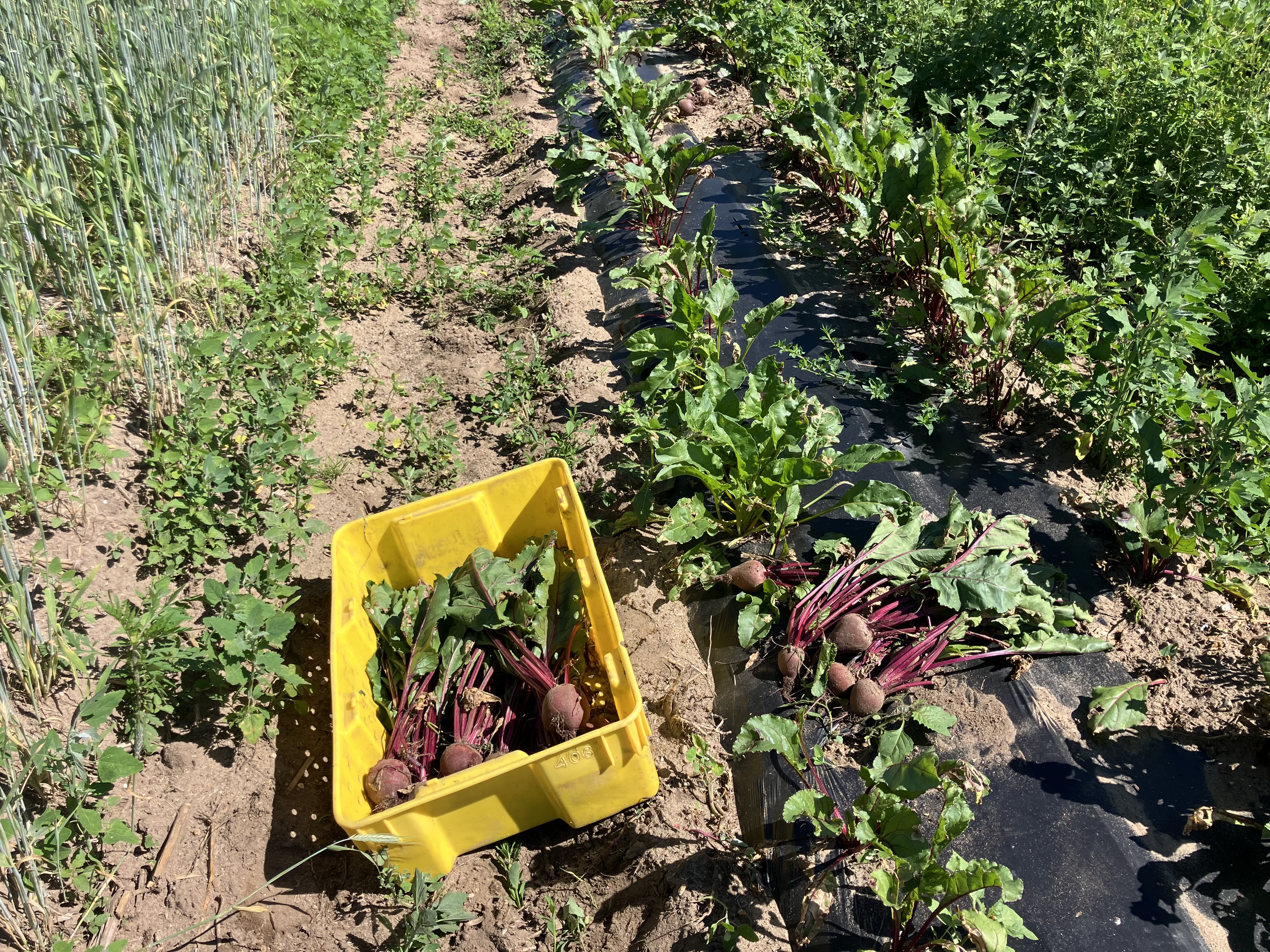
Radish harvests have been ongoing. Early carrots and beets are starting to hit stands.
Cucurbits
Zucchini picks have begun, with field cucumbers and hand-pick pickles not far behind. Planting is in high gear for pumpkins. The last-plant deadlines for mid-Sep to late-Oct harvests are roughly July 4 for direct-seeded baresoil pumpkins to July 10 for transplanted baresoil pumpkins or direct-seeded on plastic. When transplanting into plastic, you can expect 7 to 10 days earlier maturity as well, but that’s pushing the timeline pretty tight especially for longer maturing varieties.
Squash bugs are laying eggs, and nymphs are likely to be found. They are easiest to manage at the nymph stage when they still behave a bit like aphids, and respond to aphid-management tools. As adults they are much harder to kill and require heavier-duty chemistries.
Cucumber beetles and squash bugs often appear at the same time, but they do not respond equally to insecticides. Understanding your options can help improve control, reduce costs, and avoid unnecessary sprays. Read Managing cucumber beetles and squash bugs at the same time to find out more about managing these two pests.
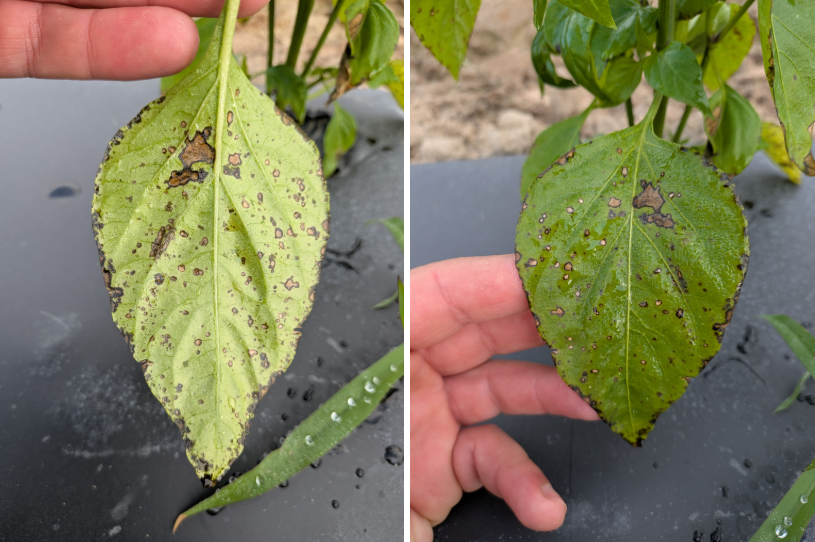
Some foliar blights have been reported, but causes have not been confirmed. When taking pictures for help identifying whether a pathogen is downy mildew, it helps to have an up-close picture of both the tops and bottoms of a symptomatic leaf. See the picture below of a pepper leaf showing a blighting symptom for an example.
Cucurbit downy mildew spores have been detected in spore trap air samples in Berrien, Bay, Allegan and Muskegon counties. Read the full story in this recent article from MSU Extension “Statewide monitoring network for cucurbit downy mildew verifies the 2026 arrival of spores in four Michigan counties”.
New technology enhances the downy mildew early warning system
The use of recently developed molecular diagnostics coupled with microscopy ensures the accurate confirmation of this pathogen from our spore trap air samples. We can distinguish the downy mildew pathogen that infects cucurbits from the downy mildew pathogen that infects other crops, such as hop. Without the use of these new tools, we could mistake the hop downy mildew, which overwinters for a downy mildew from a totally different crop, resulting in a false positive. Another important feature of our alert system is the ability to tell growers which cucurbits will be targeted by the arriving downy mildew spores. For instance, in past years, only Clade 2 of the cucurbit downy mildew pathogen has been detected in the air. Clade 2 most commonly infects cucumber and melon. Clade 1 has not been detected in the state in recent years meaning that growers of pumpkins, squash, and zucchini do not need to be concerned about downy mildew on their crops. However, each week’s positive samples are tested to determine whether Clade 1 and/Clade 2 have been detected so that growers can know if and which cucurbit crops are at risk from this highly destructive pathogen.
Phytophthora has appeared on zucchini crops in the state following the recent storms. Disease symptoms can include infection of the petioles near the crown of the plant that becomes blackened and dies. Plant wilting is also a common symptom. Phytophthora crown and stem rot is caused by a soilborne plant pathogen and while it’s favored by planting sites with poor drainage it can also be a significant problem on sandy, well-drained soils. Since the Phytophthora spores can be splash dispersed and carried by water, the plants may appear to die in a pattern that mirrors the field drainage pattern. Once symptoms develop, the diseased plant cannot be cured. To help avoid this problem and limit crop losses, consider the following:
- Do not plant areas of the field where water collects
- Provide a route for excess water from heavy rainfalls to leave the field by improving drainage with waterway systems or ditches.
- Utilize raised beds whenever possible.
- Rotate crops but avoid pepper, eggplant, tomato, cucumber, pumpkin, winter squash, watermelon, and cantaloupe. Phytophthora also infects these crops.
- If rotating back into a field with a history of Phytophthora, an application of a Phytophthora fungicide at planting and at regular intervals as a preventive is recommended. Incorporating the fungicide applications into an overall control program with good water drainage and raised plant beds is most effective.
The Hausbeck lab has an active research program to better understand this disease and whether the pathogen has become resistant to key fungicides and is interested in knowing about any Phytophthora outbreak.
As a reminder for those who have fields with a history of Phytophthora, MSU has a series of fact sheets on managing Phytophthora in various vegetable crops. Check out the list of publications on the Hausbeck Plant Pathology Research Lab website.
Watermelon mosaic virus, an aphid-vectored pathogen, has been detected in pumpkins. It resembled a nutritional issue initially with interveinal chlorosis, no real obvious mosaic virus symptoms. Symptoms caused by various viral pathogens can be difficult to differentiate. Plants infected with a virus can not be cured or treated, but knowing the specific identification of the virus involved can impact future management decisions.
Brassicas and greens
Broccoli, cauliflower, cabbage and kale harvest is underway. Crops are being cultivated, which is often combined with sidedressing fertilizer. Flea beetles have been reported on cabbage and broccoli. Early lettuces and mixes are hitting stands.
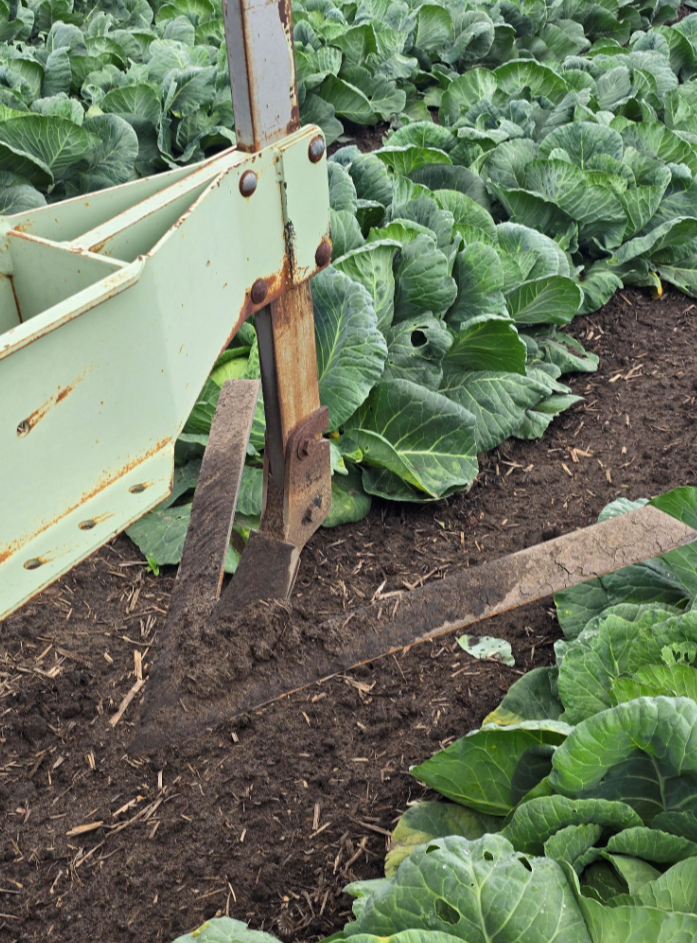
Heavy-duty sweep used for between-row cultivation in vegetables. Photo by Chris Galbraith, MSU Extension.
Fruiting vegetables
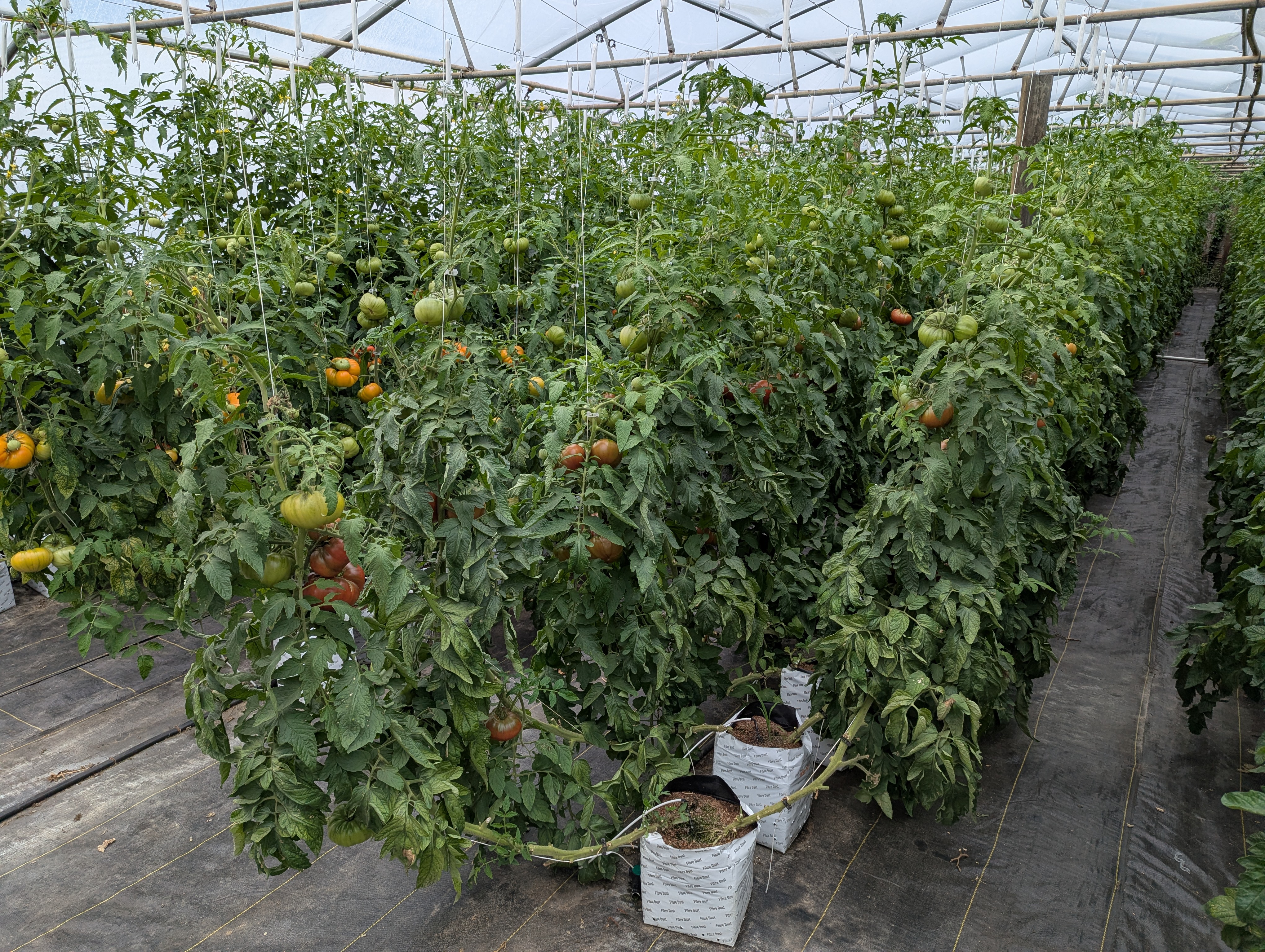
Early field peppers and tomatoes are in bloom. Hoophouse tomato picking has started on some farms. Hoophouses can offer exceptional quality heirloom tomatoes when environmental controls are tuned in. Early blight and grey mold has been reported in the high tunnels. Magnesium and potassium deficiencies are a common sight at the fruit-bearing crop stage in high tunnels.
In field pepper plantings, there have been some reports of bacterial-like symptoms that still need confirmation. Rows near windbreaks and drivelanes appeared to be more severe. Tall windbreaks increase leaf-wetness time, and soil splash from tractors driving through puddles can sometimes contribute to things like this. The capacity of a variety to be resistant to bacterial pathogens also plays a role in where and when outbreaks occur.
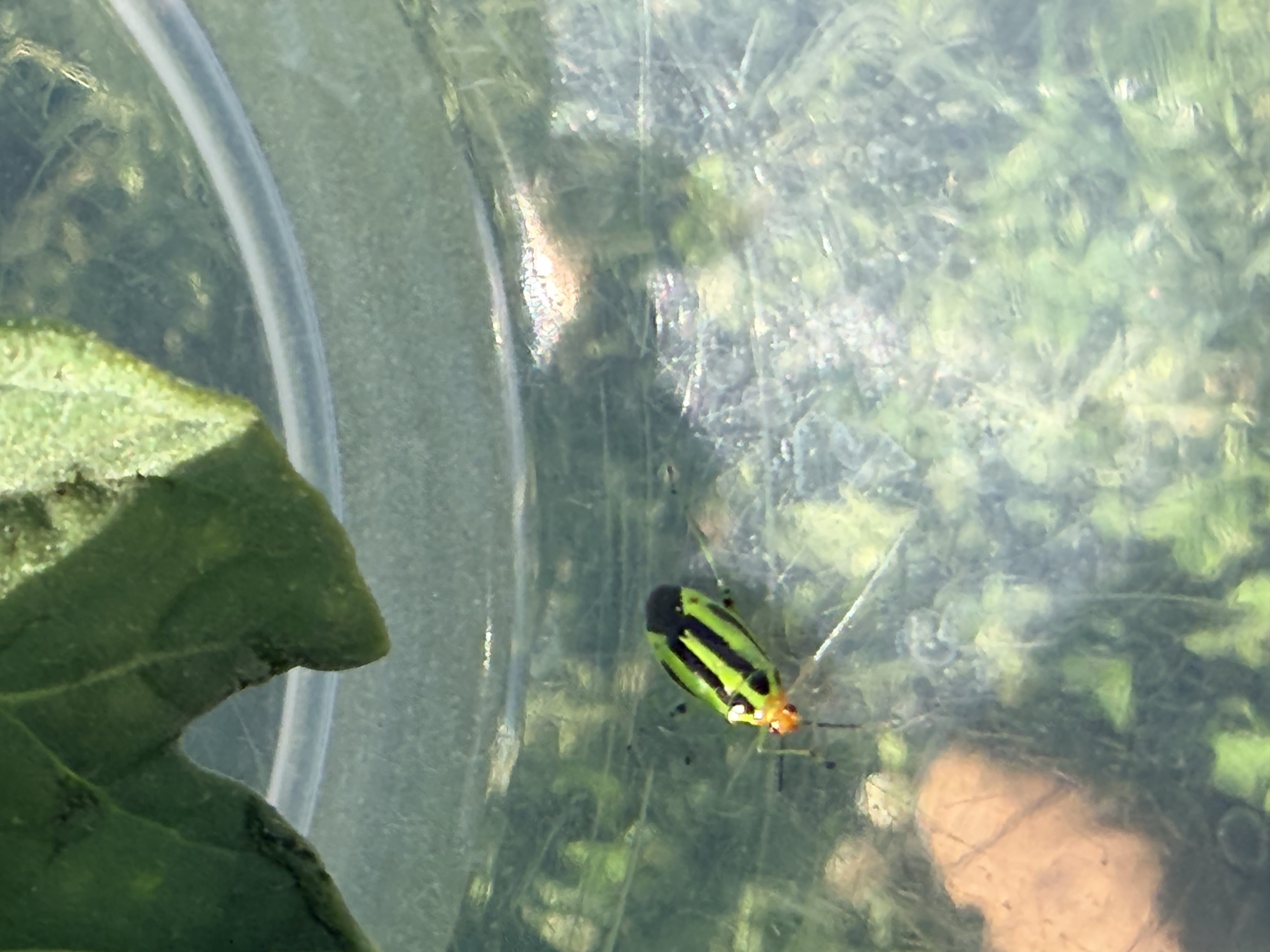
Four-lined plant bugs have been observed over the last week in tomato plants in the field in Huron County. In vegetable crops, they are generally considered an occasional nuisance pest rather than a major economic threat. They can sometimes be problematic in potatoes, peppers, and occasionally tomatoes, particularly in small diversified farms and home gardens. Young plants are more susceptible to injury than older, established plants. Before considering treatment, check whether the insects are still present and actively feeding. The damage remains visible long after feeding has stopped, and because four-lined plant bugs have only one generation per year, populations often decline naturally after early summer. In many cases, treatment is not necessary.
Garlic and onions
Scallions and green onions are being harvested. Garlic is starting to yellow and some farms are harvesting fresh garlic. Early-seeded onions are starting to thicken their stems and transplanted onions have noticeable bulbs.
Growers with concerns about garlic health should be aware of symptoms caused by the garlic bloat nematode. Damage caused by this nematode can disfigure bulbs and cause foliar dieback symptoms. MSU Plant & Pest Diagnostics provides evaluation for this and other issues that affect garlic. For complete diagnostic work these samples should include 10 intact bulbs as well as a soil sample.
Sweet corn
Early plantings are at tassel, with silks emerging. As we get farther into the season, keep an eye out for corn leaf aphids, which there have been known to be outbreaks of in recent years.
Strawberries
Picks continue, with renovation soon ahead.
MSU is planning a Strawberry Day on July 8, 2026 from 9:30 a.m. to 2 p.m., hosted by River Valley Farms and Corey Lake Orchards. Join to learn more about renovation, agritourism and pest management in strawberries. Register here: https://pears.io/events/msuext/7250/
Agenda
9:30-10 a.m. Gathering at River Valley Farms, coffee and donuts
10 a.m. - 12 p.m. Field Day Experience
12-12:15 p.m. Travel to Corey Lake Orchards
12:15-1 p.m. Lunch at Corey Lake Orchards
1-2 p.m. Agritourism Tour
2 p.m. Closing and post-event networking social
For more information, contact Derek Plotkowski (plotkow5@msu.edu; 248-347-3860 ext 202) or Cheyenne Sloan (sloanche@msu.edu; 269-657-8213).
Produce Food Safety On-Farm Readiness Reviews
Schedule an On-Farm Readiness Review (OFRR) today for a 2-hour educational visit that takes place during the harvest season and is meant to be casual and low stress. Everything discussed during an OFRR is confidential and focused on ways you can reduce your own risks in relation to produce safety. There is no pressure to take our advice either, we are just here to support you in your produce safety efforts!
Events
- June 25, 2026: Beekeeping Workshop - Novi, MI
- June 29, 2026: Technical Assistance Provider Training for Pay for Performance Program – Adrian, MI
- June 30, 2026: Monroe Conservation District Hands-On Mushroom Workshop – Temperance, MI
- July 8, 2026: 2026 Strawberry Day – Three Rivers, MI
- July 21, 2026: Washtenaw TOPP Farm Tours – Whitmore Lake/Dexter/Willis, MI
- July 23, 2026: Beekeeping Workshop – Novi, MI
- July 25, 2026: Beekeeping Workshop - Lansing, MI
- July 30, 2026: Summer Irrigation Workshop - Hickory Corners, MI
- July 31, 2026: Berrien County Organic Agriculture: Tour 3 Value-Added & Agritourism Farms – Sodus/Buchanan/Three Oaks, MI
- August 6, 2026: 2026 Potato Field Day – Lakeview, MI
- August 11, 2026: West Michigan Organic Farm Tour: Explore Farm to Institution Markets from schools to hospitals – Muskegon/Whitehall, MI
- August 11, 2026: Michigan Agricultural Irrigation Water Use Efficiency Program - Lansing, MI
- August 11-12, 2026: Michigan AgroExpo – St. Johns, MI
- August 18, 2026: Northwest Michigan TOPP Field Day: Farming for People, Purpose, and Profit – Petoskey, MI
- August 20, 2026: Hillsdale Nutrient Management Field Day – Waldron, MI
- September 3, 2026: Cover Crop Workshop at SVREC- Frankenmuth, MI
- September 3, 2026: Fourth Annual KBS LTAR Field Day - Hickory Corners, MI
- August 28, 2026: Washtenaw Conservation District Field Day – Ann Arbor, MI
- September 9, 2026: Tillage & Soil Health Field Day – Monroe, MI
- September 10-11, 2026: Great Lakes Tek Flex – Benton Harbor, MI
- September 16, 2026: 2026 Midwest Mechanical Weed Control Weed Day – Benton Harbor, MI
- September 22-24, 2026: Farm Science Review 2026 – London, OH
- October 4-6, 2026: Northern Michigan Small Farm Conference – Bellaire, MI
- November 4-6, 2026: Michigan Agritourism 20th Anniversary Convention – Frankenmuth, MI
- December 8-10, 2026: Great Lakes Fruit, Vegetable, & Farm Market Expo – Grand Rapids, MI
This work is supported by the Crop Protection and Pest Management Program (grant no 2024-70006-43569) from the USDA National Institute of Food and Agriculture. Any opinions, findings, conclusions, or recommendations expressed in this publication are those of the author(s) and do not necessarily reflect the view of the U.S. Department of Agriculture.