


MSU Dairy Cattle Teaching and Research Center Summer 2026 Newsletter
 Print
Print Email
EmailStay up to date on research and events at the new MSU Dairy Cattle Teaching and Research center.
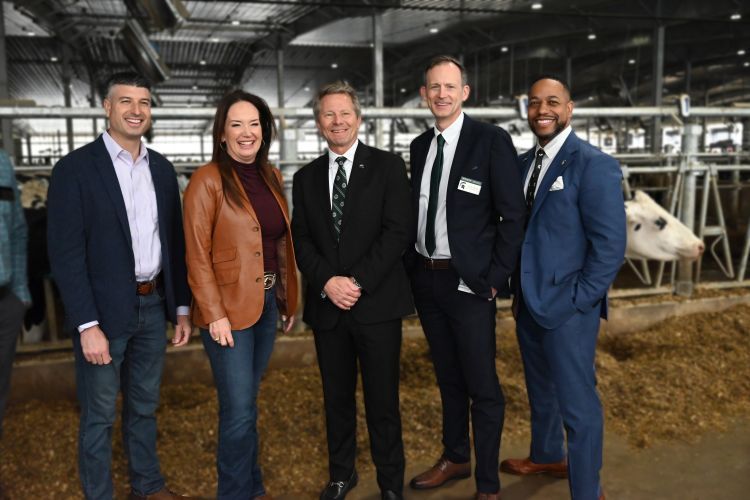
The Michigan State University Dairy Cattle Teaching and Research Center is approaching the on-year anniversary of moving cows into the new facility. From preparing feed bunks for haylage and supporting exciting research projects to hosting our summer open houses, all while keeping up with daily chores and milking, our team has been hard at work.
What’s new at the dairy?
- USDA visit: We were honored to welcome U.S. Secretary of Agriculture Brooke Rollins to the farm in April. During her visit, she announced $275 million in USDA grant funding to support the U.S. specialty crop industry. We’re excited to continue working together to strengthen and advance Michigan agriculture.
- A summer baby boom: it’s been a busy calving season on the farm. Since May 1, we have welcomed 150 calves and over 100 are expected before the end of summer.
- Summer open houses: We hosted over 400 visitors in June and July who enjoyed guided tours of the farm from dairy faculty and staff. These events have been a wonderful opportunity to showcase our new facility, connect with our community, and share the story of today’s dairy industry. If you want to support educational programs for kids at our new facility, you can donate here.
- The finishing touches: The cow statues are installed in front of the new dairy facility- stop by and visit them sometime!
An update from Jim Good, farm manager
It’s amazing to think that it’s been one full year of working at the new Dairy Cattle Teaching and Research Center! The first year of transitioning our herd and the purchased herd to a new facility has been very successful. Currently, we have nearly the same amount of milking and dry cows that we started with when moving into the new facility. The cows in milk total about 530 head that average around 86 pounds of milk daily. In addition, the butterfat of this herd is 4.4% and the protein is 3.5%. The impressive somatic cell count averages 70,000.
All the good results are only possible because of the dedicated hard work done by the entire dairy farm team during the past year. We look forward to the upcoming year filled with more progress and lots of great research.
A new assistant farm manager
Riley Baker is our new assistant farm manager. Riley is a graduate of MSU with an Animal Science degree with a dairy concentration and a minor in agri-business management. His passion for dairy began when he grew up around his grandparents’ dairy farm. Additionally, he has been active in Future Farmers of America (FFA). Riley is excited to step into this role and bring his knowledge, passion and fresh ideas to the farm.
Hay fever
The 2026 hay season has been great. Even with the dry summer, we still have good yields. After the third cutting, we now have over 900 acres of haylage and roughly 2,100 tons of silage. One of the new challenges in our feed center is the start of our drive-over silage piles. Now that the old dairy building is gone, we have plenty of space to use for silage drive-over piles.
Research updates
Dr. Barry Bradford conducted the first tie-stall research study at the new facility, evaluating whether polyphenol extract from cherry pits helps cows recover from endotoxin-induced mastitis.
Dr. August Madureira is studying if an “internal cooling” feed additive can reduce heat stress during the summer months. This has the potential to improve dairy cow welfare, productivity and sustainability.
Dr. Adam Lock is researching how feeding high levels of whole cottonseed at 10% of the diet to high-producing dairy cows is influenced by both forage level and metabolizable protein supply.
Dr. Andres Contreras is conducting a study to determine the effects of metabolic acidosis and alkalosis on metabolic function and production during the initial postpartum and early lactation period in cows
Dr. Mike Vandehaar is studying alternative calf starter ingredients to determine the effects on growth, feed efficiency, health, rumen development and cost effectiveness in calves from birth to eight weeks.
New contact information
Please email ABR.DCTRC.Admin@msu.edu to request door access or classroom reservations, as well as general questions and student employment opportunities.