MSU researchers launch international project to shed light on Africa’s smallest-scale fisheries
 Print
Print Email
EmailMillions in sub-Saharan Africa rely on small-scale, informal “safety net fisheries” for food and income, yet their impact is often overlooked. An MSU-led initiative aims to better document and understand these vital but undercounted systems.
EAST LANSING, Mich. — Across sub-Saharan Africa, millions of people depend on small-scale fishing systems for daily nutrition and income. Often operating outside formal markets and government reporting channels, these fisheries help households earn income while managing food shortages and economic shocks. Known in fisheries research as “safety net fisheries,” these systems are typically low-technology and open-access, serving subsistence needs or neighborhood-scale markets.
Despite their importance, their contributions remain largely undocumented because they are among the smallest and least visible components of the small-scale fisheries sector, making them difficult to quantify and easy to overlook in policy and investment decisions.
An MSU-led research effort
Michigan State University’s College of Agriculture and Natural Resources (CANR) is leading a multi-country research initiative to address that gap. The project is led by Edith Gondwe, a postdoctoral researcher with MSU’s Wild Foods Institute, in collaboration with a CANR-based team that includes Abigail Bennett and Mar Mancha-Cisneros of the Wild Foods Institute and the Department of Fisheries and Wildlife and Saweda Liverpool-Tasie of the Department of Agricultural, Food and Resource Economics.
Titled Africa’s Safety Net Fisheries: Understanding Their Value to Society, the project aims to generate evidence on how these fisheries support livelihoods, contribute to food systems and function as a source of resilience across diverse ecological and social contexts.
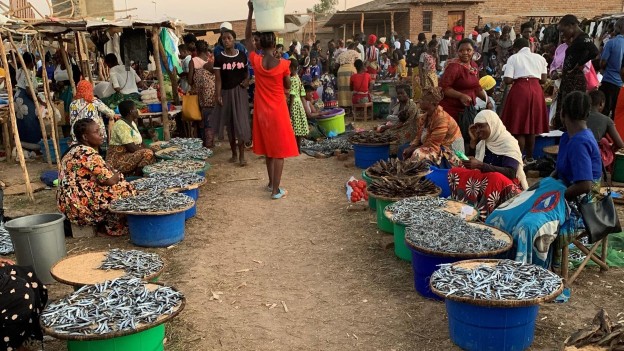
The work builds on methodological advances from the global Illuminating Hidden Harvests initiative, led by the Food and Agriculture Organization of the United Nations in partnership with Duke University and WorldFish. The initiative helped showcase the benefits and impacts of small-scale fisheries to inform policy and support more sustainable and equitable management, a framework now being applied to safety net fisheries that remain largely absent from national statistics.
Small-scale fisheries, large collective impact
“For many of these fisheries, there’s no production data,” said Bennett. “We don’t know how much fish is being produced or who is consuming it, which makes it difficult to communicate their value.”
While individual fishing activities may appear modest in scale, their combined impact, even at the smallest scale, is substantial. Taken together, safety net fisheries support large populations and play a central role in local food systems, particularly for households with limited alternatives.
“Small-scale fisheries may operate at an individual level, but when aggregated, they account for the largest share of fisheries activity,” said Gondwe. “The scale is small, but the impact is not.”
To better understand how safety net fisheries function under different conditions, the project will use a comparative case study approach. Research will take place in a coastal fishery in Liberia, a riverine system along Malawi’s Shire River, a floodplain fishery in Namibia’s Kavango and a lake-based fishery in the Lake Edward system shared by Uganda and the Democratic Republic of the Congo.
“These systems are not homogeneous,” Gondwe said. “They face different pressures and adapt in different ways. That variation matters if we want to understand how safety net fisheries continue to support people.”
Measuring value and resilience
Researchers will employ a multidimensional approach to assess the economic and nutritional contributions of safety-net fisheries. Their analysis will examine how these fisheries support jobs and livelihoods as well as local economies, including fish that families catch and consume rather than sell. The team will also explore how access to aquatic foods influences diets and nutrition outcomes.
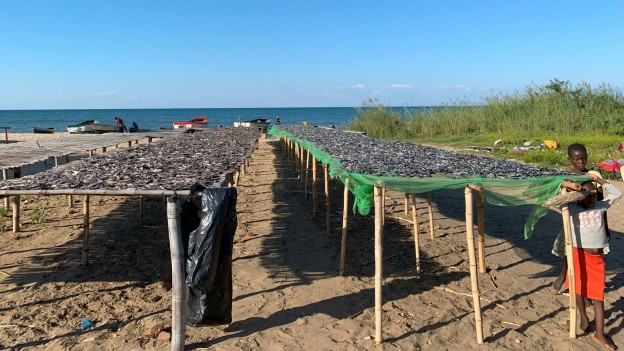
The project also places particular emphasis on resilience, examining how households rely on safety net fisheries as conditions change and climate shifts.
“When we talk about safety net fisheries, we’re talking about what keeps people going during periods of uncertainty,” Gondwe said. “Understanding how these fisheries transform, and how people adapt alongside them, is essential to understanding their value.”
From fieldwork to policy
The research follows a two-phase structure: initial reconnaissance fieldwork to refine research questions and identify data gaps, followed by more structured data collection to capture production patterns and employment dynamics.
“Some of these fisheries take place across very large areas, with people harvesting fish in a highly dispersed manner,” Bennett said. “Designing research that reflects those realities is challenging, but necessary.”
The project is also supported by collaborators from international academic and philanthropic institutions. These include Michael Cooperman of PlusFish Philanthropy; Ted Lawrence of the African Centre for Aquatic Research and Education; and John Virdin and Liz Kamara of Duke University. Their expertise supports the project’s comparative approach and helps connect findings to broader policy and management discussions.
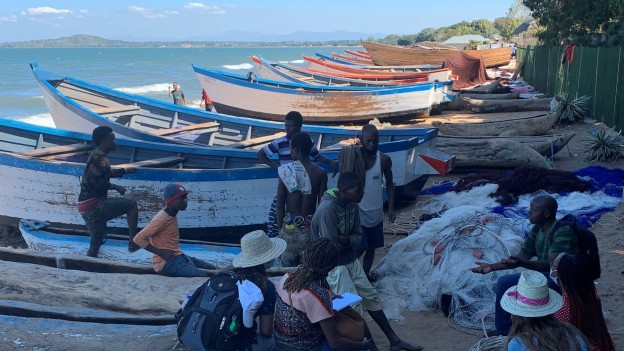
Local research partners will lead major components of data collection and interpretation, a structure grounded in knowledge sharing and collaboration that Gondwe believes is central to the project’s goals.
“Local partners are critical for understanding what value actually looks like in context and for making the findings meaningful,” Gondwe said. “This project brings together collaborators interested in answering the question ‘how do we better communicate the value of small-scale fisheries to policymakers?’ Working directly with our local partners creates a network that will enable us to help answer that question by addressing one of the most significant challenges in small-scale fishery research: data scarcity.”
With planning nearing completion, the project will move into fieldwork in early 2026. Researchers will analyze findings in 2027 and share results through publications and policy outreach, while engagement with governments and stakeholders will continue through 2028.
Ultimately, the project aims to equip policymakers and development partners with evidence that reflects the full value of safety net fisheries. Gondwe also hopes that the research will provide clear, actionable guidance on investments and policies to strengthen these fisheries and ensure their sustainability.
“If we care about food security and livelihoods, these fisheries cannot remain invisible,” Gondwe said. “Evidence is what allows them to be part of the conversation.”