Nitrogen dynamics of various N sources and 15N stable isotope fate in potato plants, from leaf to stem to tuber.
 Print
Print Email
EmailNew graduate student Abbie Guza sets up for success
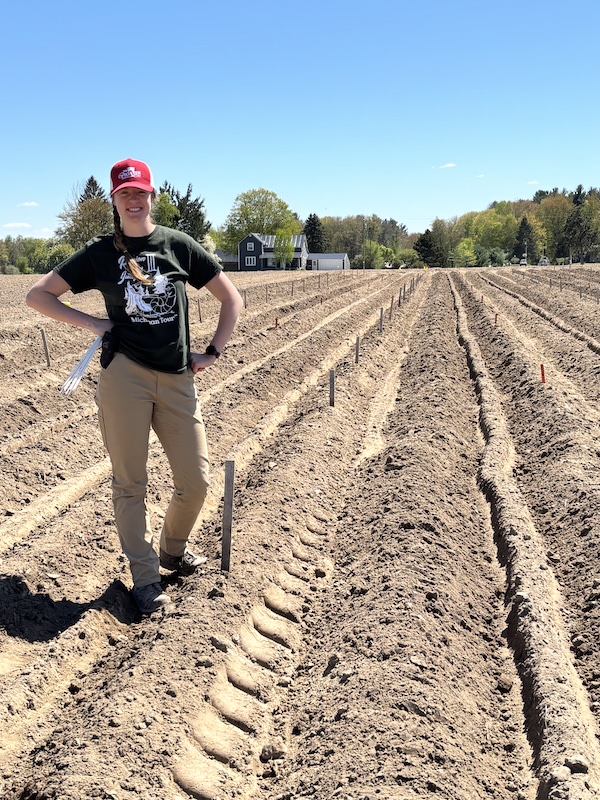
Abbie Guza has found a new interest: field work on the farm. Abbie is very busy this year, graduating with her bachelor’s degree in crop science, becoming a graduate student in crop science, and joining a team that includes Jim Moran and Kurt Steinke, who are taking a very close look at the Nitrogen dynamics of various N sources and 15N stable isotope fate in potato plants, from leaf to stem to tuber. “This is my first time doing agricultural field crop research, “ Abbie said, "and I have been enjoying the work thus far."
In Michigan, potatoes generate more than $300 million annually in cash receipts and support a statewide industry valued > $2.5 billion, yet potato production is notoriously dependent on high nitrogen (N) inputs, with a typical NUE ranging from just 40% to 60%. "This raises an important question, what exactly is happening to all of this nitrogen?” Jim said, “Where is the applied fertilizer actually going—leaves? Stems? Tubers?”
We have a very good idea on how potatoes respond to specific nitrogen application timings and strategies, Kurt said, "but there is a significant knowledge gap on the ultimate fate of these N applications within the plant. Do they ultimately reside in the tuber, aboveground vegetation, or perhaps in the soil? Data will give us a better idea on guiding potato N application strategies moving forward for not only improving production but also tuber quality and ultimately environmental protection."
With increasing pressure on growers to maximize efficiency while minimizing environmental impacts, Jim said "this research could provide valuable insights into improving nitrogen management strategies for one of our most important crops.”
To address these questions, 15N stable isotope tracing will be used to distinguish fertilizer-derived nitrogen from soil-derived nitrogen within the plant-soil system.
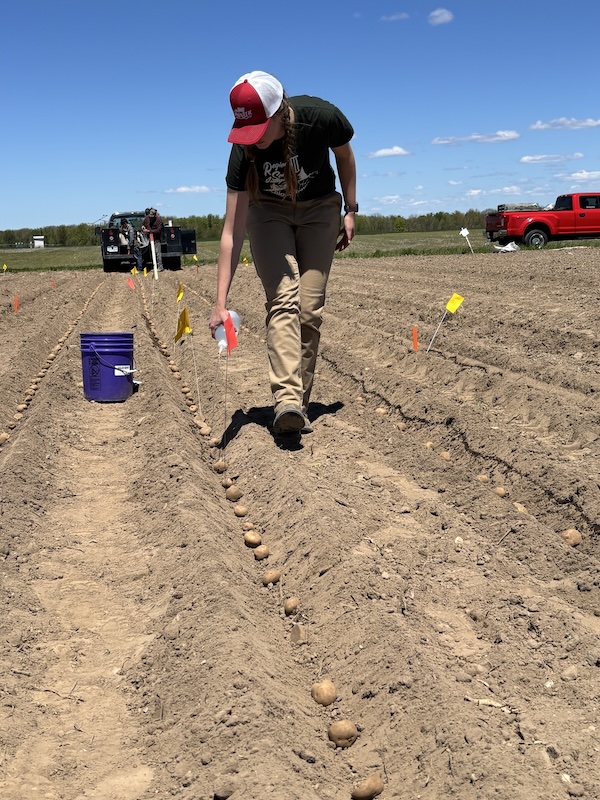
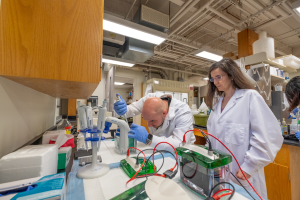
For this project, Abbie will be in charge of all N (including N-15) applications, collecting samples and other data throughout the growing season, analyzing the samples on the IRMS, and assisting with harvest.
Michigan Potato Industry Commission, MSU Project GREEEN, and MDARD Specialty Crop Block Grant Program are all supporters of this study, which aims to provide growers with a clearer understanding of how the plant uses applied nitrogen cycling, recovery, and potential losses in real-world management conditions.
As well, this project right on schedule for training our next generation of soil scientists.
"The rest of my work this summer will involve my other master's project (in sugar beets) and the many other studies in the soil fertility program,” Abbie said. "In those studies, I again, will be assisting with fertilizer applications, collection of measurables, and harvest."
Have you read the entire article? Thank you! Now be the first to send me an email and win a free ice cream from the MSU Dairy Store!