Planning in Action: URP Students at MSU Partner with Michigan Communities to Shape Real-World Solutions
 Print
Print Email
EmailEach spring, students in Michigan State University’s Urban and Regional Planning Practicum step beyond the classroom and into the communities they aim to serve.
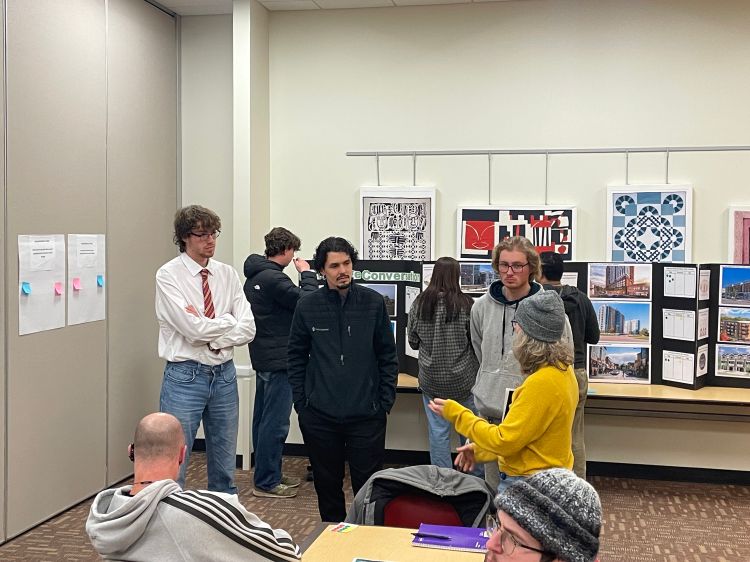
Each spring, students in Michigan State University’s Urban and Regional Planning Practicum step beyond the classroom and into the communities they aim to serve. This practicum experience brings together undergraduate and graduate students to work directly with city partners on pressing planning challenges, producing not hypothetical ideas, but actionable strategies grounded in real conditions, real data, and real relationships.
A defining feature of the practicum is its emphasis on two foundational components: understanding the community through both qualitative and quantitative analysis, and engaging stakeholders throughout the planning process. These components are not separate steps, but core practices that inform every phase of the work, ensuring that all recommendations are grounded in local realities and community priorities.
This year’s practicum engaged three Michigan communities, East Lansing, Grand Rapids, and Flint, each presenting a distinct planning context. Across these projects, students applied spatial analysis, community engagement, and strategic planning to develop solutions that are both visionary and implementable.
Reimagining a Student District in East Lansing
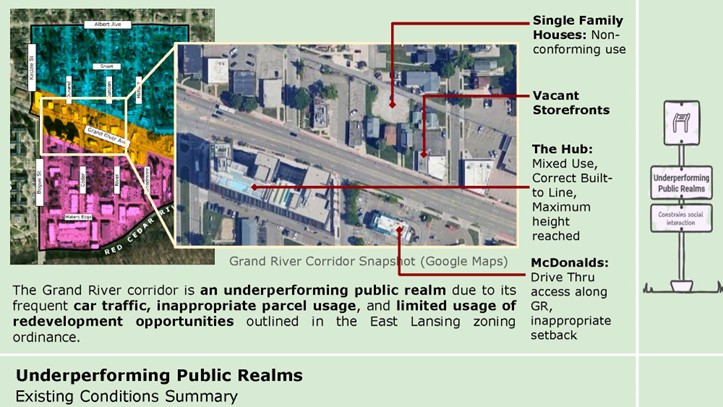
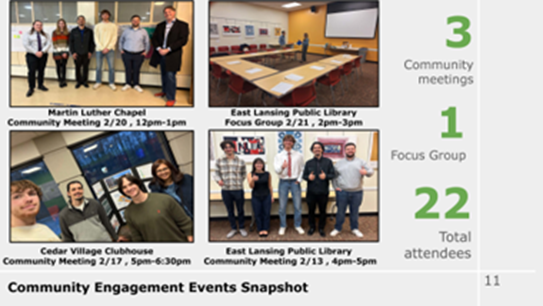
Working with the City of East Lansing, students focused on the East Village area, a key student-oriented district adjacent to campus that is experiencing development pressure, shifting housing demand, and questions about its long-term identity.
The team grounded its work in a detailed understanding of the community. Quantitative analysis included zoning regulations, parcel-level development patterns, and market conditions, while qualitative insights were gathered through conversations with city staff, property owners, and community members. This combined approach helped reveal not only physical constraints, but also the lived experiences and competing priorities shaping the district.
Through ongoing stakeholder engagement, students were able to test ideas, refine assumptions, and align their recommendations with community expectations. The resulting concept plan repositions East Village as a more cohesive, walkable, and mixed-use district, supported by clear implementation strategies.
Advancing Climate Equity Through Bus Stop Design in Grand Rapids
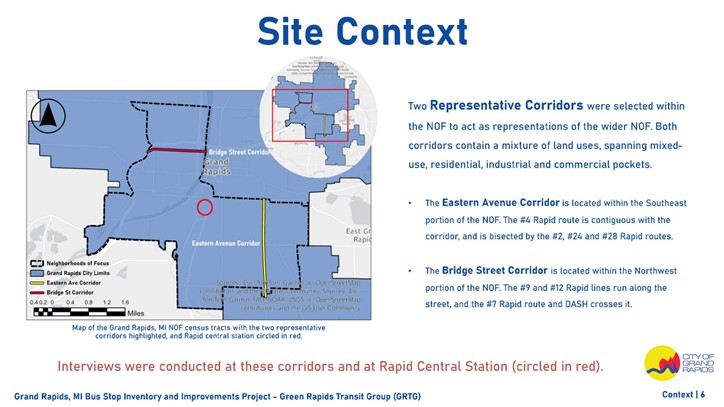
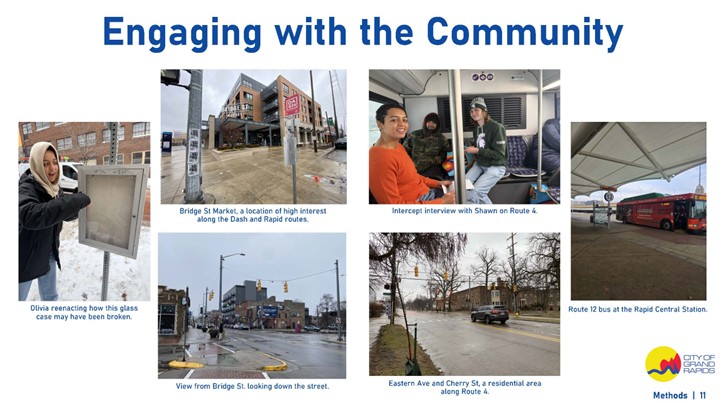
In Grand Rapids, students partnered with the city’s Office of Sustainability to examine how public transit infrastructure can better respond to climate change. The project focused on evaluating bus stops across the city, many of which lack adequate shelter, shade, or seating.
Understanding the community was central to this work. Students combined quantitative data, including transit usage, urban heat patterns, and tree canopy coverage, with qualitative observations from field visits and community context. This allowed them to identify where environmental conditions and social vulnerability intersect.
Engagement with city partners and stakeholders helped ensure that the analysis reflected local priorities and operational realities. This informed the development of the Shelter Priority Index, a decision-support tool that ranks bus stops based on need and impact, along with practical design and policy recommendations.
Supporting Neighborhood Revitalization in Flint
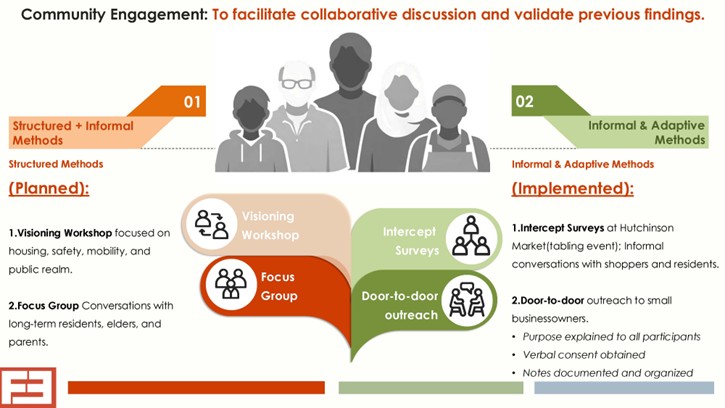
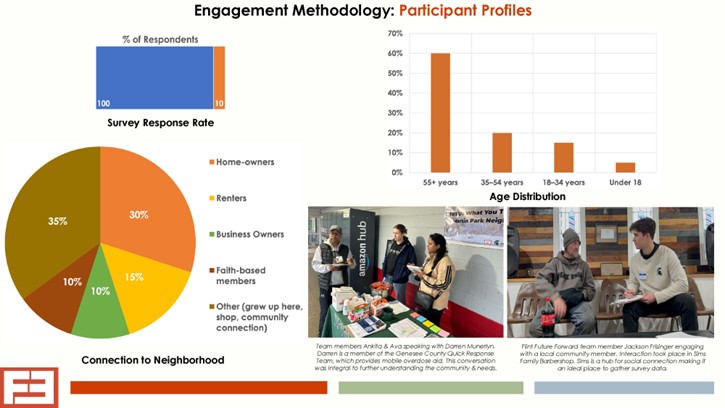
In Flint, students worked with local partners to develop a comprehensive revitalization strategy for the Martin Park neighborhood, an area facing long-term challenges related to housing disinvestment and vacancy.
The project was grounded in a deep understanding of neighborhood conditions. Students analyzed housing data, vacancy patterns, and infrastructure needs, while also engaging directly with residents and community stakeholders to understand priorities, concerns, and opportunities.
This combination of qualitative and quantitative insights ensured that the plan reflects both measurable conditions and lived experience. Stakeholder engagement played a critical role in shaping strategies that are realistic, community-supported, and aligned with local capacity.
The resulting plan focuses on stabilization and long-term growth, supported by clear actions, partnerships, and implementation pathways.
From Classroom to Community Impact
Across all three projects, the integration of community understanding and stakeholder engagement shaped every stage of the planning process. These components ensured that student work moved beyond analysis to produce meaningful, grounded, and actionable outcomes.
Students developed technical skills while learning to navigate real-world complexity, collaborate with stakeholders, and communicate ideas professionally. Each team produced a comprehensive planning report designed to support real decision-making by community partners.
As the semester concludes, students will present their work to community partners and stakeholders, marking a transition from analysis to action. The practicum reflects Michigan State University’s land-grant mission by connecting education, research, and community engagement.