Projected Cost of Production for Soybeans tool for 2026 available
 Print
Print Email
EmailA new cost of production Excel-based tool for soybeans is now freely available online for the 2026 growing season.
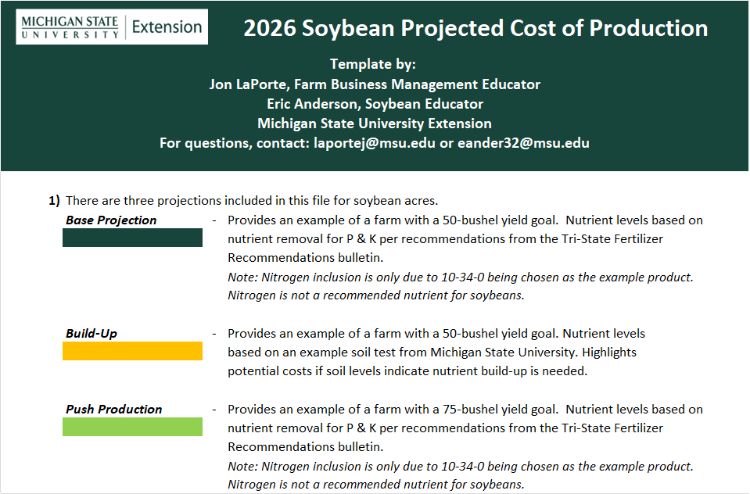
Farm profitability is a bottom-line priority for farmers and is a challenge in any year, but particularly in times when input costs are on the rise and grain prices are flat or falling. When margins are tight, farmers need to know their cost of production to determine what inputs and practices are profitable and which ones may need to be put on hold. The new 2026 Projected Cost of Production for Soybeans tool from Michigan State University Extension is intended to serve as a starting point for discussions on both expected income and expenses for individual farms.
There are three versions of the cost of production tool included in a single downloadable Excel file:
- The Base Projection version provides an estimate for farms seeking to minimize costs without sacrificing yield. It uses a yield goal of 50 bushels per acre with aligning chemical plans and assumes a fertility plan based solely on rate of nutrient removal.
- The Build-Up version is the same base model as the Base Projection but includes added fertility based on sample soil test results that recommend additional fertilizer inputs to build up soil test levels.
- The Push Production version provides an estimate for farms seeking to push maximum yield output. It uses a yield goal of 75 bushels per acre with aligning chemical plans and fertilizer inputs based solely on rate of nutrient removal.
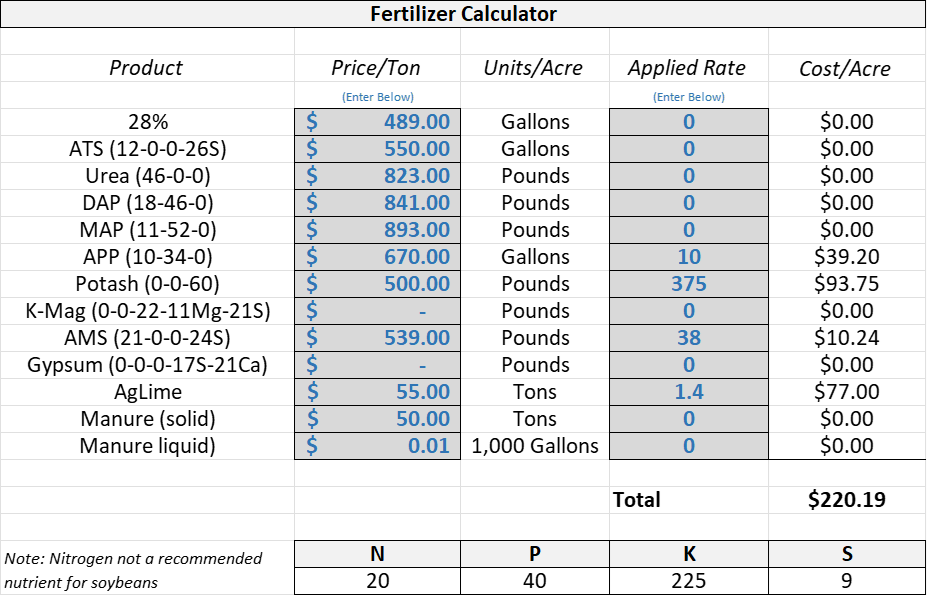
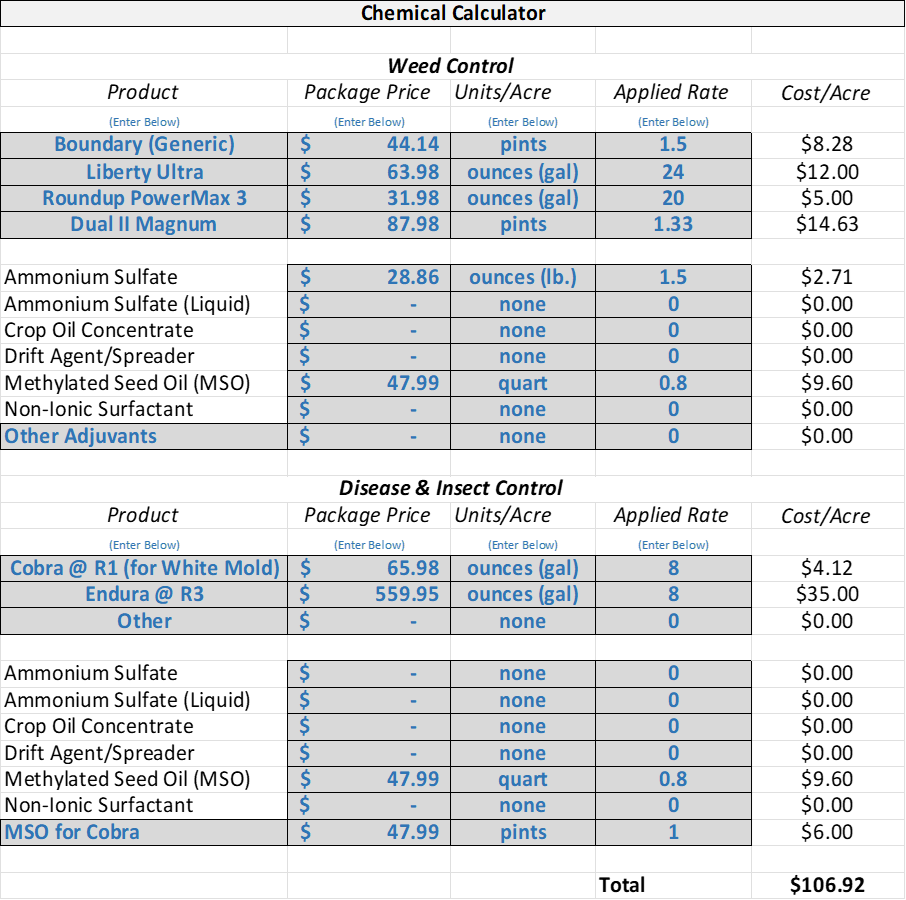
Income values are derived from price projections from composite grain buyers across Michigan and yield data for Michigan from the U.S. Department of Agriculture’s (USDA) National Agricultural Statistics Service (NASS). Expenses are based on the latest Illinois production costs report from USDA’s Agricultural Marketing Service (AMS), compositive prices from Michigan retailers, five-year average benchmark data from the FINBIN database (finbin.umn.edu), and current price trends. The example expenses are based on recommendations from various resources at Michigan State University (MSU). Resources include:
- MSU Weed Control Guide
- Tri-State Fertility Recommendations and supplemental data from msu.edu
- Crop Protection Network
Note: products used in the examples are for illustrative purposes only and not considered an endorsement by Michigan State University Extension.

At the time of publishing, the Base Projection budget estimates a break-even price of $10.90 per bushel or a break-even yield of 49.49 bushels per acre. The Push Production budget estimates a break-even price of $8.98 per bushel or a break-even yield of 61.19 bushels per acre. Individual farm values and break-even values will differ based on production practices, timing of purchases, and/or value of soybeans at time of sale. All versions of the tool can be edited by individual farms to create budgets for their own operations.
The 2026 Projected Cost of Production for Soybeans tool can be found in the cost of production section on the MSU Extension Farm Management website, and a link to the tool will be located on the Michigan Soybean Committee website.