Understanding the Pollinators Supporting Michigan’s Winter Canola Fields
 Print
Print Email
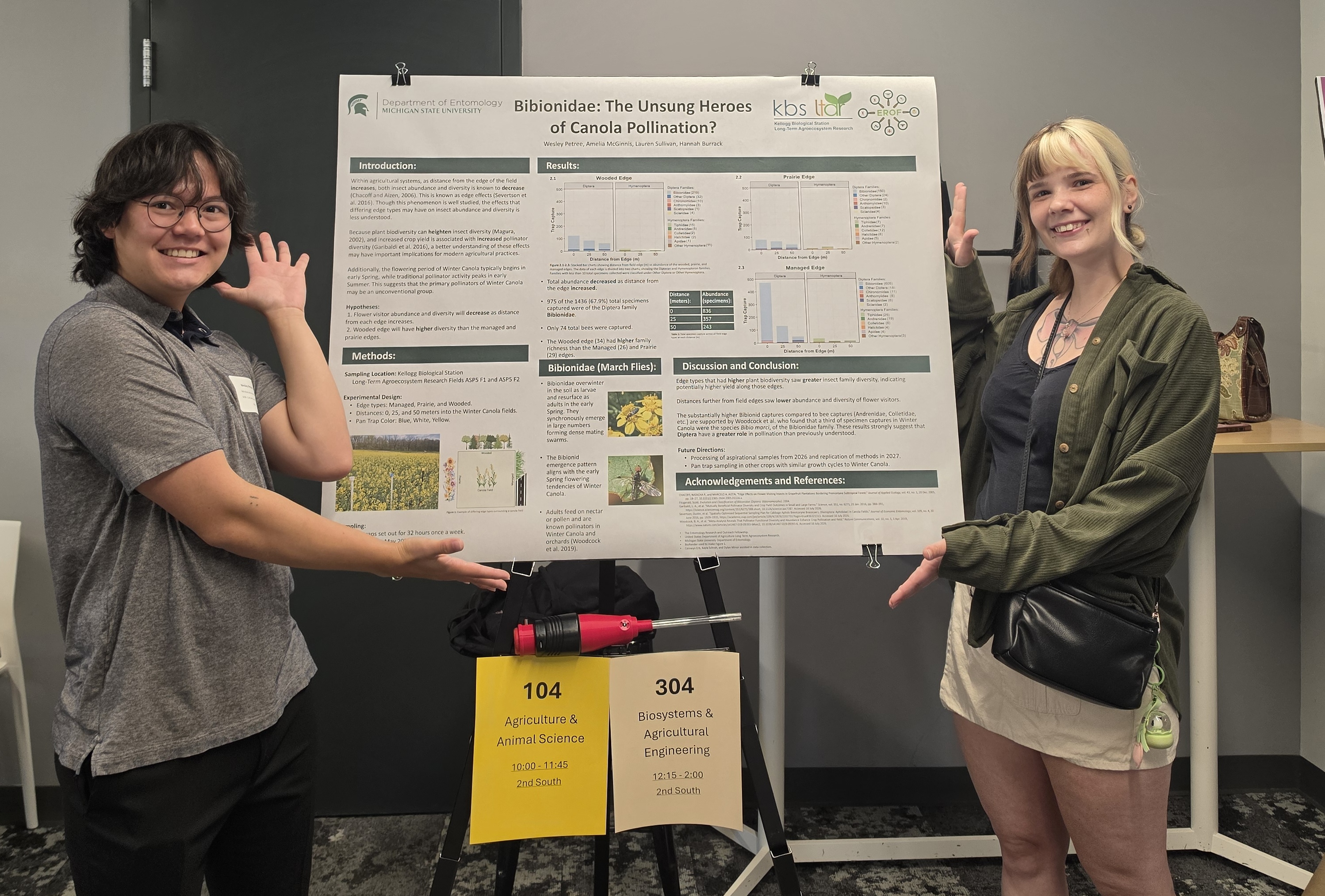
EmailMSU Ph.D. student Amelia McGinnis is investigating how surrounding habitats influence pollinator communities within winter canola fields, providing new insight into the role agricultural landscapes play in supporting biodiversity.
Winter canola is emerging as a valuable addition to Michigan's agricultural landscape. According to Brook Wilke, KBS-LTAR Associate Director for Agronomy and Science, "Farmers are eager to add canola to their crop rotations to diversify income potential and leverage the benefits of another fall-seeded crop."
As a member of the brassica plant family, canola can help break pest, weed, and disease cycles associated with more traditional field crops. It also provides a large and stable market opportunity through Archer-Daniels-Midland (ADM), in Windsor, Ontario, a company that processes and markets agricultural commodities internationally, making it an increasingly attractive option for farmers throughout the state.
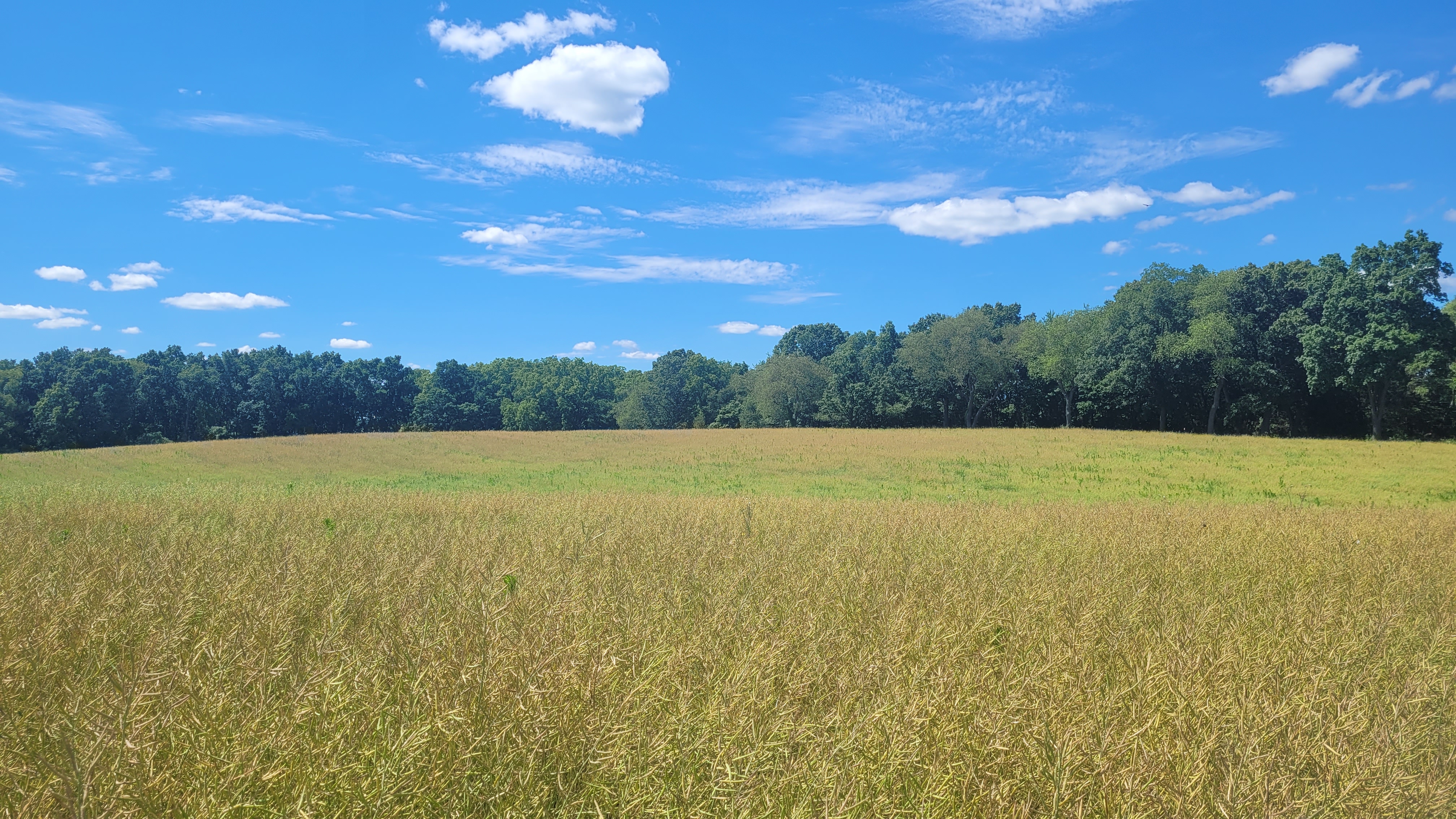
Yet, as interest in winter canola continues to grow, there is still much to learn about how to best establish and manage the crop within Michigan's agricultural systems. According to Wilke, "like any new crop for a region, there have been some kinks to work out with the agronomy. Establishing the crop successfully using no-till practices and managing weeds and insect pests has taken some trial and error." For those interested in learning more, MSU Extension has been sharing agronomic updates on winter canola production and management in Michigan.
At the KBS-LTAR, researchers are working to better understand the many factors that influence winter canola production, including the insects and surrounding habitats that support the crop. Amelia McGinnis, a Ph.D. student in the Department of Entomology, is helping answer some of those questions through her dissertation research in the LTAR program. Her work examines the communities of insects that pollinate canola and explores how surrounding habitats influence their abundance and diversity throughout crop fields.
Specifically, Amelia is studying winter canola fields surrounded by three distinct edge types: wooded edges, managed edges (mowed grass), and prairie edges. By sampling pollinator communities associated with each habitat and examining how insect abundance and diversity change with increasing distance from the field edge, she hopes to determine how surrounding landscapes influence pollinators in agricultural systems.
Canola is a mass-flowering crop that relies on insect pollination. Because winter canola blooms early in the spring and is harvested before peak bee season, Amelia's research offers insight into pollinator communities during a unique period of the agricultural growing season.
Researchers know relatively little about fly pollinators compared to bees and even less about the insects that pollinate winter canola in the Upper Midwest. According to Amelia’s Ph.D. advisor Dr. Hannah Burrack, Professor and Chairperson of the Department of Entomology, "Flies are usually active earlier in the growing season than other insects, and understanding which flies are visiting canola flowers and present during bloom will help us determine how best to support a diverse pollinator community."
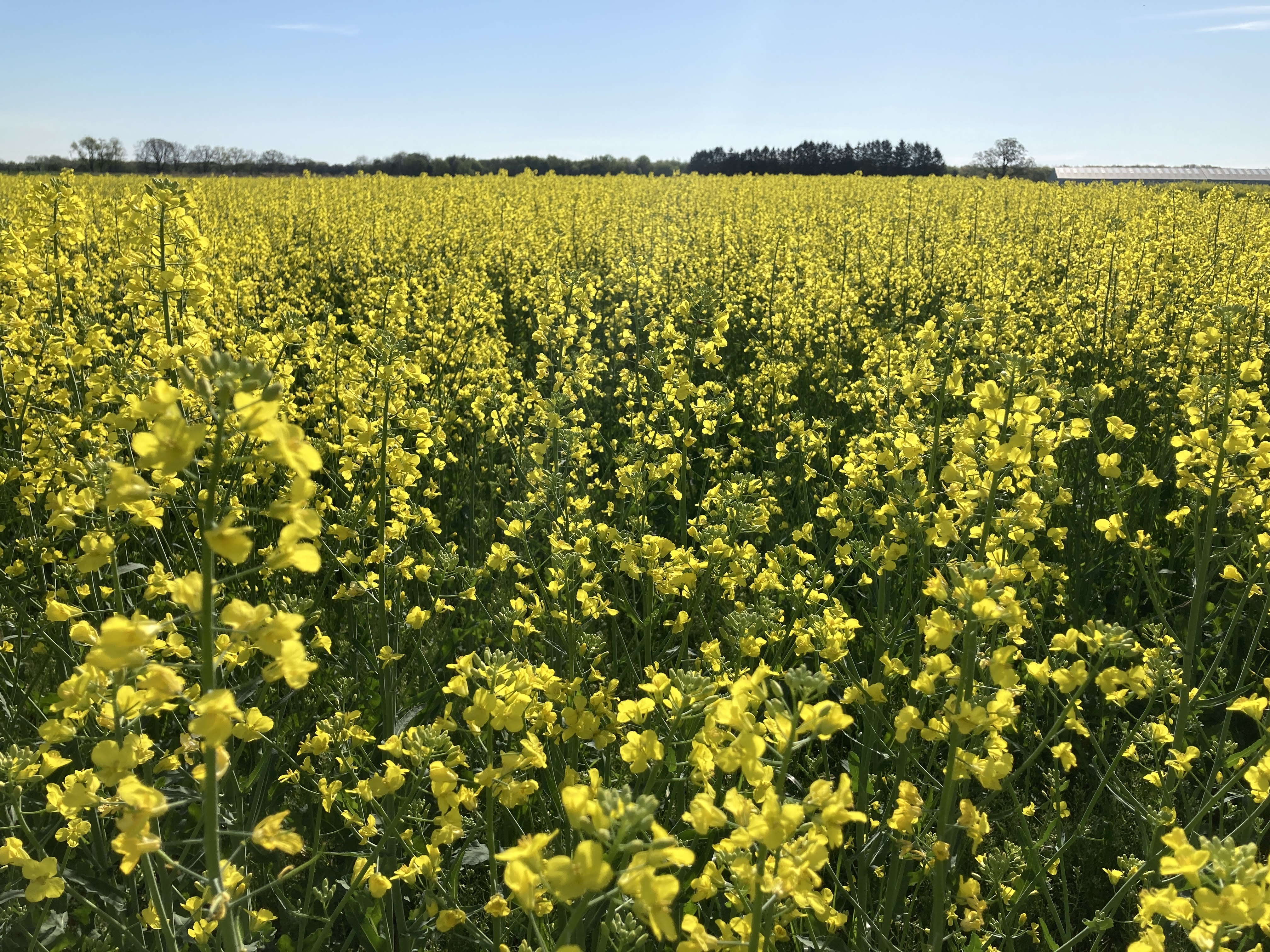
Identifying which insects contribute to winter canola pollination and how different edge habitat types influence these communities can help inform management practices that promote successful pollination and improve yields for growers. It may also demonstrate the value of conserving diverse habitats near crop fields by highlighting how field edges can help connect habitats for pollinators and other organisms while providing other ecosystem services. More broadly, this research contributes to a greater understanding of how agricultural landscapes can be managed to simultaneously support both crop production and biodiversity.
As this is the first field season of her research project, Amelia is currently collecting and processing data. This involves identifying captured insects and counting and weighing canola seed pods. She hopes to begin analyzing data this fall, with the potential to share preliminary findings as results become available. Next summer, she will complete the field sampling phase before analyzing the full data set and reporting her findings.

Throughout her project, Amelia has navigated the uncertainties and complexities that come with ecological research.
“One of the biggest challenges I’ve experienced since beginning my own research project is learning to be patient with the process and remember the bigger picture,” Amelia says. “As the field season has continued, I’ve been grateful that I kept my original sampling design and added additional methods rather than making major changes based on early results.”
While Amelia's current research reflects her growth as an independent scientist, her involvement with the KBS-LTAR program began years earlier. Through MSU's Entomology Research and Outreach Fellowship (EROF), she first joined the LTAR as an undergraduate research fellow working with DeShae Dillard on his community analysis of flies within agroecosystems.
That early experience shaped the way Amelia understood agricultural landscapes and the biodiversity they support. One of the most meaningful moments from her time with the KBS-LTAR program was examining her first malaise trap sample with Dillard.
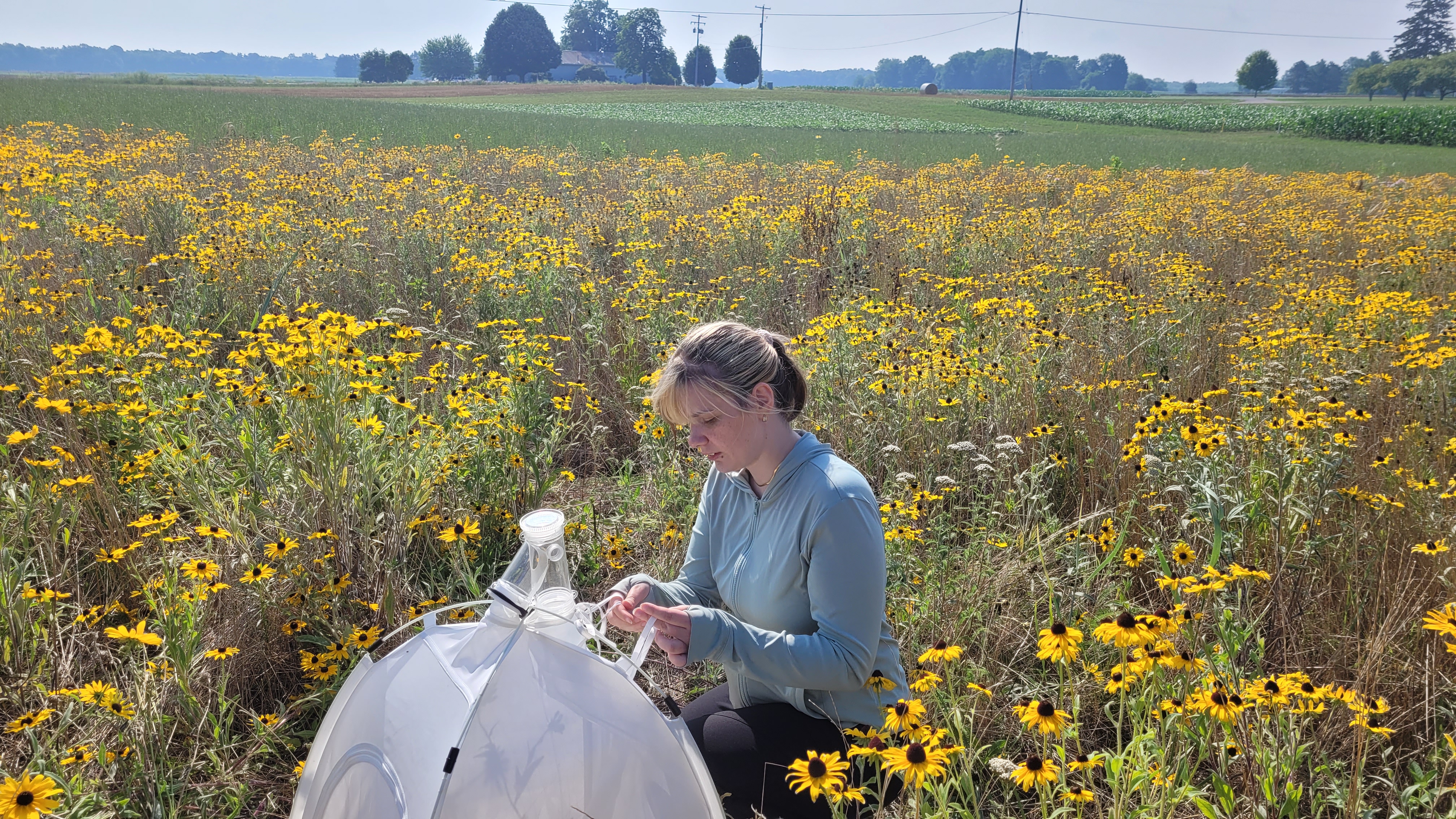
“The sample contained such an incredible diversity of insects, especially flies, that it really opened my eyes to the biodiversity and complexity that exists within agricultural systems,” Amelia recalls.
Dillard has watched Amelia grow as her mentor and, in the years since, as a colleague. "What first stood out to me about Amelia was her independence and her capacity to undertake graduate-level tasks as an undergraduate student," he says. "As a scientist, I have watched her grow and chart her own path, from having no prior background in entomology to leading independent research that bridges her passion for entomology and plant biology."
Now, Amelia finds herself on the other side of that experience as she mentors undergraduate research assistants through the KBS Summer Research Experience for Undergraduates Program (REU) and MSU's Entomology Research and Outreach Fellowship (EROF)—the same fellowship program she participated in as an undergraduate. Amelia's evolution from mentee to mentor underscores the lasting impact of programs like EROF and REU in providing young scientists with the opportunities, skills, and mentorship needed to grow as researchers.