Farm Financial Resiliency Resources
DOWNLOADSeptember 24, 2026 - Michigan State University Extension
 Print
Print Email
EmailFarms that maintain current financial statements, communicate with lenders, and actively manage risk are better positioned to withstand economic stress.
This fact sheet highlights the importance of building financial resilience to manage economic pressures and avoid severe financial distress. Financial resilience can be built through rigorous recordkeeping, financial analysis, risk management, and strategic capital investment triage. By integrating free educational resources with federal support programs, producers can better understand their operational health and make informed decisions to ensure long-term viability. Resources are available through several educational delivery methods, including decision tools, multimedia, written materials, and direct engagement with classes and staff.
Core Financial Health Indicators
Developing complete farm records and financial statements is critical to the financial health of your business. Accurate financial statements not only support informed decisions, but they can also improve profitability by identifying areas for improvement and show lenders and other stakeholders your financial viability. Strong financial records can strengthen your relationship with your lender in a variety of ways:
- Good recordkeeping shows organizational and management skills that lenders are looking for.
- Financial statements can provide evidence that your operation can generate enough cash to repay loans.
- Cash flow projections for both year-end and the upcoming year facilitate discussions with lenders and help plan for potential cash flow issues.
- Being able to read your financial statements and explain the results and variances can build your lender’s confidence in your operation’s potential success.
Financial analysis combines your financial statements and production information to show a more complete financial picture. Evaluating the farm’s profitability and repayment capacity helps producers establish a clear baseline of their operation's current standing and helps the operation become more secure during difficult economic periods. Lenders are more likely to approve a loan for an operation that can demonstrate successful financial management and stable financial health.
- MSU TelFarm program offers recordkeeping support and assistance, as well as complete financial analysis
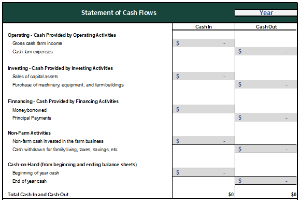
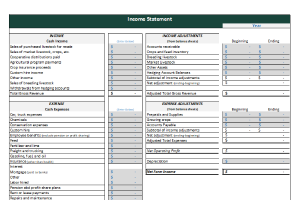
- Farm Financial Statement templates, spreadsheet tools, videos and courses
- Accounting Software Options for Farmers fact sheet
- Cash Flow Estimator spreadsheet tool
- Enterprise Budgeting spreadsheet tools
Managing Lender Relationships and Requirements
Consider your lender as a stakeholder in your business and be able to share your story with them. Learn to read and discuss your financial statements. Explain why your farm operating results have changed or what you plan to do to improve operations. Lenders who know a farmer's operation, management style, and financial history are often more comfortable extending credit when needed. It can help to know ahead of time what information they may need so you can provide the required documentation and stay informed about current programs.
Understanding Loan Programs: The Farm Service Agency (FSA) may offer loans in situations that commercial lenders cannot serve. Producers should understand the differences between standard and emergency loan programs. Specific requirements for creditworthiness, collateral, and management experience may vary across loan types. Check with your local FSA office and learn about options on their website.
FSA Eligibility: It is vital to ensure eligibility with the Farm Service Agency (FSA) to access disaster-related loans or other specialized programs that they offer.
Supporting Materials: To access disaster loan programs, producers must provide documentation of disaster-related losses, a farm operating plan, and required financial information to their local FSA office.
Negotiation: When financial pressure mounts, farmers may need to negotiate directly with lenders to manage debt payments.
Bulletins from MSU Extension
Strategic Planning and Capital Triage
Capital Investment Triage: Farms may need to prioritize or triage their farm’s capital investments in times of economic struggle. Triaging capital investments focuses on identifying critical equipment needed to keep the farm productive, while delaying other upgrades or purchases to pursue farm growth. This helps to preserve cash and maintain liquidity.
Repairs vs. Debt: Farmers must carefully assess whether to prioritize capital repairs or take on new debt payments. Capital repair costs may become equal to or greater than the debt payment for replacements. However, the decision goes beyond the difference in outgoing cash flow and the ability to afford a loan. You also need to consider how the decision affects the farm's ability to maintain adequate working capital, which can be limited by increased debt and may then reduce earning potential. Which option will most improve the farm’s financial position and earning capacity?
Partial Budgeting: From a profitability standpoint, partial budgets can allow producers to compare different financial scenarios, such as the cost of repairing existing capital assets versus replacing them entirely. Partial budgets can evaluate the financial impact of changes to a farm's operation, such as new or lost revenue and added or decreased costs that would be associated with the change. This can be compared to the scenario of not changing anything. A common example is hiring a custom harvester or repairing a broken combine.
Questions to Ask Yourself before Making a Capital Purchase
- Is it essential to keep the operation running?
- Will it increase profitability or reduce costs?
- What effect does delaying the purchase have?
- Can existing equipment be repaired instead?
- Will the investment’s return cover the financing cost?
- Is it a “need” or a “want”?
- Partial Budget Worksheet
- Partial Budgets Explained (Penn State )
- Iowa State University Ag Decision Maker
Risk Management and Revenue Protection
Combining risk management tools can improve decision-making, stabilize cash flow, and enhance the overall financial resilience of your farm operation.
Marketing: Use grain and livestock marketing resources to help manage price uncertainty. The MSU Extension website offers articles, spreadsheet templates, tools, and courses to help you learn about grain marketing. Active grain and livestock marketing improves lender confidence that producers can recover from adverse events.
- Grain and livestock marketing resources
- Commodity Challenge simulation game
Insurance: Sign up for email or text reminders or use the USDA Risk Management Agency app to learn more about supplemental area-based insurance, such as SCO (Supplemental Coverage Option) and ECO (Enhanced Coverage Option). These can provide critical payments during yield or revenue losses.
- Farm Business Revenue Insurance resources
- SCO Insurance Program and its use in Michigan
- RightRisk newsletters, articles, and tools
- USDA email or text reminders
- USDA Risk Management Agency Reminder Tool
Relief Programs: Monitor eligibility for Farm Service Agency (FSA) or other disaster loans or economic relief payments. Eligibility often depends on your participation in USDA programs, your ability to meet reporting and application deadlines, and your status as a registered producer with a Farm Number. Eligibility is not usually automatic and requires crop acreage reports, program enrollment, and compliance with FSA rules. Missing a deadline can disqualify you from that year’s benefits. For the most accurate information, verify with your local FSA office.
- Beginning Farmer and Rancher Loans
- Emergency Farm Loans
- Farm Service Agency programs
- Introduction to the application package for USDA FSA programs
Government Program Payments: Maximize revenue through programs like PLC (Price Loss Coverage) and ARC-CO (Agricultural Risk Coverage-County) to provide a financial cushion that supports loan repayment capacity. Producers can use current market year average price data to forecast estimated payments from PLC and ARC-CO programs. Understanding these projections allows farmers to factor potential government support into their long-term cash flow and debt-repayment plans.
Addressing Severe Financial Distress and Farm Stress
In some situations, financial challenges can become severe enough that bankruptcy could be considered. While a last resort, bankruptcy does not mean the farm has failed. Rather, it can be an opportunity to reset and restructure. When a farm owes more than its assets are worth and cannot meet debt payments, Chapter 12 bankruptcy may create a court-protected plan to pay down debt over time. Chapter 12 was created to help farmers keep their farm operational while restructuring their debt. This bankruptcy option reflects the realities of farming, removes many barriers, and is less complicated and less expensive than Chapter 11, which is better suited to larger corporations.
Farming is one of the most demanding occupations because of the stress and unpredictability caused by economic instability, high costs, and uncontrollable factors such as weather and market prices. Physical danger, long hours, and work-life balance can further increase the stress that farmers experience. Whether farm stress stems from financial distress or everyday issues, free resources and support are available to recognize the human element of financial resilience.
- Connect with a teletherapy professional
- Read the latest farm stress news from MSU Extension
- Free online farm stress course
Final Thoughts and Other Resources
During challenging periods of tighter credit, it becomes increasingly important for producers to understand their financial position, carefully evaluate major expenditures, and implement strategies that strengthen cash flow and resilience. Michigan State University Extension can help farmers navigate these challenges by providing educational resources and decision tools. Through workshops, fact sheets, and one-on-one educational support, MSU Extension helps producers make informed decisions that improve profitability, manage risk, and position their operations for long-term success.