Horse Showmanship Guide
DOWNLOADApril 30, 2026 - David Lindsay, Michigan State University Extension and Dr. Karen Waite Warner, Department of Animal Science at Michigan State University
 Print
Print Email
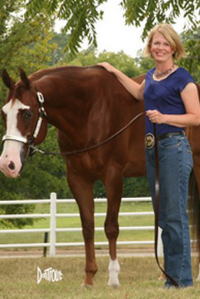
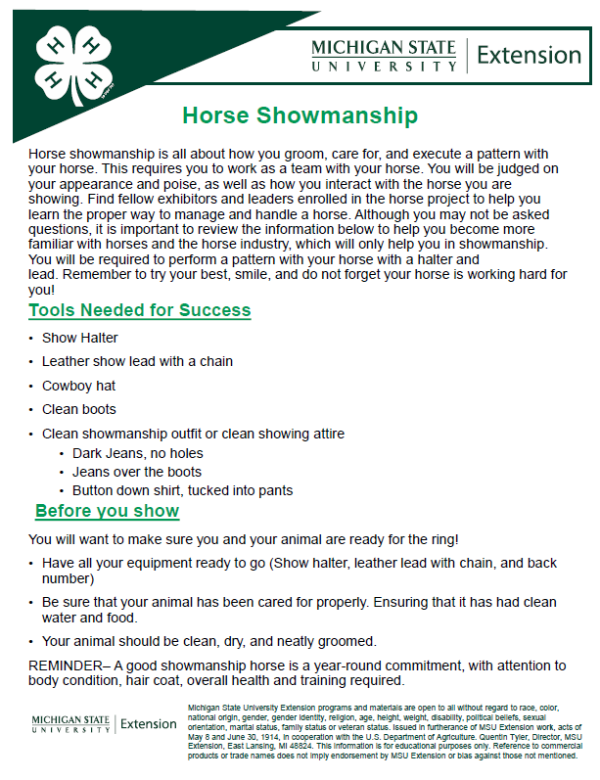
EmailHorse showmanship is all about how you groom, care for, and execute a pattern with your horse. This requires you to work as a team with your horse. You will be judged on your appearance and poise, as well as how you interact with the horse you are showing. Find fellow exhibitors and leaders enrolled in the horse project to help you learn the proper way to manage and handle a horse. Although you may not be asked questions, it is important to review the information below to help you become more familiar with horses and the horse industry, which will only help you in showmanship. You will be required to perform a pattern with your horse with a halter and lead. Remember to try your best, smile, and do not forget your horse is working hard for you!
Tools Needed for Success
- Show Halter
- Leather show lead with a chain
- Cowboy hat
- Clean boots
- Clean showmanship outfit or clean showing attire
- Dark Jeans, no holes
- Jeans over the boots
- Button down shirt, tucked into pants
Before you Show
You will want to make sure you and your animal are ready for the ring!
- Have all your equipment ready to go (Show halter, leather lead with chain, and back number)
- Be sure that your animal has been cared for properly. Ensuring that it has had clean water and food.
- Your animal should be clean, dry, and neatly groomed.
REMINDER– A good showmanship horse is a year-round commitment, with attention to body condition, hair coat, overall health and training required.
Handling, Posing, and Examination of Horses
Horse showmanship will require a halter, lead, and positive attitude. When leading the horse, be sure to hold only on the leather show lead, never the chain piece going under or over the nose. In the instance of showing a horse that is not yours, be sure to talk with the owner about best practice to showing their animal. Once you have reviewed the pattern and are ready for show, follow the steps and guidelines below:
- Hold your lead rope with your right hand next to the chain but still on the leather. Left hand has the excess leather folded in it.
- Enter the ring with your horse on your right side, keeping your body position between the horse's head and shoulder.
- Follow with one horse length (app. 8 ft.) between your horse and the one ahead of you.
- Line up with at least 10 ft. between the other horses.
- Always walk, trot, turn, or back on the left side of your horse. You should be about at the middle of the neck. Look where you are going, not at the horse or the ground. Walk at a brisk pace. Your hand needs to be quiet and gentle, do not jerk or pull on the halter.
- To stop your horse, simply stop walking, lift your hands slightly and say “whoa”.
- Set up your horse while keeping a close watch on the judge, moving out of the line of vision as she walks around your horse. To set up your horse take your right hand, with the lead, and gently push towards the hoof you want the horse to move. The horse’s legs should look like the legs of a table when it is set up.
- Keep your horse set up and alert, but do not draw attention to yourself.
- Depending on pattern or when instructed, walk your horse directly to the judge and stop 5 to 10 feet in front of her/him.
- When positioning or backing your horse, it is important to stand in a safe location. As described in the Michigan 4-H Horse and Pony Show Rules and Regulations, an exhibitor should only be standing in areas A or B, as seen in the diagram on the next page.
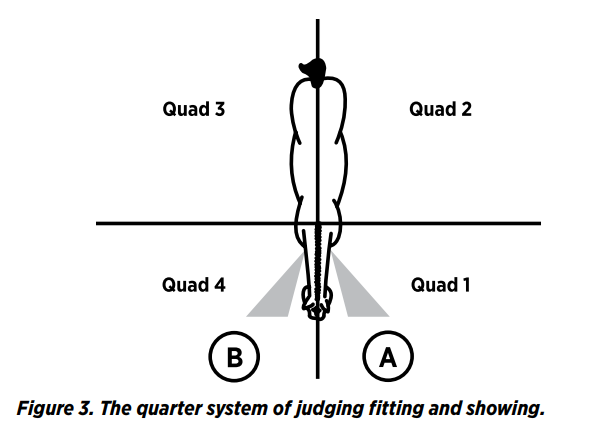
Diagram from the Michigan 4-H Horse and Pony Rules and Regulations.
It is important to always have your animal between you and the judge, never standing in the same quadrant as the judge. Follow the chart below to see where the exhibitor should stand depending on where the judge is standing.
| Judges Position | Exhibitors Position |
| Quad 1 | B |
| Quad 2 | A |
| Quad 3 | B |
| Quad 4 | A |
The judge will walk around for an inspection. You need to move to the other side when the judge is at the nose, withers, tail, and withers again.
- To turn your horse, you only need to raise your hand slightly and walk into the horses’ head and they will move away from you once they have been trained to do so.
- To trot a horse, remain on the left side, and break into a slow jog and your horse will trot alongside you. Do not look at the horse, look where you are going and at your judge.
- Remember to practice your pattern ahead of the class, if there is one. Otherwise, follow instructions of the judge or ring steward.
- Keep showing your horse until you leave the ring!
- Congratulate yourself and thank your horse for a job well done.
Showmanship Questions and Answers
Questions:
- What is the normal body temperature of a horse?
- What color is your horse?
- What is colic?
- What is a Mare?
- What is a Stallion?
- What breed is your horse?
- What is the gestation period of a horse?
Answers
- Approximately 100 degrees Fahrenheit (99-101 degrees F)
- Answers may vary. Review names of colors and be prepared to demonstrate your knowledge on this topic.
- Colic is a stomachache. It can be caused from feed, water, heat, and medications.
- A female horse
- An intact male horse
- Answers may vary. Be sure to ask the owner of the horse and be able to answer any breed questions on horses.
- About 11 months.
Additional information on Showmanship and other Horse showing rules see the Michigan 4-H Horse and Pony Rules and Regulations.