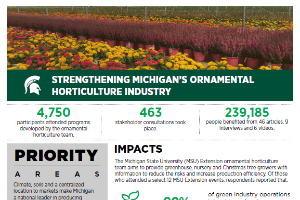
Strengthening Michigan's Ornamental Horticulture Industry
DOWNLOADAugust 27, 2026 - Michigan State University Extension
 Print
Print Email
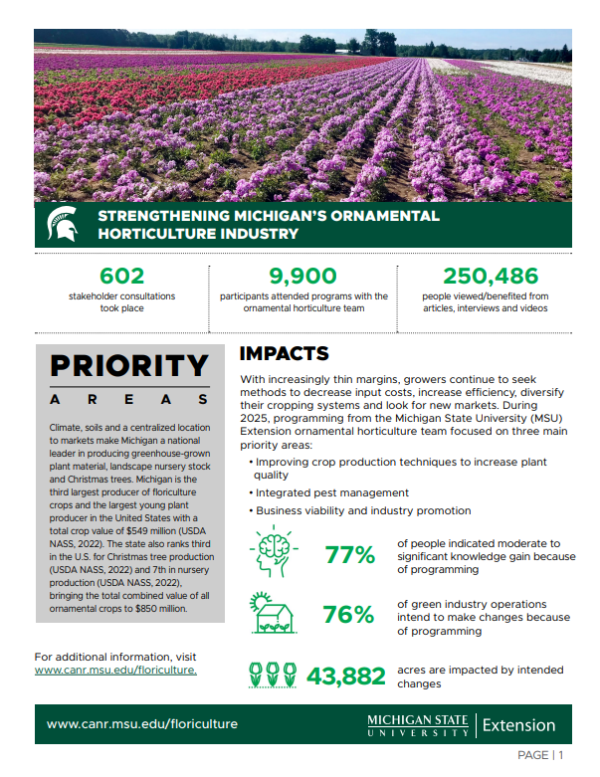
Email- 602 stakeholder consultations took place
- 9,900 participants attended programs with the ornamental horticulture team
- 250,486 people viewed/benefited from articles, interviews and videos
Priority Areas
Climate, soils and a centralized location to markets make Michigan a national leader in producing greenhouse-grown plant material, landscape nursery stock and Christmas trees. Michigan is the third largest producer of floriculture crops and the largest young plant producer in the United States with a total crop value of $549 million (USDA NASS, 2022). The state also ranks third in the U.S. for Christmas tree production (USDA NASS, 2022) and 7th in nursery production (USDA NASS, 2022), bringing the total combined value of all ornamental crops to $850 million.
Impacts
With increasingly thin margins, growers continue to seek methods to decrease input costs, increase efficiency, diversify their cropping systems and look for new markets. During 2025, programming from the Michigan State University (MSU) Extension ornamental horticulture team focused on three main priority areas:
- Improving crop production techniques to increase plant quality
- Integrated pest management
- Business viability and industry promotion
- 77% of people indicated moderate to significant knowledge gain because of programming
- 76% of green industry operations intend to make changes because of programming
- 43,882 acres are impacted by intended changes
Improving Christmas Tree Production Through MSU Extension Winter Webinar Series
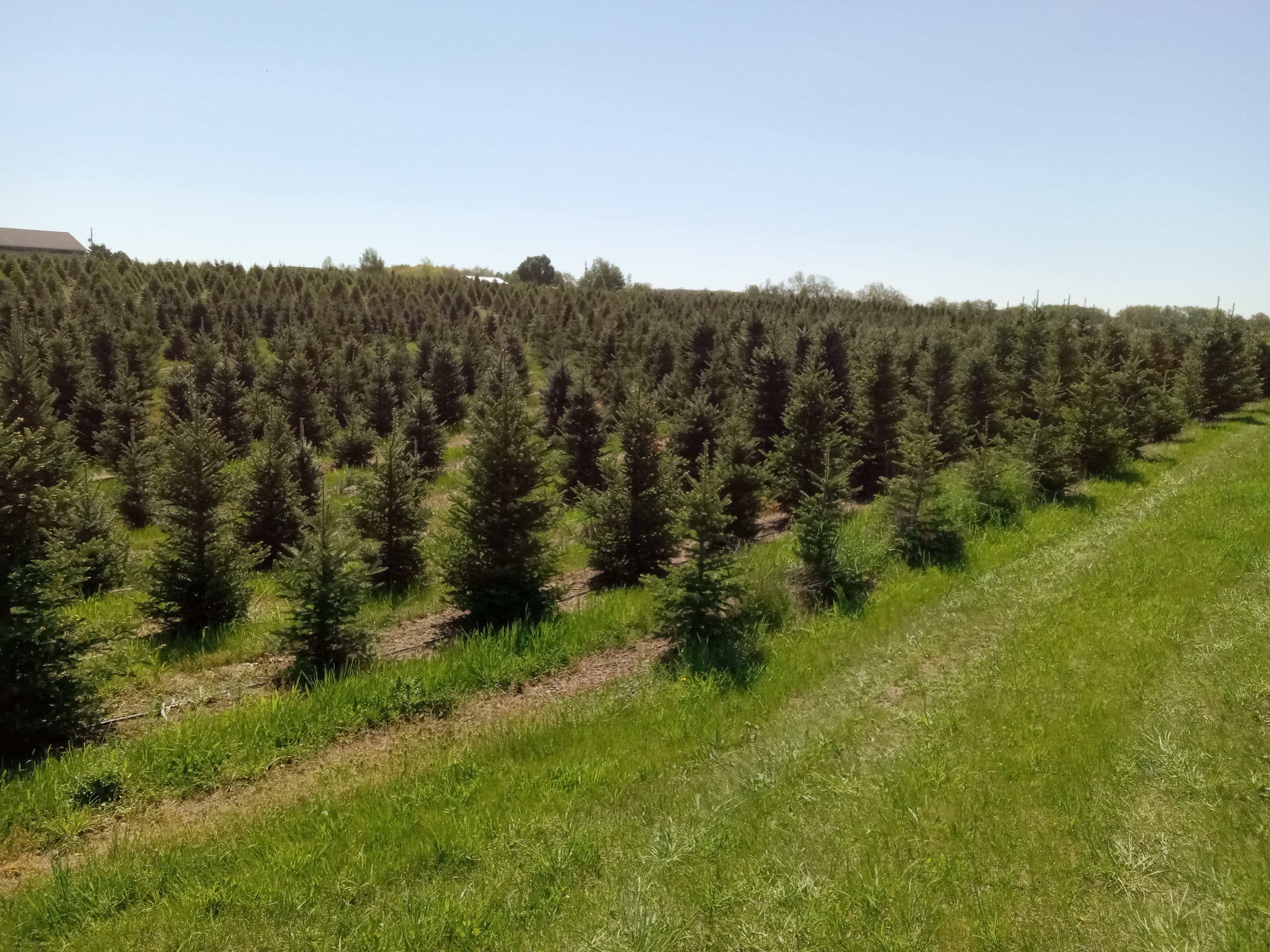
Christmas tree growers across Michigan manage thousands of acres under increasingly complex production conditions, including changing climate patterns, nutrient limitations, pest pressures and shifting consumer expectations. Producers seek reliable, research-based guidance to improve tree quality, adapt management practices and strengthen farm viability. The MSU Extension Christmas tree team developed a webinar series in 2025 to deliver accessible, timely education directly to growers operating in diverse environments. The multisession series focused on irrigation, nutrient management, insect and pest management, climate-responsive production strategies and Extension-developed tools.
The program reached 567 participants from 34 states and six Canadian provinces, collectively representing 86,472 acres of Christmas tree production. Short-term outcomes were collected through a post-series survey, completed by 74 growers representing 26,852 acres. Longterm impacts were measured through another follow-up survey distributed to all registered participants.
Ninety-seven percent of short-term survey respondents reported learning new information from the series, and 71% planned to make management changes in 2025. Survey respondents rated webinar sessions as beneficial to extremely beneficial across all topics, with nutrient management receiving the highest rating at 85%. Respondents also reported increased confidence in applying irrigation (29%), nutrient management (80%), climate-responsive practices (68%) and pest management strategies (61%).
Feedback from participants further highlight the value of the series for growers:
"Excellent webinars with useful information and great presenters." Webinar series participant
"These webinars are so very important to us. Thank you for making them possible." Webinar series participant
"Your webinars have helped us grow better quality trees." Webinar series participant
MSU Extension Supports Emerging Agricultural Industries

Small farms are a vital part of Michigan’s economy, contributing to the social and economic strength of communities across the state. The MSU Extension ornamental horticulture team recognizes that helping these farms succeed strengthens local businesses, supports job creation and builds more resilient regional economies.
Specialty cut flower production continues to grow as an emerging agricultural sector in Michigan, now ranking eighth in the nation with over $10 million in annual sales (USDA NASS, 2022). Many new growers enter the industry without formal agricultural training, creating a clear need for accessible, practical education.
To meet this need, MSU Extension has developed a coordinated set of programs to support growers at all stages. The Specialty Cut Flower Farm Tour Series offers on-farm learning experiences where participants engage directly with successful growers and Extension educators. Across the 2024 and 2025 seasons, 88 growers from 31 Michigan counties and four states participated in these programs, with 89% reporting an increase in their cut flower know-how and 87% indicating plans to adopt new practices.
In addition, MSU Extension delivers educational sessions at the Michigan Greenhouse Growers Expo, reaching 546 cut flower farmers over the past two years. These sessions connect producers with university researchers and industry experts on key topics related to production, pest management, soil health and business operations. An overwhelming 96% of participants reported that these sessions were helpful to their operations.
Earlier efforts, such as the Bloom Zoom webinar series, further expanded access to foundational knowledge for beginning growers, demonstrating the team’s ongoing commitment to meeting emerging needs.
By combining research-based information with real-world applications, MSU Extension is helping Michigan’s specialty cut flower growers build profitable, sustainable businesses that strengthen both local communities and the state’s agricultural economy.
"I'm also on sandy soil, so their experience with pulse watering and irrigating peonies was helpful." Farm tour series participant
"I learned so much. Please keep doing these." Farm tour series participant
"Appreciate the farmer's real-world experience and lessons." Farm tour series participant
"Thank you! Excellent tour and information." Farm tour series participant

Biological Control Course Increases Greenhouse Grower Knowledge and Improves Pest Management Practices
Greenhouse growers manage complex pest pressures that threaten crop quality and profitability. Many producers lack accessible training on biological control strategies that reduce reliance on chemical pesticides and support long-term crop health. MSU Extension and Kansas State University developed the Biological Control for Greenhouse Growers course to address this need and strengthen growers’ ability to implement effective, sustainable pest management practices across diverse production systems.
During winter 2025, 18 people enrolled in the English version of the course and one person enrolled in the Spanish-language version. Participants collectively managed 3.88 million square feet of ornamental plant production, equivalent to 89 acres. The course provided foundational and advanced instruction on biological control agents, scouting, banker plant systems and key factors that influence successful implementation.
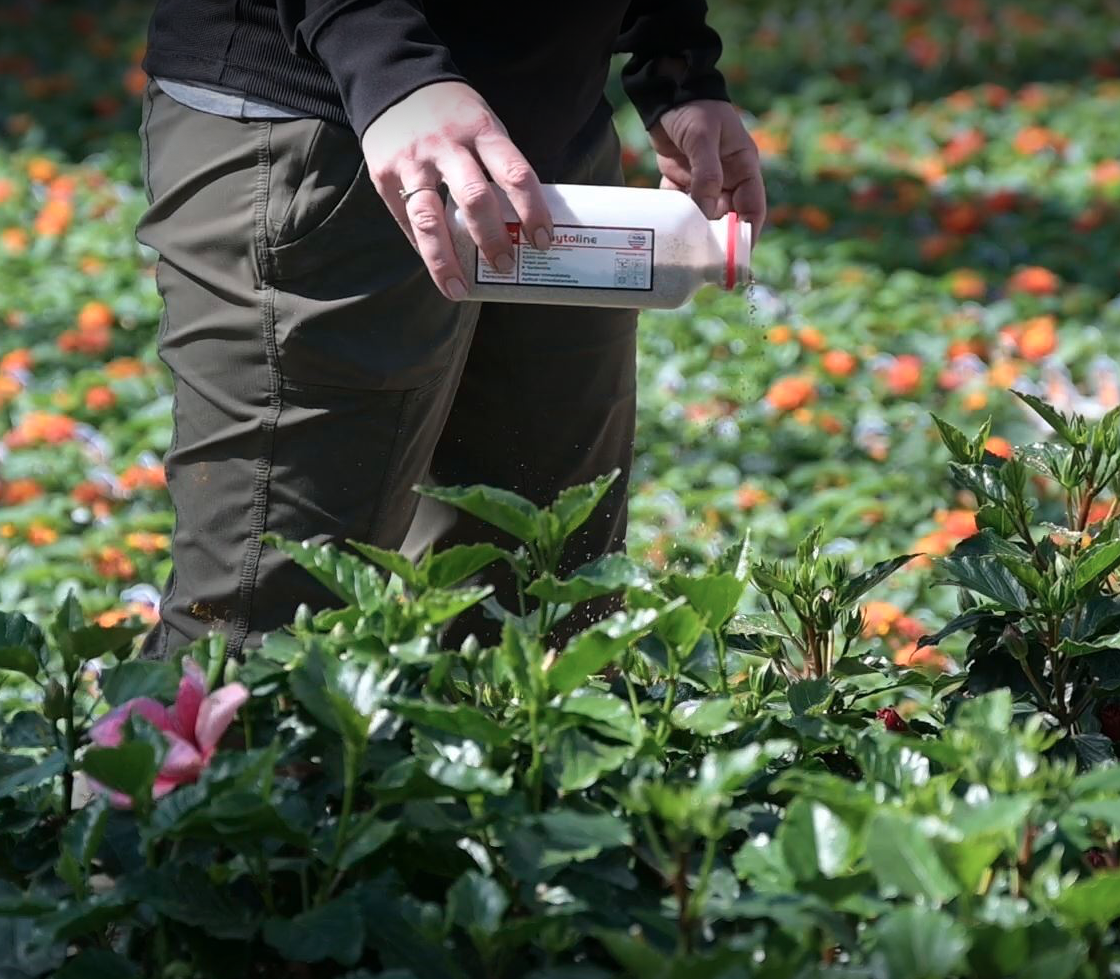
Participants demonstrated clear knowledge gains, with scores on average increasing from 68% to 94% among those who completed both assessments. One grower, representing 435,600 square feet of production, reported plans to improve scouting and biological control release timing within the next year. These changes are expected to help reduce plant losses, protect crops from pest damage and strengthen long-term pest management programs.
References
U.S. Department of Agriculture (USDA) National Agricultural Statistics Service (NASS). (2022). Survey 2022. https://quickstats.nass.usda.gov/.