


Senior Design 2026
BE Showcase (Hybrid) - April 24, 2026, 1:30 pm
116 Farrall Hall or click to join https://msu.zoom.us/j/97714737403
Click for pdf program
A Showcase of the Program and Students
April 24, 2026
Presented by
Faculty and Students in the Biosystems Engineering Program
College of Engineering & College of Agriculture and Natural Resources
Michigan State University
Design Day Poster Session 1st floor Engineering Building
- 8:00-10:00 am
Individual Senior Design Team Evaluations (Industry Advisory Board, Industry Evaluators, and Project Sponsors by Invitation Only)
- 10:30-11:00 am & 11:15-11:45 am Individual Senior Design Team Evaluations
BE 230 Poster Session 1st floor Farrall Hall
- 12:35-1:30 pm
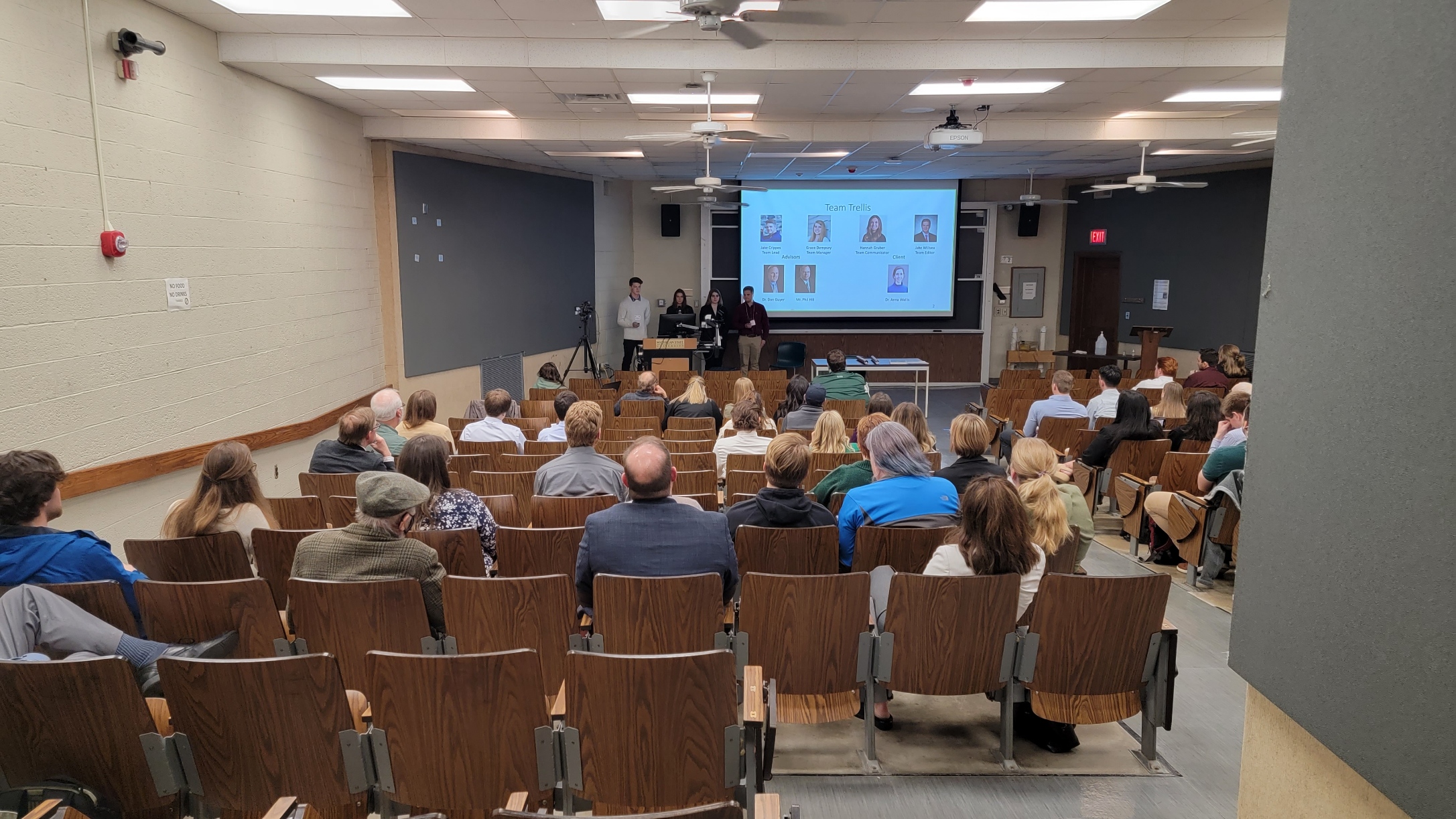
Hybrid Senior Design Team Presentations (Open to all – no registration required)
- 1:30 Team Tillamook - Tillamook (under Non-Disclosure Agreement) - Ensuring Ice Cream Quality Through Palletization Management - Katherine Heinecke, Kealey Kolp, Summer Luick, & Carter Ostrowski - Dr. Kirk Dolan
- 1:40 Team MSU Bioretention - MSUInfrastructure, Planning, and Facilities - Restoration and Improvements of MSU Stormwater Bioretention Basin - Miles Morman, Neha Patel, Joseph Pelkey, Megan Ransler, & Ryan Wrublewski - Dr. Dawn Dechand & Dr. Subhasis Giri
- 1:50 Team Soldan Paw Patrol - Ingham County Parks - Addressing Harmful Algal Blooms in the Soldan Dog Park Pond - Truman Bauer, Cody Fisher, Ethan Hartwig, & Drew Kraemer - Dr. Dawn Dechand & Dr. Subhasis Giri
- 2:00 Team Perrigo - Perrigo (under Non-Disclosure Agreement) - Automation of COD and TOC Waste Stream Monitoring for Proper Disposal - Luke Caruso, Varshitha Korivi, Evan Malbouef, & Sasha Stoyanovich - Dr. Yan "Susie" Liu
- 2:10 Team Consumers Energy - Consumers Energy (under Non-Disclosure Agreement) - Evaluating the Feasibility of Corn Stover-Manure Anaerobic Digestion - Patrick Brennan, Josie Cayen, Ava Chavez, & Emily Woodyard - Dr. Chris Saffron
- 2:20 Team Sustainable Organic Digester - Henry Ford Health (under Non-Disclosure Agreement) - Supporting Sustainability: Organic Patient Food Waste Digester for Henry Ford Health – Destination Grand - Eliza Ajro, Josh Hirschenberger, Defne Karalar, Connor Moritz, & Maria Sufyan Abbasi - Dr. Wei Liao
- 2:30 Break
- 2:40 Team Henry Ford Health - Henry Ford Health (under Non-Disclosure Agreement) - Non-Invasive Frameless Immobilizer for MRI Guided Focused Ultrasound - Amber Boomer, Nicholas Bray, Sydney Chapman, & Clayton Whetstone - Dr. Daniel Morris
- 2:50 Team Mitten Solar – MSU Extension - Optimizing Agrivoltaic System Design for Michigan Farmer Income - Joshua Dixon, Danielle Edington, Miguel Martinez-Garcia, & Diana Mejia - Dr. Ajit Srivastava & Aluel Go
- 3:00 Team Stryker - Stryker (under Non-Disclosure Agreement) - Using Fluorescein Sodium for Real-Time Identification of Cerebrospinal Fluid Leaks in Saline - Aubree Crane, Elizabeth Diez, Lilliana Duus, & Daniel Klungle - Dr. Vangie Alocilja
- 3:10 Team Duck Lake – Duck Lake Water Quality Committee - Implementing Phosphorus Mitigation Technologies for Algal Blooms in Duck Lake (Allegan County) - Jaclyn Cool, Leah Jarmolowicz, Jayden Schmaltz, & Stewart Tucker - Dr. Ehsan Ghane
- 3:20 Team Pickle Pals – E.W. Grobbel (under Non-Disclosure Agreement) - E.W. Grobbel Temperature Control Chamber for Pickle Fermentation - Gianna Fiore, Gillian Kuehnle, David Lau, & Sophie McCowan - Dr. Kirk Dolan
- 3:30 Acknowledgements and Wrap up (Dr. Brad Marks & Kevin Kowalk)
- 3:40 pm - Senior Design student reception 114 Farrall
2026 Senior Design Projects and Teams
Team MSU Bioretention - MSU Infrastructure, Planning, and Facilities - Restoration and Improvements of MSU Stormwater Bioretention Basin
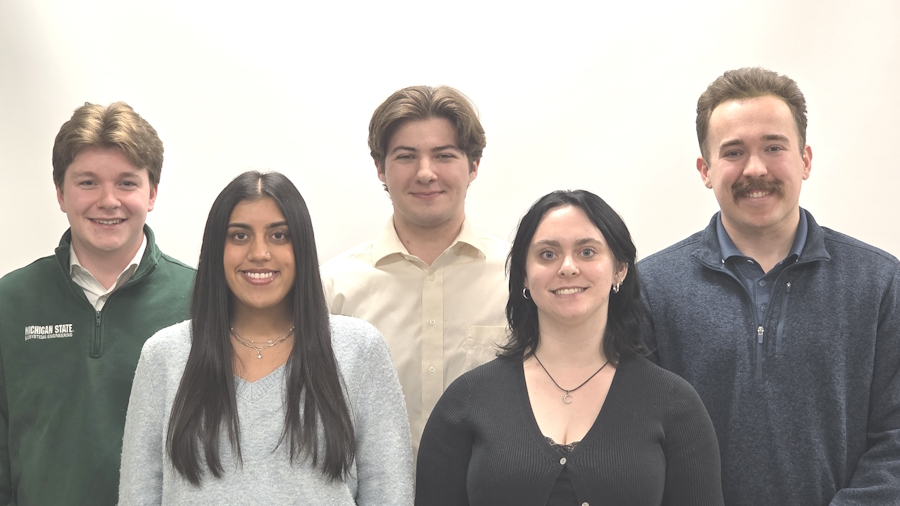
Sponsor – MSU Infrastructure, Planning, and Facilities
Faculty Advisors – Dr. Dawn Dechand & Dr. Subhasis Giri
Since its installation in 2010, the bioretention basin on MSU’s campus has experienced difficulties in managing and providing adequate treatment for the stormwater flowing into the site. This project objective was to restore the drawdown time to 24-48 hours and expand the treatment volume of the site by
50%. Additionally, the environmental health of the site will be improved with a list of plantings to increase biodiversity and a maintenance plan included in the design.
Team Soldan Paw Patrol - Ingham County Parks - Addressing Harmful Algal Blooms in the Soldan Dog Park Pond
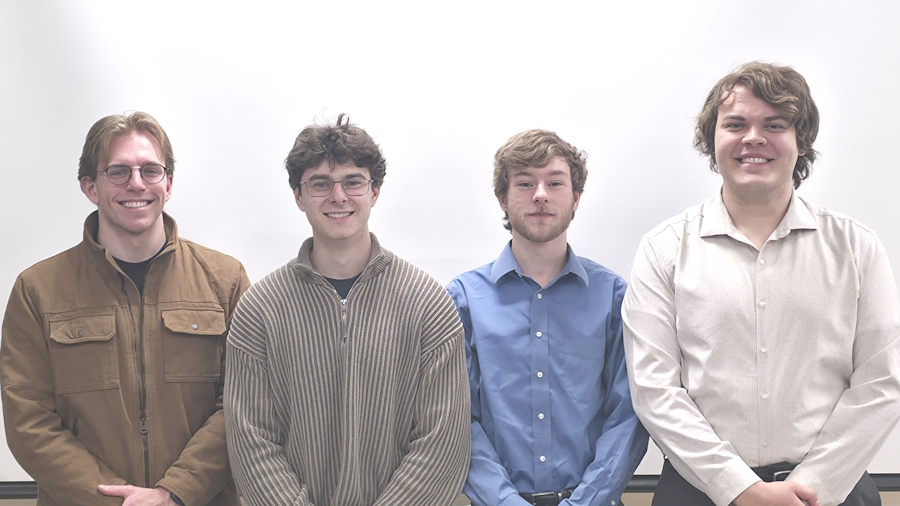
Sponsor – Ingham County Parks
Faculty Advisors – Dr. Dawn Dechand & Dr. Subhasis Giri
The pond at Soldan Dog Park has regularly experienced harmful cyanobacteria and cyanotoxins for four years. Phosphorus from influent stormwater and sediments stimulate harmful algal blooms (HABs) each summer. A coupled biochar-aeration approach was chosen to combat the HABs: biochar bags will be applied to reduce influent phosphorus concentrations to 0.025 mg/L while pond aerators will be used to increase dissolved oxygen, reduce in-pond phosphorus concentrations, and disrupt cyanobacterial growth. A quote for a 4-diffuser aeration system places the price at $10,390 which was determined reasonable for a long-term solution. Biochar application calculated to be $443 for the initial removal of phosphorus, with future applications ranging from $50-$200.
Team Duck Lake - Duck Lake Water Quality Committee - Implementing Phosphorus Mitigation Technologies for Algal Blooms in Duck Lake (Allegan County)
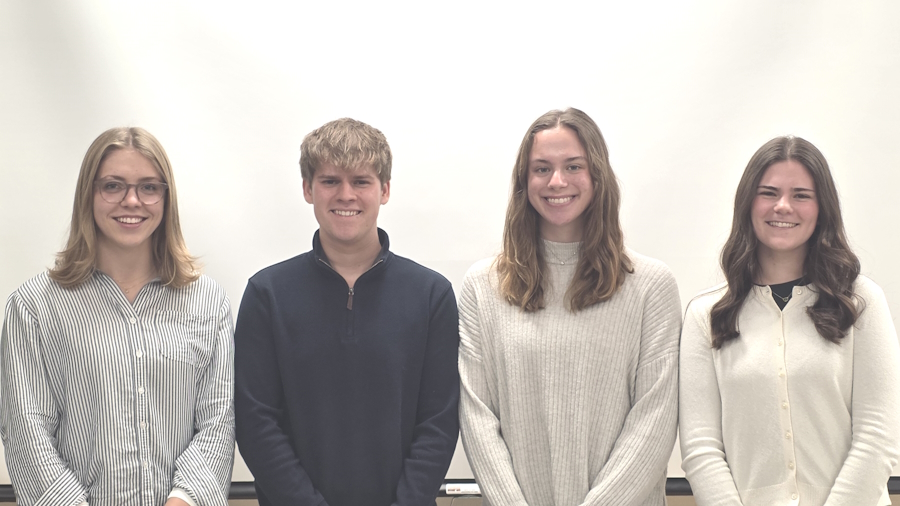
Sponsor – Duck Lake Water Quality Committee
Faculty Advisor – Dr. Ehsan Ghane
Residents of Duck Lake have been experiencing an increased number of harmful algal blooms in recent years due to high phosphorus levels. The Duck Lake project delivers a dual phosphorus-reduction strategy combining an alum treatment for internal loading with phosphorus removal structures for watershed inflows. Together, these designs are projected to reduce preexisting lake phosphorus by 85% and to reduce phosphorus entering the lake by 30%, lowering harmful algal bloom risk and improving water clarity within the first treatment season. This approach provides the Duck Lake community with a sustainable path toward restoring water quality and a net benefit of $1.5M.
Team Consumers Energy - Consumers Energy (under Non-Disclosure Agreement) - Evaluating the Feasibility of Corn Stover-Manure Anaerobic Digestion
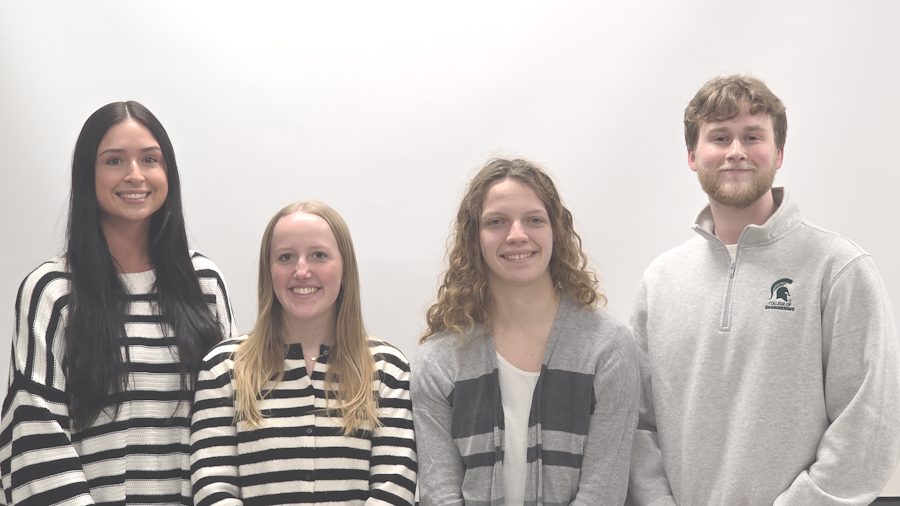
Sponsor – Consumers Energy
Faculty Advisor – Dr. Chris Saffron
Anaerobic digestion (AD) is a process that produces renewable natural gas from organic wastes, such as dairy manure, food wastes, and agricultural residues. The team evaluated the feasibility of an anaerobic digestion system with corn stover and manure. The final feasibility study includes a comparative Life Cycle Assessment (LCA) and Techno-Economic Analysis (TEA) of the corn-stover manure AD to the current Consumers’ manure only AD. The corn-stover manure system showed a 1.7 times decrease in global warming potential compared to the manure only system. The ROI of the corn-stover manure AD system was determined to be 9.0%, and the selling price was found to be $150.87 per MMBtu. The team also generated ideas to increase the profitability of the system by utilizing by-products. The selected design utilizes a solid digestate by-product for mushroom cultivation. Future work could include the mushroom cultivation steps within economic analysis to reach the desired energy price.
Team Sustainable Organic Digester - Henry Ford Health (under Non-Disclosure Agreement) - Supporting Sustainability: Organic Patient Food Waste Digester for Henry Ford Health – Destination Grand
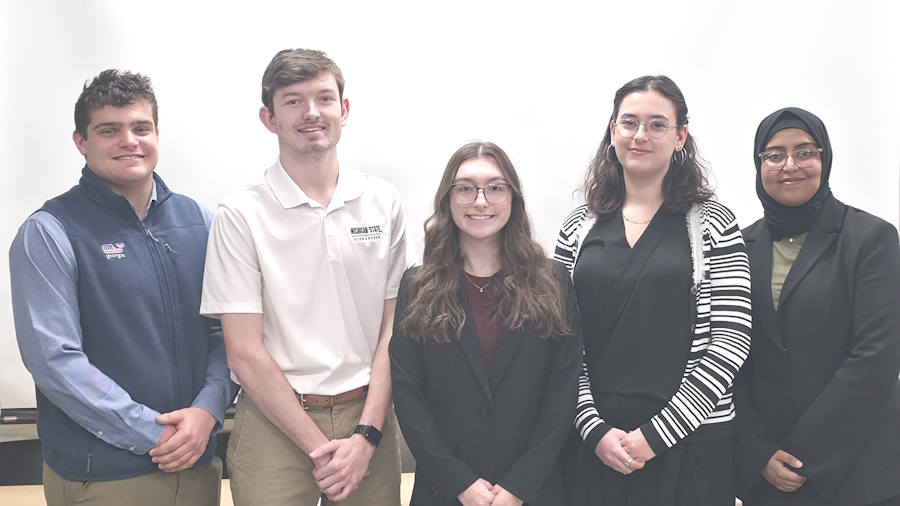
Sponsor – Henry Ford Health (under Non-Disclosure Agreement)
Faculty Advisor – Dr. Wei Liao, PE
Team Sustainable Organic Digester partnered with Henry Ford Health (HFH) to advance their broader environmental and sustainability goals at their new hospital facility, Destination Grand. The proposed 2-stage anaerobic digester design is sized and sited specifically offering operational efficiency, heat and energy generation, and a safer fertilizer-ready digestate. Operating at 90% efficiency, the design uses over 600 lb/d of organic patient food waste to generate over 100 kWh/d of usable energy. Environmental benefits include substantial reductions in carbon dioxide emissions by 98% and ~ 3,770 lb of digestate/d for fertilizer use. Savings accrue by diverting food waste away from landfills to avoid transportation and tipping fees and generating on-site heat and electricity. HFH would recoup $0.12 per gallon of waste by not sending it to a landfill.
Team Henry Ford Health - Henry Ford Health (under Non-Disclosure Agreement) - Non-Invasive Frameless Immobilizer for MRI Guided Focused Ultrasound
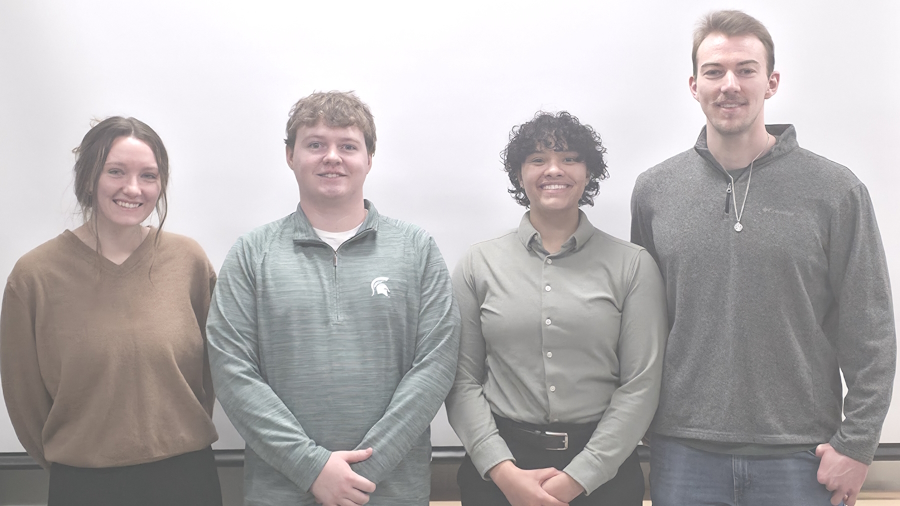
Sponsor – Henry Ford Health (under Non-Disclosure Agreement)
Faculty Advisor – Dr. Daniel Morris
This project aims to improve patient comfort during MRI-guided focused ultrasound procedures used to ablate small, targeted areas of the brain responsible for movement disorders. Current stereotactic head frames are invasive as they require screws fastened to the skull. This deters patients from a life-changing procedure. We developed a non-invasive frameless mask as an alternative to improve patient comfort while maintaining the required stability. The design consists of a modified radiosurgery mask that attains displacement values of <5 mm, demonstrating positive proof of concept. Further refinement can achieve the target displacement value of <2 mm.
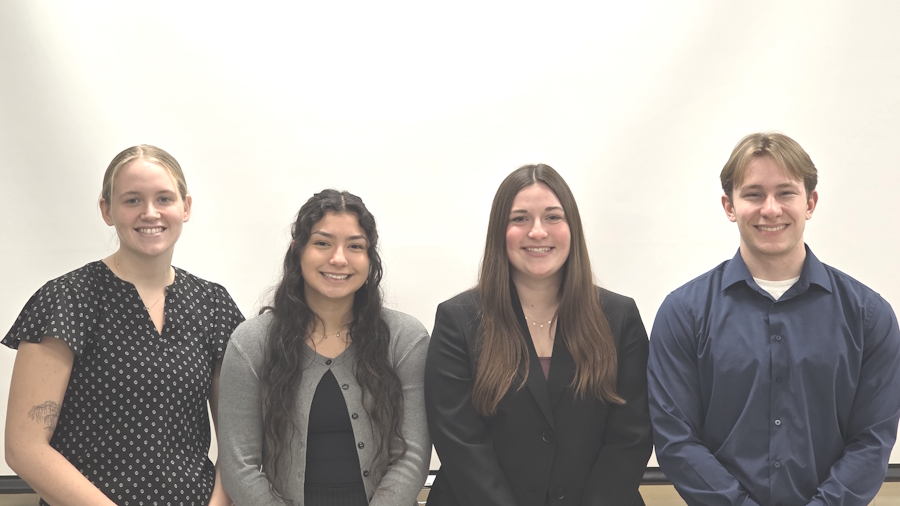
Team Stryker - Stryker (under Non-Disclosure Agreement) - Using Fluorescein Sodium for Real-Time Identification of Cerebrospinal Fluid Leaks in Saline
Sponsor – Stryker (under Non-Disclosure Agreement)
Faculty Advisor – Dr. Vangie Alocilja
This project explores the use of a sodium fluorescein intrathecal injection to identify cerebrospinal fluid (CSF) leaks during neurosurgery. Neurosurgeons opt out of using irrigation during spinal surgery due to the optical similarity of saline and CSF. Under blue light, CSF mixed with sodium fluorescein will fluoresce neon green, becoming visible to a surgeon if a leak occurs. This visibility allows the surgeon to seal the dura, preventing future complications. This method encourages irrigation with Stryker’s surgical power tools, ensuring tool longevity and effectiveness. Focus was put on minimizing fluorescein concentration, and therefore patient risk, while maintaining CSF leak visibility.
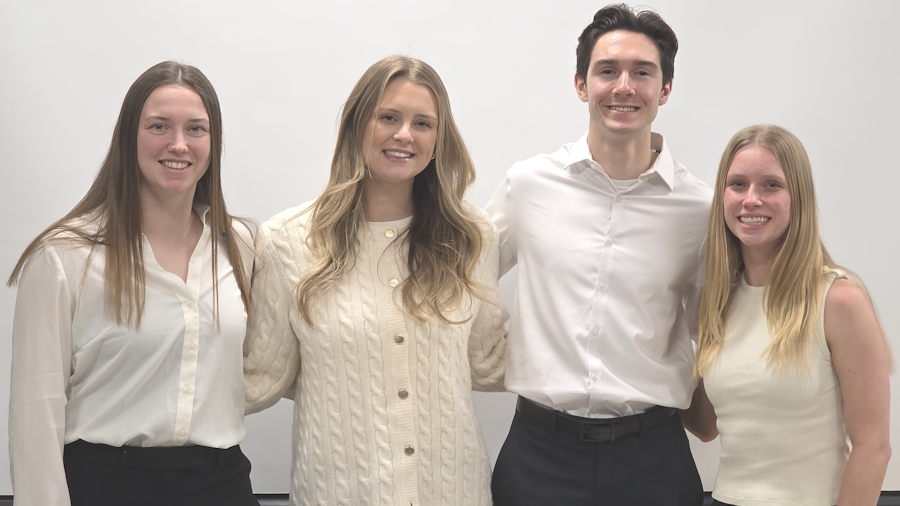
Team Tillamook - Tillamook (under Non-Disclosure Agreement) - Ensuring Ice Cream Quality Through Palletization Management
Sponsor – Tillamook (under Non-Disclosure Agreement)
Faculty Advisor – Dr. Kirk Dolan
At Tillamook's Decatur, IL plant, the ice cream products have experienced quality degradation from thermal abuse during palletization. Through experimentation and verification with a COMSOL heat transfer model, the failure points for temperature and time have been determined. The team has
suggested the installation of a thermal camera with a stack light system to alert plant operators. This project will decrease failures by 4% and increase profits by over $1 million.
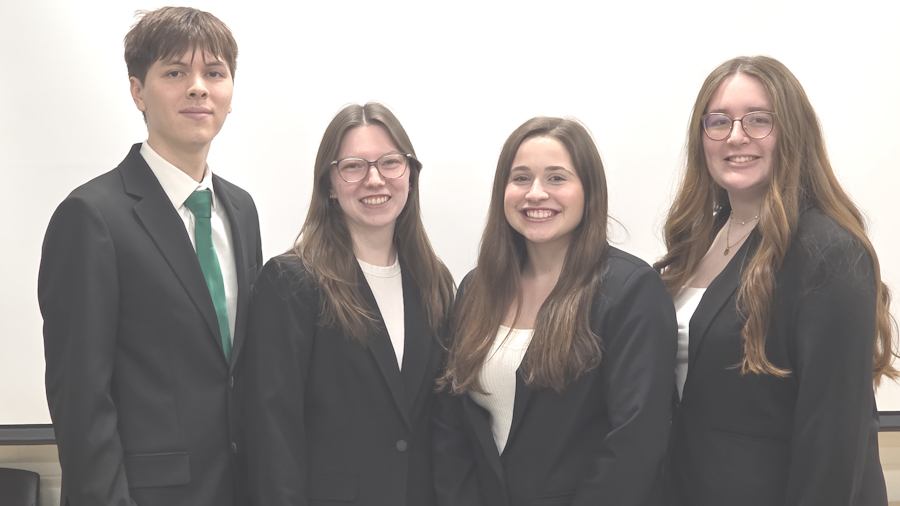
Pickle Pals - E. W. Grobbel (under Non-Disclosure Agreement) - E.W. Grobbel Temperature Control Chamber for Pickle Fermentation
Sponsor – E. W. Grobbel (under Non-Disclosure Agreement)
Faculty Advisor – Dr. Kirk Dolan
E.W. Grobbel is a company that works diligently to produce quality food products. Team Pickle Pals designed a temperature control chamber to reduce temperature fluctuations during pickle fermentation. The chamber stabilizes temperature fluctuations to standardize fermentation times and reduces waste from over fermentation. The final chamber design will encompass 16-fermentation barrels with four per pallet and a cost of $3,960 per unit.
Team Perrigo – Perrigo (under Non-Disclosure Agreement) - Automation of COD and TOC Waste Stream Monitoring for Proper Disposal
Sponsor – Perrigo (under Non-Disclosure Agreement)
Faculty Advisor – Dr. Yan “Susie” Liu
Perrigo is seeking out a detection system that identifies adverse waste stream conditions and automatically diverts the waste stream based on an undesirable sugar concentration at their liquid fill plant in Allegan, MI. COD and TOC sensors will be utilized to detect their presence and
automatically divert the fluid into designated waste tanks for a cost avoidance of $210,000+ in 10 years and an improved relationship with the City of Allegan’s Waste Water Treatment Facility.
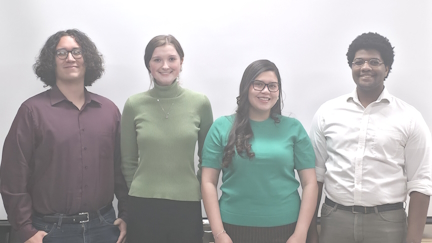
Team Mitten Solar - MSU Extension - Optimizing Agrivoltaic System Design for Michigan Farmer Income
Sponsor – MSU Extension
Faculty Advisors – Dr. Ajit Srivastava & Aluel Go
Team Mitten Solar developed an optimization tool that identifies the most profitable balance between crop production and solar energy generation for Michigan farms from a solar-developer perspective. Using real-world performance data, incentive structures, and a representative farm profile, the model
determines the optimal allocation of land between crops and high-density solar arrays. The tool enables farmers to evaluate multiple agrivoltaic scenarios and select the configuration that maximizes revenue while fitting their site conditions and management goals.
 Print
Print Email
Email