Don’t overspend on early corn emergence problems
 Print
Print Email
EmailEarly corn decisions could cost or protect profit.
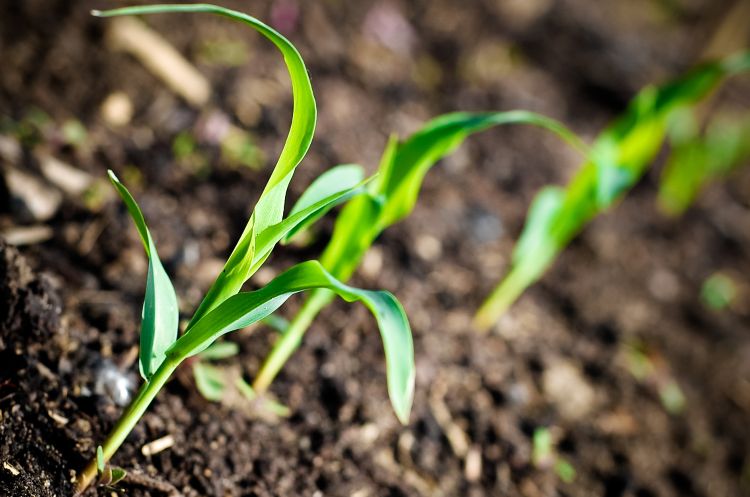
The spring season of the 2026 crop year has been off to a slow start with cool weather and wet field conditions. Planting progress on corn is currently trailing about 5% behind the five-year average, after trailing by 11% the previous week. Significant emergence has also not been widely reported even on those acres that have been planted. As warmer weather appears on the horizon, corn rows should start to become more visible and provide early indications of plant health and uniformity. With higher-than-normal input costs, it is important to start preparing now to make in-field decisions that will maintain yield and profit potential.
Delayed planting often means that windows to get in the fields are fewer and less than ideal. A lack of ideal conditions means that when corn emerges, it may have uneven or poor plant stands and unhealthy or damaged plants. If stands or plant health are poor enough, a critical decision is whether to replant. Once the field is established, another crucial decision is to identify any early plant health stresses, such as nutrient deficiency.
Delayed emergence and replant decisions
According to North Central Regional Extension Publication No. 344, if the poor stand varies row-to-row, replanting is unlikely to increase yields. There is also a chance that plants may continue to emerge over the next 1 or 2 weeks. If emergence continues over this period, yield could increase 5%. Consider growth stages between early and late emerged plants to assess challenges, especially challenges that may arise for in-season fertilizer side-dress, pollination and harvest timing or moisture content.
Alternatively, if poor emergence is field wide, more than 50% delayed and appears likely to last longer than two weeks, replanting is recommended. After three weeks, yield potential is often greater if the field is replanted entirely depending on planting date. Replanting within two weeks of the initial planting may allow for spot planting or filling in gaps. Consider planting dates and life cycle of early versus late-planted corn. Later corn is often dominated by early-planted corn and has difficulty catching up. Additionally, if replanting into June, yield penalties for corn are much greater and may require shifting to another crop. For more information, review the MSU Extension article Should you prioritize planting soybean or corn?
If deciding to replant, consider the additional costs involved. Tillage costs (fuel, repairs, time), replacement costs of seed and pesticides, and dryer fuel for excessive moisture at harvest.
- If spot planting, a new application of pre-emergence herbicides may not be needed. Review the herbicide labels of applied products to identify any replant intervals that need to be observed.
- Seed companies may offer a replant program to assist with replacement seed costs. Ask about free or reduced-price options. Contact your seed representative at the onset of any delayed emergence concerns.
- If replanting entirely, a replacement hybrid with a shorter relative maturity is often recommended to maximize yield potential and reduce harvest moisture concerns. Review Bulletin E-3545: Optimizing Corn Hybrid Maturity Selection for Maximum Yield and Profit in Michigan and Northern Regions for more information.
In addition to replant programs, some replanting costs may also be offset if the farm carries crop insurance. USDA’s Risk Management Agency (RMA) calculates potential payments using a bushel factor and base price.
Bushel Factor X Base Price X Producer Share of Insurance
The bushel factor for Michigan counties in 2026 is 8 bushels, and the base price is $4.62, set in March from February Futures contract. Expected coverage with 100% share of the insurance would be $36.96 per acre (8 bushels X $4.62 per bushel).
Replant coverage for yield and revenue insurance requires a minimum of either 20 acres or 20% of the insured units to qualify for coverage. Consult with your local crop insurance agent at the onset of emergence concerns to confirm eligibility and process any claims as timely as possible.
For more information on replant considerations, review the recent presentation at the MSU Virtual Breakfast on Corn and Soybean Planting Considerations.
Assessing plant health and possible nutrient deficiencies
Corn plants that are slow to emerge may show signs of poor plant vigor or health. One of the more common signs can be nutrient deficiencies or damage from soil-borne pathogens, insects, and environmental stresses. If any of these signs are seen, further investigation is needed to identify the cause and response actions. For nutrient deficiencies in young plants, investigation is especially important. Deficiencies in young plants are common in cold or wet springs, and the plants often outgrow them as the roots develop. Corrective actions may not be required at all, potentially saving additional costs and return on investment burdens on the corn crop.
Phosphorus and sulfur deficiencies are common concerns in the early stages of plant growth. However, determining if corrective action is needed is not as simple as looking for leaf symptoms.
Phosphorus
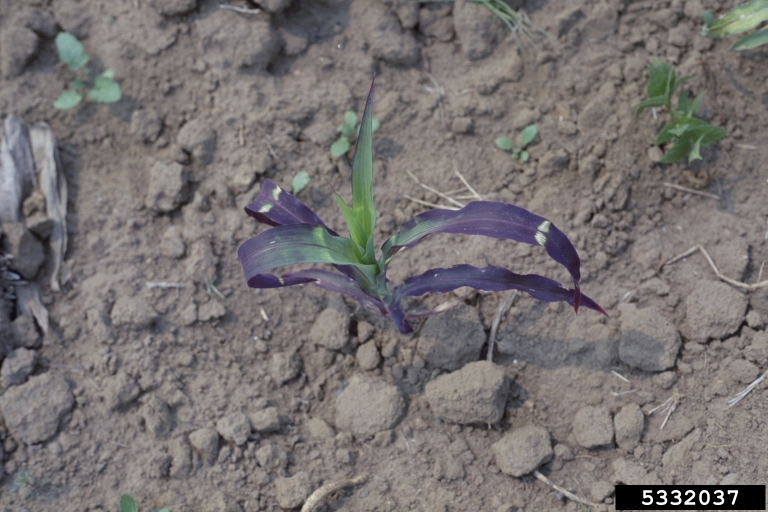
Cooler, wet soil conditions that affect root growth and nutrient movement can also lead to purple pigmentation in some corn hybrids. The pigmentation appears on the older plant leaves and is referred to as purple corn syndrome (Figure 1). The purple coloring is due to an excessive buildup of sugars within the leaves from cooler temperatures. It can last through the sixth vegetative growth stage and does not often reduce yields. In some cases, certain corn hybrids may be more prone to purple corn syndrome than others. For more information on Purple Corn Syndrome, review MSU Extension’s article: Purple corn syndrome: What causes purple coloration of corn?
It is recommended to perform a soil test and submit a tissue sample for analysis to confirm deficiencies exist, especially before applying unusually high-priced phosphorus-based products. For example, Monoammonium Phosphate (MAP) prices are currently averaging $938 per ton. If 100 pounds of MAP were applied without confirmation of deficiency, the cost per acre would be $46.90 per acre. At a price per bushel of $4.50 for corn, a yield increase of 10.42 bushels is needed to cover the application cost.
Sulfur
Cooler, wet soil conditions may lead to sulfur immobilization within the plant. Symptoms appear as pale, yellow stripes or an overall yellowing of upper plant leaves (Figure 2). The immobilization limits the plant’s ability to translocate the nutrients to newer, younger leaves. As temperatures increase and plant roots further develop, the plant will grow out of deficiency without yield losses.
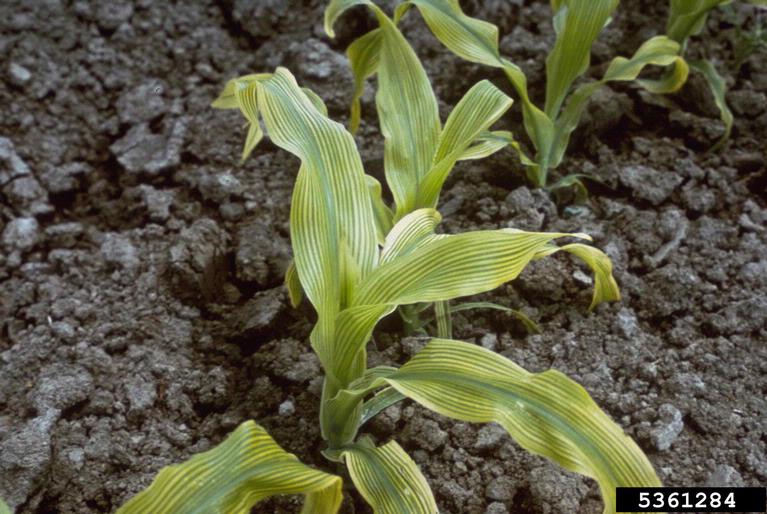
Symptoms often start to be seen around the V3 growth stage, depending on soil temperatures and planting depth. Any observation of symptoms should be investigated prior to replanting to ensure deficiencies do not impact new seedlings.
Like phosphorus, prices on sulfur-based fertilizers are experiencing higher levels than normal. Ammonium Sulfate (AMS) prices are currently averaging $580 per ton. If 100 pounds of AMS were applied without any testing, the cost per acre would be $29 per acre. Using the same corn price, a yield increase of 6.44 bushels would be needed to cover the rescue application.
For more information, Purdue Bulletin AY-379-W: Sulfur Deficiency in Corn, Soybean, Alfalfa, and Wheat provides guidance on deficiency symptoms, tissue sampling and analysis, and corrective actions.
For more information on overall fertilizer considerations in corn, review Bulletin 974: Tri-State Fertilizer Recommendations.
Confirm before taking action
The decision to replant or apply additional fertilizer carries additional costs. Costs that will place a higher demand on the corn crop’s yield and profitability. Identifying whether those costs will benefit the corn crop is the first step in evaluating any potential actions.
Current weather has made planting progress slow this season and may lead to additional challenges. Addressing these challenges should involve fully investigating causes and optimum strategies to maintain yield and profit potential.