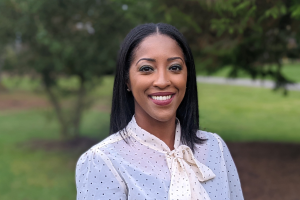
Dual degree in Resource Development and International Relations bolstered career in public health for alumna
 Print
Print Email
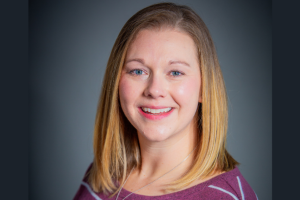
EmailRachel Katonak, alumna of Department of Resource Development (now Community Sustainability) and James Madison College, shares how her unique experiences at MSU influenced her path, and eventual career in public health, after graduation.
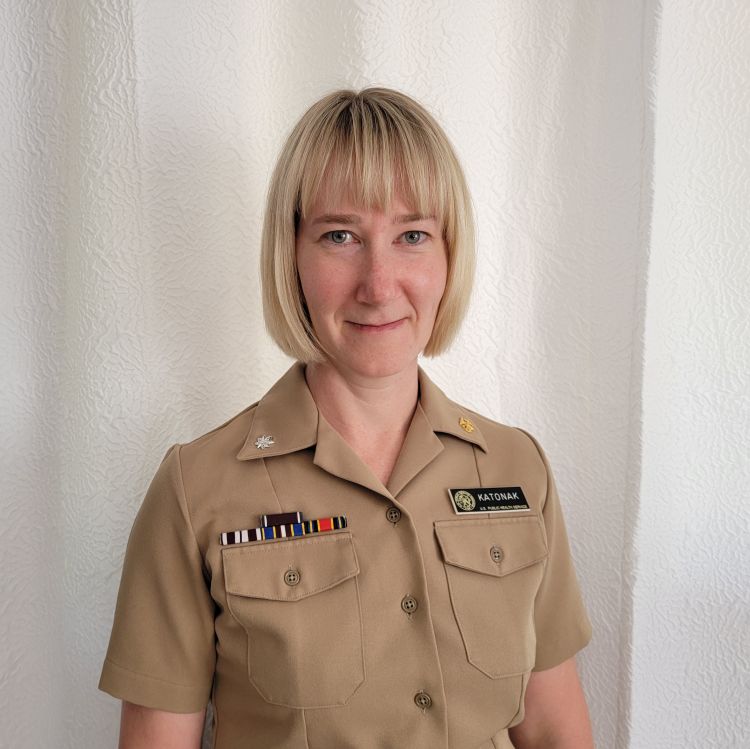
Rachel Katonak, alumna of Department of Resource Development and James Madison College, shares how her unique experiences at MSU influenced her path after graduation. During her time at MSU, Katonak worked for a non-profit addressing water quality issues and in a microbiology lab on campus that investigated Cryptosporidium, a water contaminant. Katonak received a dual degree in Resource Development and International Relations in 2003 and emphasizes how her experience in both programs bolstered her current work in public health in the Public Health Services. When thinking about how insights from these two degrees influence her current work, Katonak notes, “The health of people is directly and indirectly connected to the environmental issues around us. It’s not direct, but the skills like thinking critically, analyzing problems, looking at all aspects of an issue are all relevant to my work.” Katonak’s story exemplifies how engaging in opportunities on campus and pursuing your passion can create a life path of unique experiences and a fulfilling career.
Katonak’s degree in Resource Development was housed in the Department of Resource Development. The Department of Resource Development was a stand-alone department in 2003 before it merged with other units to become the Department of Community, Agriculture, Recreation, and Resource Studies (CARRS) in 2004. CARRS was renamed to Department of Community Sustainability in 2013. You can see the timeline of the departmental mergers at the bottom of the CSUS alumni homepage. We sat down with Katonak to hear how her time at MSU has led to a unique and fulfilling career path. This interview has been lightly edited for clarity and space.
Name:
Rachel Katonak
Graduation Year:
2003
Degree and Major:
Dual major in Resource Development (College of Agriculture and Natural Resources) and International Relations (James Madison College)
What department were you a part of?
Department of Resource Development
Why did you choose the Resource Development major at MSU?
I did a dual degree of Resources Development and International Relations. While I was at MSU, I was working at my first job in college with Clean Water Action. Clean Water Action is a non-profit organization that works on water quality issues, and it piqued my interest in environmental and water quality issues. When I learned that there was a Resource Development major my sophomore year, I picked up that major. I had one of those unique paths before I came to MSU. Before college, I had always struggled in school and then in the second half of high school, I started finding my passion and got better grades. So, coming to MSU to pursue my degree was a big deal for me, but I didn’t have any specific connection to MSU before I got here. I knew MSU was an excellent school, and it was my top choice because of its strong academic reputation.
What did you do after graduation?
About one month after I graduated from MSU, I joined the Peace Corps. My Peace Corps assignment was related to resource development in Morocco. In Morocco, there were cedar forests that were being cut down by rural community members to be used as fuel to cook and to keep warm in the Atlas Mountains area. It’s a colder climate in that region and the communities there couldn’t afford propane as really the only alternative fuel source, especially for cooking and heating. So often, it was usually the women who were having to head out to the cedar forests and cut down trees for their subsistence. But this deforestation was causing broader problem for the environment. So, part of the work in the Peace Corps was developing a women’s collective that would cut out the middleman for medical herbs and helping the women in these communities start businesses. For example, there were these goat farmers who were able to figure out a way to sell goat cheese directly to a distributor and make enough money to buy propane and bolster their income.
How did that project end up going?
I wasn’t able to stay the full year unfortunately, so when I came back to the U.S. I still had some student loan debt and decided to become a nurse. I went to nursing school shortly thereafter. I would say my career is very much bolstered by what I learned in my Resource Development and International Relations programs because public health has everything to do with the health of the environment. The health of people is directly and indirectly connected to the environmental issues around us. Resource Development, because you are learning about environmental issues, I think it prepares you to think critically and gives you a lot of other tangible skills like public speaking and writing.
What is your current work?
I’m a Public Health Analyst, enlisted in the U.S. Public Health Services (USPHS) Commissioned Corps, at the Centers for Medicare and Medicaid Services (CMS). A lot of the work that I do at CMS has to do with understanding the law and regulations, even writing and analyzing regulations- figuring out how we are going to implement laws passed by congress for Medicare.
Interesting, could you explain more about how that works?
So, the Public Health Service is a uniformed military service under the Surgeon General, and the idea of PHS is to place uniformed health professionals (like doctors, nurses, and scientist) in CMS and other federal agencies to work with under-served populations.
Officers in the PHS do their work within the agencies they work at but also get deployed in natural disaster situations for medical relief. In my capacity as a PHS officer, I’ve worked with Indian Health Services on various federal Indian reservations as a health care provider and doing policy and administrative work with tribes living on reservations. This kind of ties into the work of the Department of Community Sustainability now. Most people don’t realize that some communities on reservations are still gaining access to clean water.
What keeps you engaged in your work?
Thinking critically and looking at the services that we provide to Medicare beneficiaries and working on ways that we can expand access to those services. I specifically work on preventative services, which is very important for individuals’ health. We have a framework of working within the boundaries of Social Security Act, which dictates what Medicare can and can’t cover. Congress amends the Social Security Act, but within those boundaries, there is a constant push and pull in figuring out ways we can expand our services for the health of our patients.
What do you like most about MSU?
Having a family and a living nearby to MSU campus, we are so grateful to have MSU and everything that it has to offer. There is so much around here like great speaking engagements, to cultural activities, to community experiences. I feel like MSU does such an excellent job of not only the academic piece but also making us feel like there’s a community here.
What is your favorite memory from your experience at MSU?
While I was a student at MSU, I worked as an administrative assistant for a microbiologist, Dr. Joan Rose, who was a faculty member in the Department of Natural Resources at the time (now the Homer Nowlin Chair in Water Research in the Department of Fisheries and Wildlife and Director of the Water Alliance). Dr. Rose had a Cryptosporidium lab, and I felt for fortunate to be able to witness that type of work happening. Her research was a hard science, but the outcomes had direct policy implications, so it was fascinating to work for her while I was still a student.
Any thoughts or advice for current students?
It’s probably pretty similar to what other people say, but don’t be afraid to use all the resources available to you and talk to your professors. Be bold and talk to your professors, talk about the work that their doing, and talk with them about their career path. I think when we’re younger, we don’t necessarily think in those terms to talk to people more and learn about their work and their experiences. You’ll rarely ever be in this kind of environment ever again so take advantage of it while you’re here.