Heartland Apicultural Society Conference Returns to Michigan with Hands-On Learning at MSU
 Print
Print Email
EmailMSU Entomology supported pollinator health by providing hands-on instruction and expertise at the Heartland Apicultural Society conference for 124 participants.
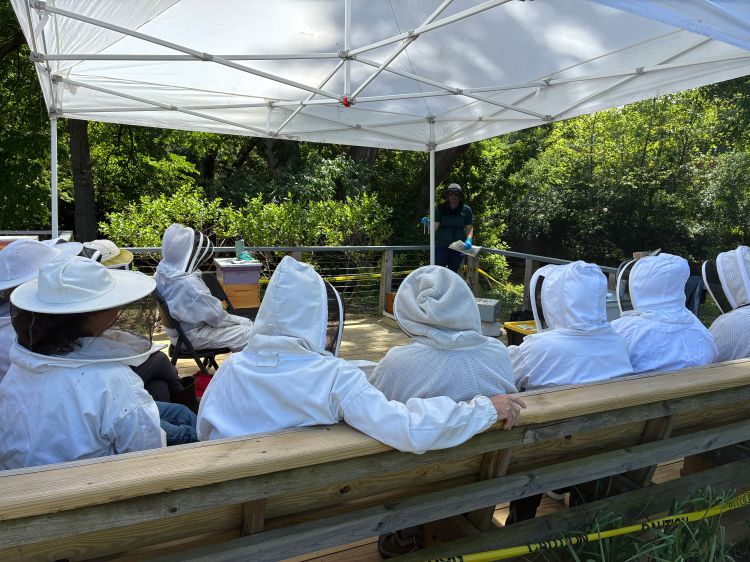
Michigan State University (MSU) entomologists contributed research expertise and hands-on instruction at the Heartland Apicultural Society Conference, helping provide training and education for 124 beekeepers and professionals.
The Heartland Apicultural Society (HAS) is one of three regional apicultural societies in the United States, alongside the Eastern and Western Apicultural Societies. It was founded in 2001 with a grant from the Eastern Apicultural Society to provide apicultural education to Midwestern states. The conference rotates annually across states like Indiana, Illinois and Kentucky. This year marked only the second time Michigan has hosted the conference, with the previous event held in 2015 at Albion College.
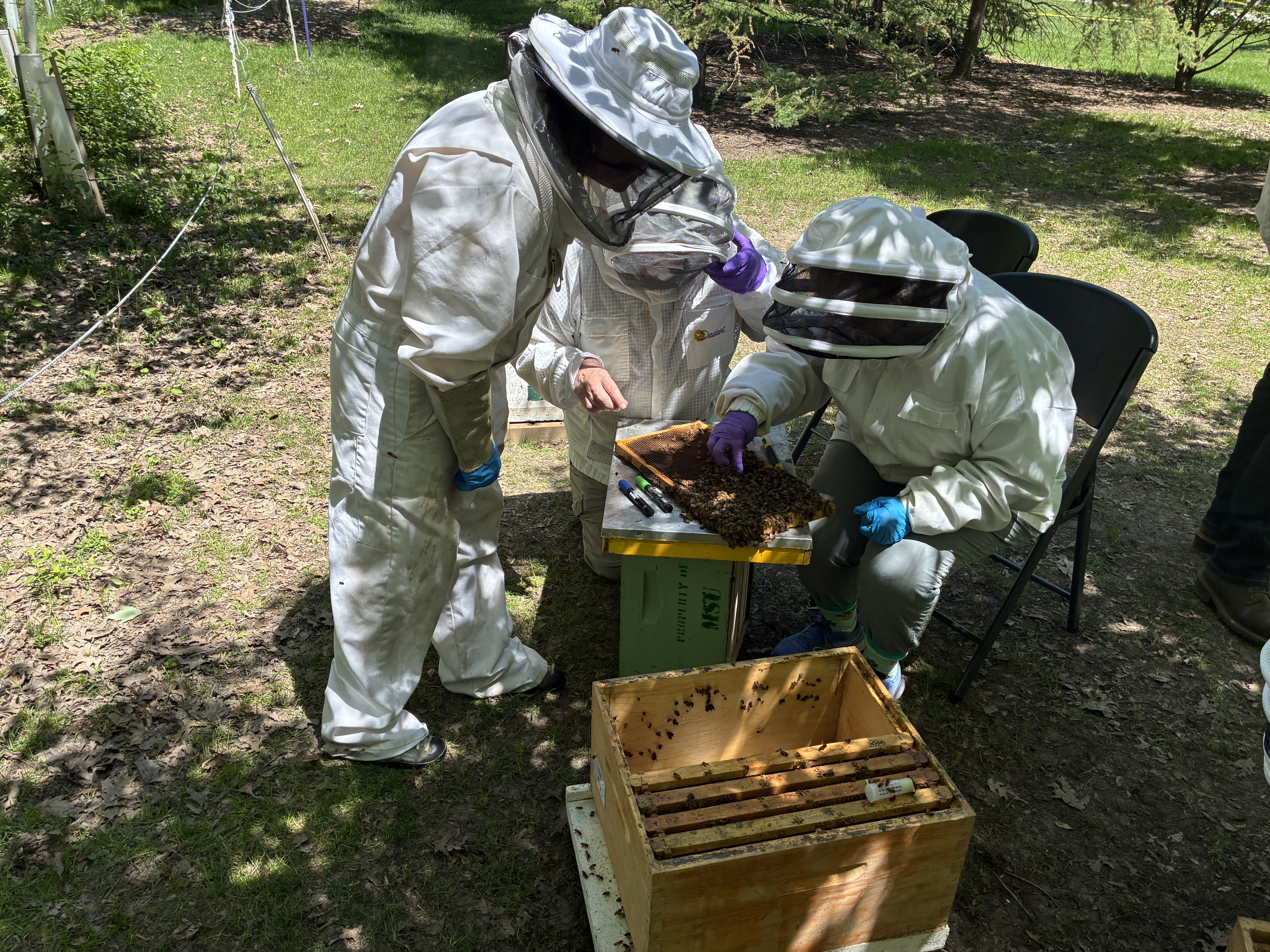
The conference was hosted by MSU Extension and brought in speakers and educators from MSU and other states to provide hands-on learning opportunities and educational lectures for attendees. Programming included in-hive workshops and classroom sessions, which counted toward Master Beekeeper credits and continuing education credits for veterinarians. This year, 96% of participants reported increased knowledge in bee health and 87% reported improved beekeeping skills.
Two open apiaries were among the conference’s unique offerings, allowing participants to drop in and learn from instructors while gaining hands-on, in-hive experience. MSU Entomology faculty and researchers led multiple sessions at the conference. Associate Professor of Apiculture Zachary Huang led an anatomy lab where participants dissected honey bee workers and queens to better understand internal structures. Postdoctoral researcher Peter Fowler led a diagnostics workshop focused on identifying bacterial diseases in honey bees. Assistant Professor of Apiculture Meghan Milbrath also led a structured apiary class covering advanced topics such as making nucleus colonies and swarm control.