


Is your water garden having a RIPPLE effect on Michigan's waterways?
 Print
Print Email
EmailWhile water gardens add beauty to backyards, it is important to be aware of the risks associated with aquatic invasive species and to prevent escape.
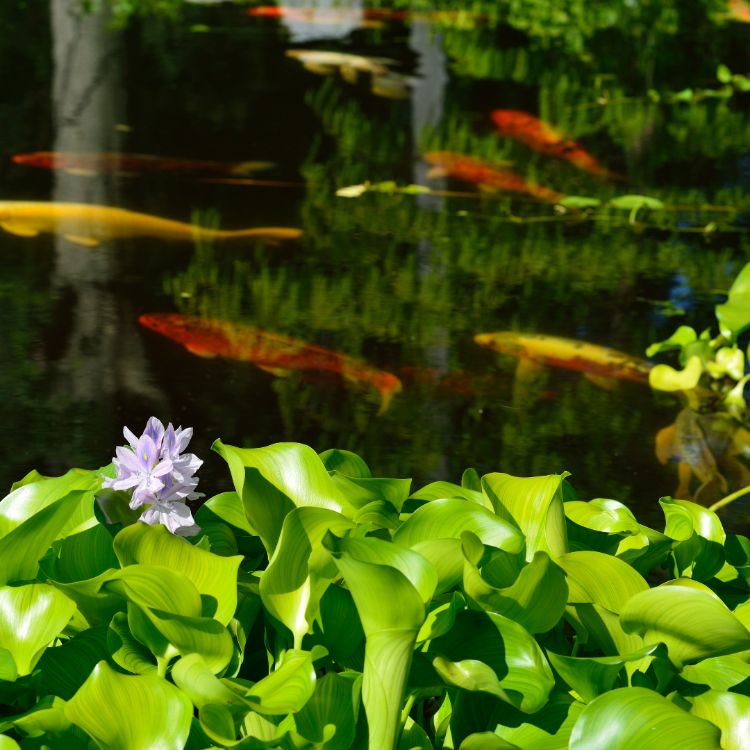
Wildlife sightings, soothing sounds, and scenic beauty are a few benefits of backyard water gardens. While exotic fish and ornamental plants can be attractive additions, they can have long-lasting detrimental impacts on Michigan’s aquatic ecosystems if they escape water gardens and enter Michigan’s lakes and rivers.
Many commonly sold water garden fish and plants are hardy and grow rapidly, making them easy to care for. However, these characteristics can also increase the risk that they will become invasive if they escape from water gardens and establish reproducing populations in our waterways.
Invasive water garden plants and fish can enter Michigan’s lakes and streams a variety of ways. Frequently, water gardeners release pets such as koi and goldfish when they are no longer wanted. This often happens in the fall when homeowners are preparing their water gardens for winter and notice an abundance of fish.
Many are surprised to find that their goldfish have flourished, especially in water gardens with floating plants and rocks that provide them shelter from predators. Flooding can also introduce non-native fish and plants into Michigan waterways. To reduce the risk of escape, water gardens should be located away from lakes, rivers, streams, and other connected waterways.
Releasing unwanted fish into lakes and rivers may seem like a compassionate choice, but it can have serious consequences for Michigan’s aquatic ecosystems. Koi, for example, have been found to cause outbreaks of Koi Herpes Virus, a highly contagious disease that exclusively impacts common carp. It spreads to wild populations when koi from backyard ponds are released into the wild.
In addition to spreading disease, water garden fish can also outcompete native species for food and habitat, potentially causing long-term impacts. Responsible alternatives include giving or trading fish and plants with another water gardener or a local pet or garden store. Some local retailers will take unwanted fish and plants to stock their ornamental display ponds. Retailers also have connections with rescue groups that can assist with rehoming.
Aquatic species of concern
Two common water garden plants of particular concern are water hyacinth and water lettuce. While the sale of these species has been prohibited since June 2026, they are still found in many water gardens due to their past popularity. Removal is not required on private property, but water gardeners should use caution when handling and disposing of these plants. They also cannot be traded with others now that they are prohibited.
Water hyacinth is a very showy plant and features light purple flowers and dark green, glossy round leaves. As its name implies, water lettuce looks like an open head of lettuce and has thick, hairy leaves. Both float on the surface of water and are easy to care for because they reproduce throughout the summer.
In the southern United States, these plants have been found to clog waterways, obstruct boat traffic and negatively impact wildlife. They can also prevent sunlight from penetrating the water, thereby reducing other more beneficial native plants, which many organisms rely on for shelter and food.
Water lettuce and water hyacinth have both been found in Michigan in natural waterways. Water lettuce was discovered in 2020 in the Clinton River spillway and water hyacinth has been observed in the Detroit River and in western Lake Erie for multiple years. When found in the wild, Cooperative Invasive Species Management Area (CISMA) staff will remove the plants by hand and monitor the location.
If you spot water hyacinth, water lettuce or any other organism commonly found in water gardens in the wild, Michigan State University Extension encourages you to report it to the Midwest Invasive Species Information Network.
When choosing plants, consider asking your local retailer for native species such as white water lily, pickerelweed, or marsh marigold. These species can add beauty to water gardens without as many risks. Note that the State of Michigan has laws restricting and prohibiting the sale of some organisms.
Tips to reduce the risk of invasion
If you have a plant or fish in your water garden and would like to get rid of it, never release it into waterways. Follow the Reduce Invasive Pet and PLant Escapes (RIPPLE) program guidelines to protect your water garden and the environment:
- Plants should not be composted; bag it and put it in the trash.
- Inspect and rinse any new plants to rid them of seeds, plant fragments, snails and fish. Aquatic plants often have unwanted hitchhiking organisms attached and some can be invasive.
- Build water gardens well away from other water bodies to prevent them from overflowing to nearby lakes and rivers during heavy rain events.
- Give or trade unwanted fish or plants with another water gardener or reach out to a local retailer who may have connections to rescue groups.
- Contact a veterinarian or pet retailer for guidance on the humane disposal of animals.
The RIPPLE program is a partnership between MSU Extension and the Michigan Departments of Natural Resources, Agriculture and Rural Development, and Environment, Great Lakes and Energy, and receives funding from the Michigan Invasive Species Grant Program.
RIPPLE educates pet and garden retailers and hobbyists about proper disposal of organisms in aquariums and water gardens to prevent the introduction and spread of invasive species.