Long-term study highlights key drivers of potato beetle trends
 Print
Print Email
EmailA long‑term study from Michigan State University and the University of Wisconsin shows that while heat remains the strongest driver of Colorado potato beetle abundance, other weather and landscape factors also play key roles in predicting outbreaks.
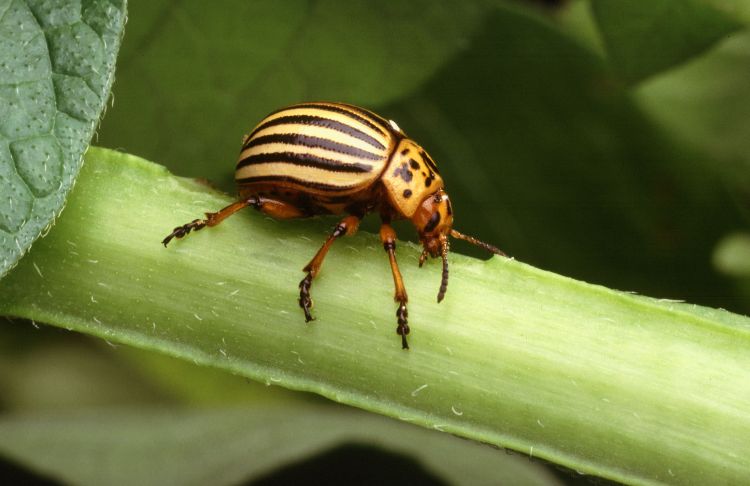
Michigan State University researchers have uncovered new insights into what drives Colorado potato beetle populations by analyzing 16 years of data. The team found that although heat is still the best predictor of when beetles appear and how abundant they become, other environmental factors like precipitation and moisture in the air and soil also shape population trends in significant ways.
The project was led by Abigail L. Cohen of MSU’s Department of Entomology, working with Benjamin Bradford and Russell Groves from the University of Wisconsin and MSU entomologist Zsofia Szendrei. The work is funded by a USDA‑SCRI grant led by Szendrei. Their goal was to better understand what environmental factors trigger outbreaks of Colorado potato beetles, a major pest that causes significant damage to potato crops each year. Predicting when these insects will show up is a critical part of protecting yields and reducing losses.
To build a more complete picture, the researchers pulled together a long-term data set and used two different types of models to (1) predict beetle numbers and (2) understand why those numbers change over time.
While heat is the dominant factor in driving Colorado potato beetle development and is therefore the strongest predictor of beetle abundance, other weather features mattered too. Precipitation, air saturation and soil temperature during the beetles’ overwintering period all influenced how populations fluctuated each year. The study also found that extremely hot conditions tend to increase beetle numbers, while very cold conditions do not reduce them to the same extent. These patterns suggest the insects may thrive in more extreme future climates.
“This research grew out of a larger effort to decrease our reliance on neonicotinoid insecticides in potato production and combine new pest management programs with pest prediction and decision‑making tools,” Cohen said.
The team of researchers is now turning its attention to developing forecasting models to better anticipate when beetles are likely to appear in a potato field at the beginning of a growing season and how severe outbreaks may be. This can help producers prepare earlier and choose management strategies that best match current and future Colorado potato beetle pressure—an increasingly important need as the climate continues to shift.