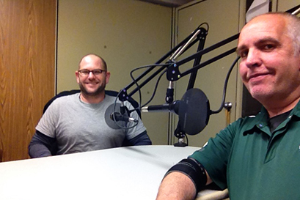
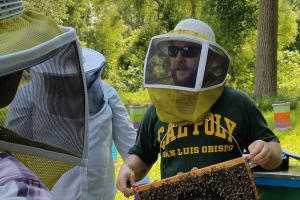
Meet the 2026 Entomology Research & Outreach Fellows
 Print
Print Email
EmailMeet the students who spent the summer contributing to cutting-edge entomology research while building skills that will shape their future careers.
Each summer, undergraduate students from a variety of academic backgrounds come to Michigan State University through the Entomology Research and Outreach Fellowship (EROF) program for hands-on research, professional development and community engagement experiences. Working alongside faculty, graduate students and research staff, fellows contribute to projects spanning agriculture, pollinator health, pest management and environmental science while building skills that prepare them for future careers in STEM and beyond. In this Q&A feature, this year's fellows share their research projects, the mentors guiding their work and the experiences that have made the biggest impact during their summer at MSU.

Lucy Heim
Mentor: Karma Thomas
Major: Natural Resources and Environmental Management; Biology minor
School: Grand Valley State University ‘26
Q: Can you share a bit about yourself (school, major, year, interests)?
A: I recently graduated from Grand Valley State University with Natural Resources and Environmental Management and a minor in Biology. I enjoy indoor rock climbing and going on hikes.
Q: What drew you to apply for the EROF program?
A: I was drawn to the EROF program because you get hands-on experience with researching insects regardless of previous experiences, which is great for people who don’t have access to entomology programs.
Q: Who is your mentor, and what are you working on this summer?
A: My mentor is Karma Thomas, and we are researching pest management strategies in agricultural fields in Zsofia Szendrei’s vegetable entomology lab.
Q: What is the main goal of your project, and what does your day-to-day work look like?
A: The main goal of the project is to examine insect-resistant potato lines against the Colorado potato beetle. We are also looking at measuring defoliation, pesticide application, and pest presence using drones and comparing them to traditional methods. I’ve been working in the greenhouse conducting bioassays, going out to the field to scout for insects, piloting a drone to take aerial imagery, and as well as doing outreach events to share information to the community about insects. There is always something new each day.
Q: Are there any specific techniques, skills, or methods you’re learning?
I’ve been learning about inputting data and conducting data analysis using RStudio and Microsoft Excel. I will also be creating a poster presentation for the mid-Michigan symposium.
Q: What has been the most interesting or rewarding part of your experience so far?
The most rewarding part of my experience is having the opportunity to get experience on skills that will be applicable for my future. This experience has also given me the opportunity to meet people in the field as well.
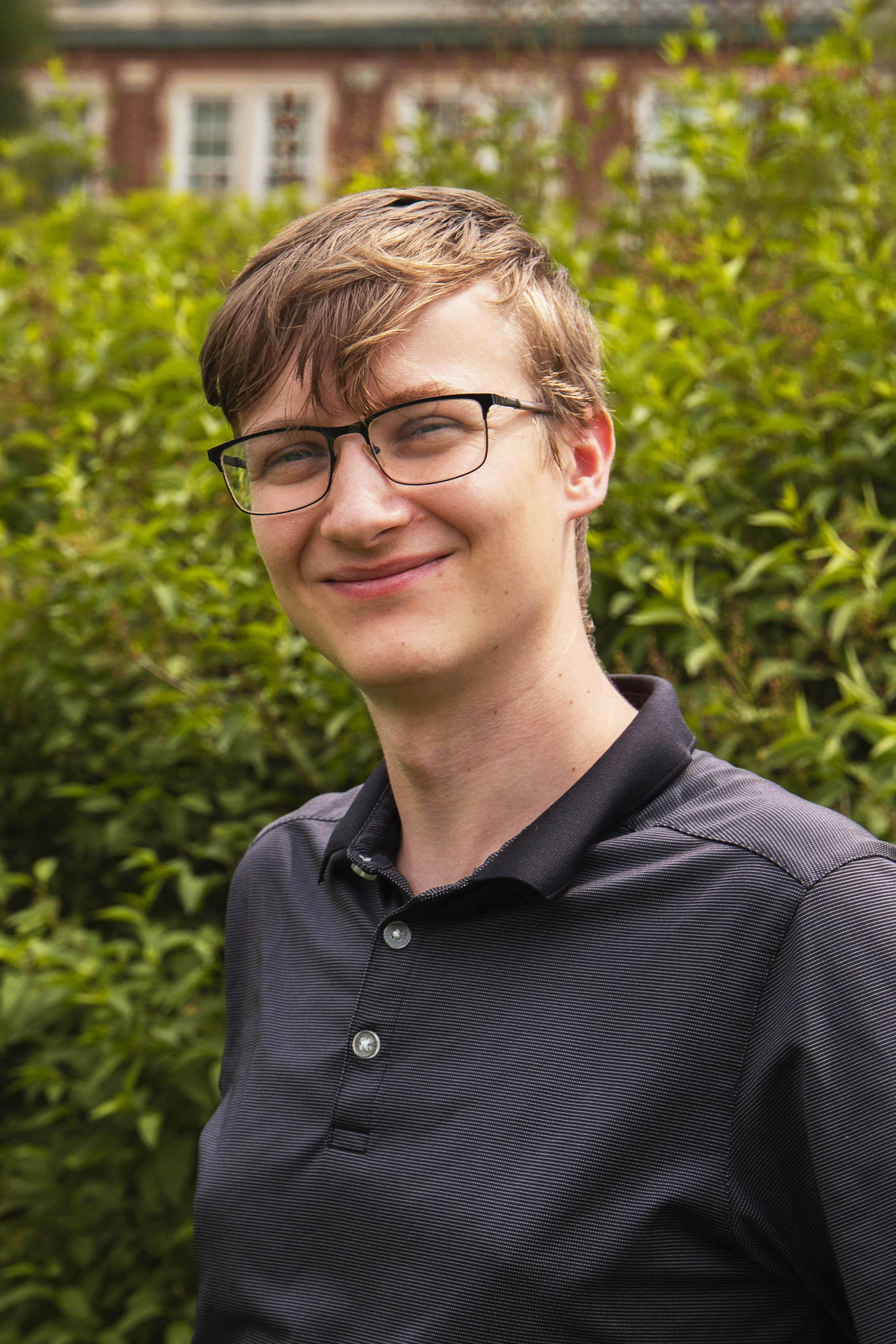
Abraham Parsons
Mentor: Lauren Goldstein
Majors: Evolutionary Biology & Ecology, Geology
School: Grand Valley State University
Q: Can you share a bit about yourself (school, major, year, interests)?
A: I am a Senior undergraduate at Grand Valley State University. At Grand Valley, I am finishing up a double-major with a focus in Evolutionary Biology & Ecology, as well as a focus in Geology. I am on track to graduate at the end of this year.
Q: What drew you to apply for the EROF program?
A: I was drawn to apply for Michigan State University's Entomology EROF program due to my deep personal interest in invertebrate biology. I plan to pursue further education on invertebrates after graduation, and I have been trying to gain as much hands-on experience as possible. I have been very lucky for the opportunity to work within MSU's Entomology program on real issues relevant to my home state. The mentors within the EROF program have all been working on highly relevant and interesting projects, and I have been excited to join in.
Q: Who is your mentor, and what are you working on this summer?
A: My mentor is Lauren Goldstein, laboratory manager for the Rufus Isaacs Berry Crop Entomology laboratory. My focus this summer has been on monitoring berry crop farms throughout Southwest Michigan.
In particular, I have been surveying beneficial arthropods (spiders, insects, and their relatives) as they relate to ecological boundaries, grass & flower fields, and trellised rows of Michigan vineyards.
Q: What is the main goal of your project, and what does your day-to-day work look like?
A: Part of my job is to support the ongoing research work of the Berry Crops Entomology lab across several projects. Their research studies and aids blueberry, grape, and strawberry farms throughout the growing season.
My personal project is focused on how Arachnid populations contribute to biological control of economic pests in and around vineyards. The goal is to develop resources for landowners and farm managers interested in maximizing the effective use of natural biological control of pests. I hope to aid in strategies and insights by developing information specific to this region.
Q: Are there any specific techniques, skills, or methods you’re learning?
A: I have been learning field sampling techniques, and getting a lot of experience classifying plants, crop diseases, insects, and arachnids with a high degree of precision. The Isaacs Berry Crops Entomology Lab has been incredibly helpful in training and supporting me throughout the summer. I have greatly appreciated learning more about botany related to both berry crops and native flowering plants. The most significant experience is probably the time i spend on taxonomy and classification of insects and arachnids. I also value the chance to learn about different stages in a large project's cycle.
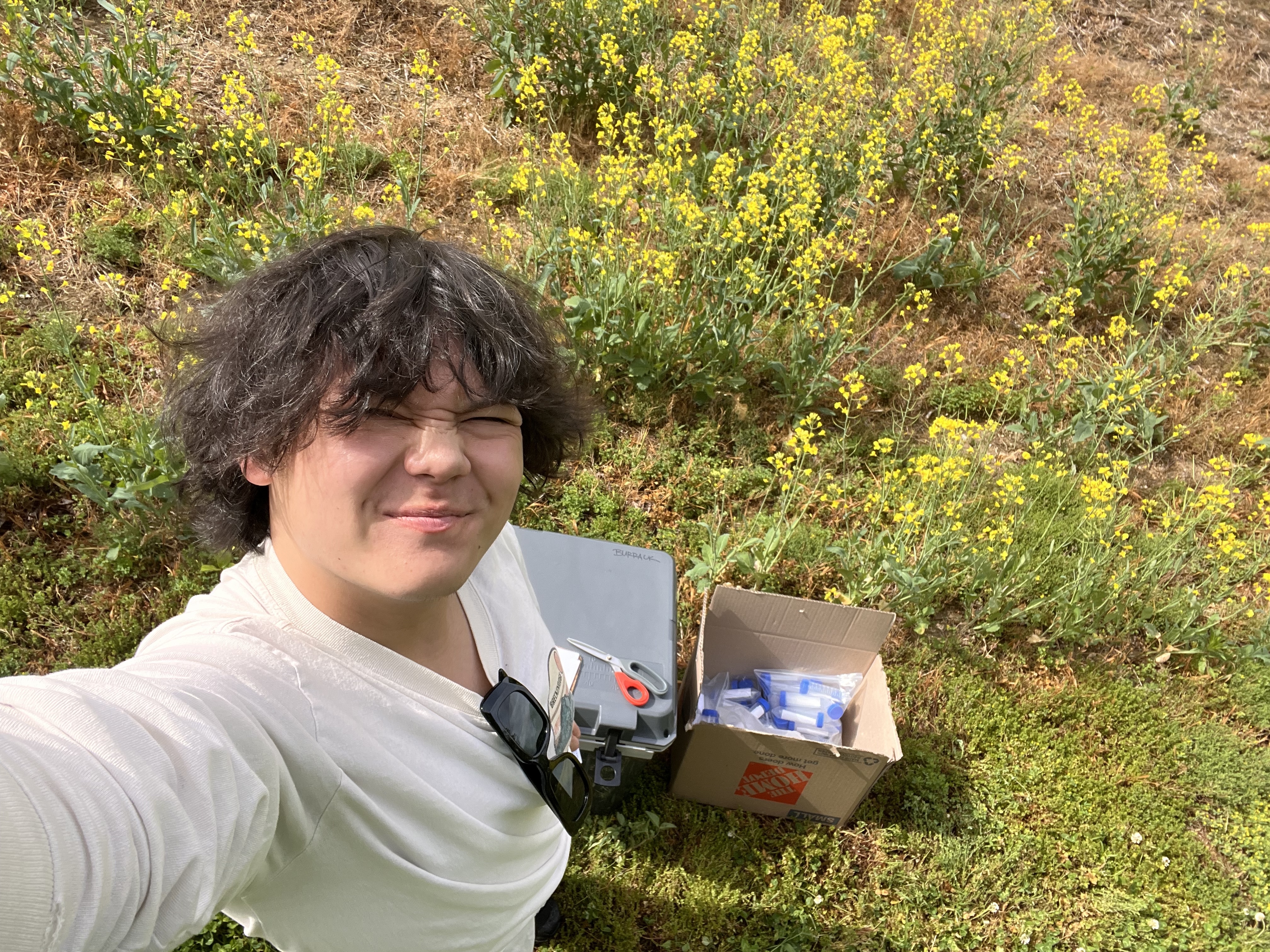
Wesley Petree
Mentor: Amelia McGinnis
Major: Genetics and Genomics major; Entomology minor
School: Michigan State University
Q: Can you share a bit about yourself (school, major, year, interests)?
A: I am a 4th year MSU student working toward a Genetics and Genomics degree and an Entomology minor. I enjoy lab work, playing sports, and I love animals!
Q: What drew you to apply for the EROF program?
A: I wanted to get more experience working in a lab this summer and working with insects seemed right up my alley!
Q: Who is your mentor, and what are you working on this summer?
A: My mentor is Amelia McGinnis. We are researching pollinators in natural and agricultural plots by capturing and identifying insects found visiting flowers.
Q: What is the main goal of your project, and what does your day-to-day work look like?
A: The main goal of the project is to survey pollinator diversity in natural and agricultural plots. Currently I am going to the Kellogg Biological Station two days a week to do field work in prairies, and the other three days I do insect identification in the Center of Integrated Plant Systems.
Q: Are there any specific techniques, skills, or methods you’re learning?
A: I am learning to do fly identification to the family level, bee identification to genus, and other hymenoptera identification to family. Along with the various sampling methods we use in the field.
Q: What has been the most interesting or rewarding part of your experience so far?
A: The most rewarding part of the experience has been getting more comfortable with my ability to do insect identification. It's a difficult skill to learn, but the more that I do the more confident I become. I've also found it super helpful to talk to graduate students about their experiences and asking them questions to help me plan for my future!
.jpeg?language_id=1)
Keith Woolsey
Mentor: Peter Fowler
Major: Biology major (concentration in Evolution, Ecology, and Organismal Diversity); Botany and Zoology minors
School: Eastern Michigan University ‘25
Q: Can you share a bit about yourself (school, major, year, interests)?
A: I am a recent graduate from Eastern Michigan University (fall 2025) where I obtained a B.S. in Biology (concentration in Evolution, Ecology, and Organismal Diversity) with minors in Botany and Zoology. I love learning about all the different kinds of plants and animals of the world (there is so much beauty and natural diversity around us that often goes under appreciated). Outside of that, I enjoy writing and drawing in my free time.
Q: What drew you to apply for the EROF program?
A: I took an Entomology field course during the summer at EMU and really enjoyed it! I found myself bummed out when it was over and wishing I could pursue the Entomology side of things a bit more. When I learned about the EROF program, it was exactly what I was looking for! Being able to build upon my my prior knowledge and skills both in the field and lab highly interested me.
Q: Who is your mentor, and what are you working on this summer?
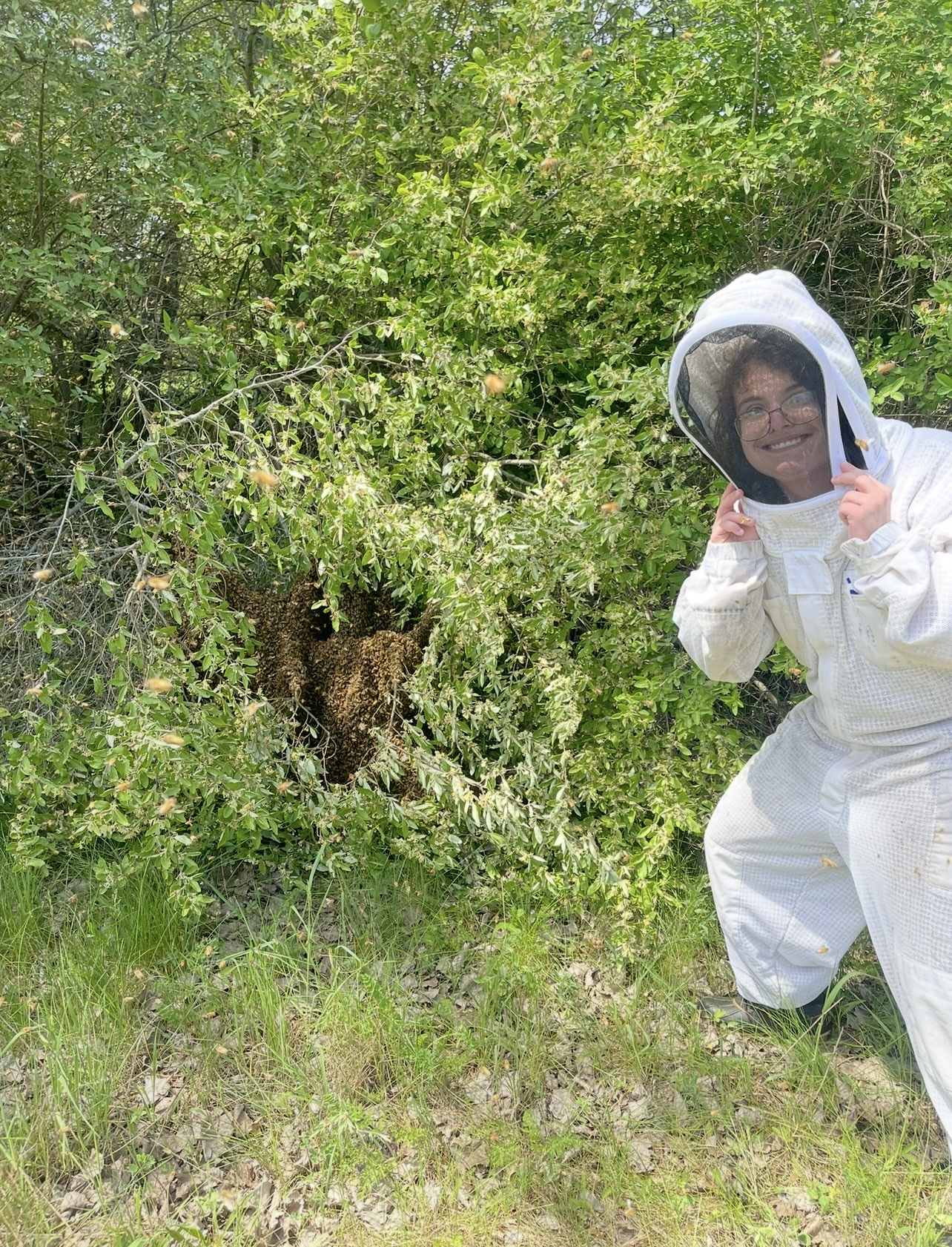
A: Peter Fowler. We both are currently in the Milbrath lab where our focus is on honey bees. Different members of the lab are focused on different projects and areas. My specific project for this summer was focused on one of the major parasites of honey bees: varroa mites. These mites are huge devestators to honey bees colonies, so looking for a method of control against them is crucial. My project was to test the efficacy and safety of a fungal strain (Beauveria bassiana) on honey bees for the control of varroa mites.
Q: What is the main goal of your project, and what does your day-to-day work look like?
A: The main goal of my project was to see if this specific strain of B. bassiana could work as a method of control against varroa mites, while not negatively impacting honey bee hive health. However, to determine that mite death was due to the fungus, we needed to confirm that the fungus actually infects the mites. Day-to-day tasks included both field and lab work. In the lab I would prepare sticky boards to deploy in the field as a method of collecting mite drops, as well as running infection assays with collected mites to confirm fungal growth. In the field is where we deployed our treatment on the hives and collected our mite data.
Q: Are there any specific techniques, skills, or methods you’re learning?
A: I’ve learned a lot about working with bees in the field and bee keeping! I have learned how to assess hive health through cluster counts, how to use hive tools, how to collect samples for alcohol washes (a method of counting mites from a sample of bees), what the signs of certain diseases look like in hive frames, etc. I also gained more experience with scientific writing and poster making through Mid-SURE!
Q: What has been the most interesting or rewarding part of your experience so far?
A: Working with the bees! Each time I went out into the field in my bee suit, I always left learning something I hadn’t previously known. It’s so cool to be able to work with and see the bees up so close. I always love trying to spot the workers vs drones vs the queen in a given hive. I’m surprised I did now know much about varroa before this program, but after learning about all the devestation it causes to honey bees, I am glad that my experience in this program involved working towards an easier world for honey bees to live in.