New Faculty Q&A: Kelsey Adams on Mosquito Biology and Global Health
 Print
Print Email
EmailNew faculty member Kelsey Adams joins MSU Entomology to advance malaria research and mentor future scientists.
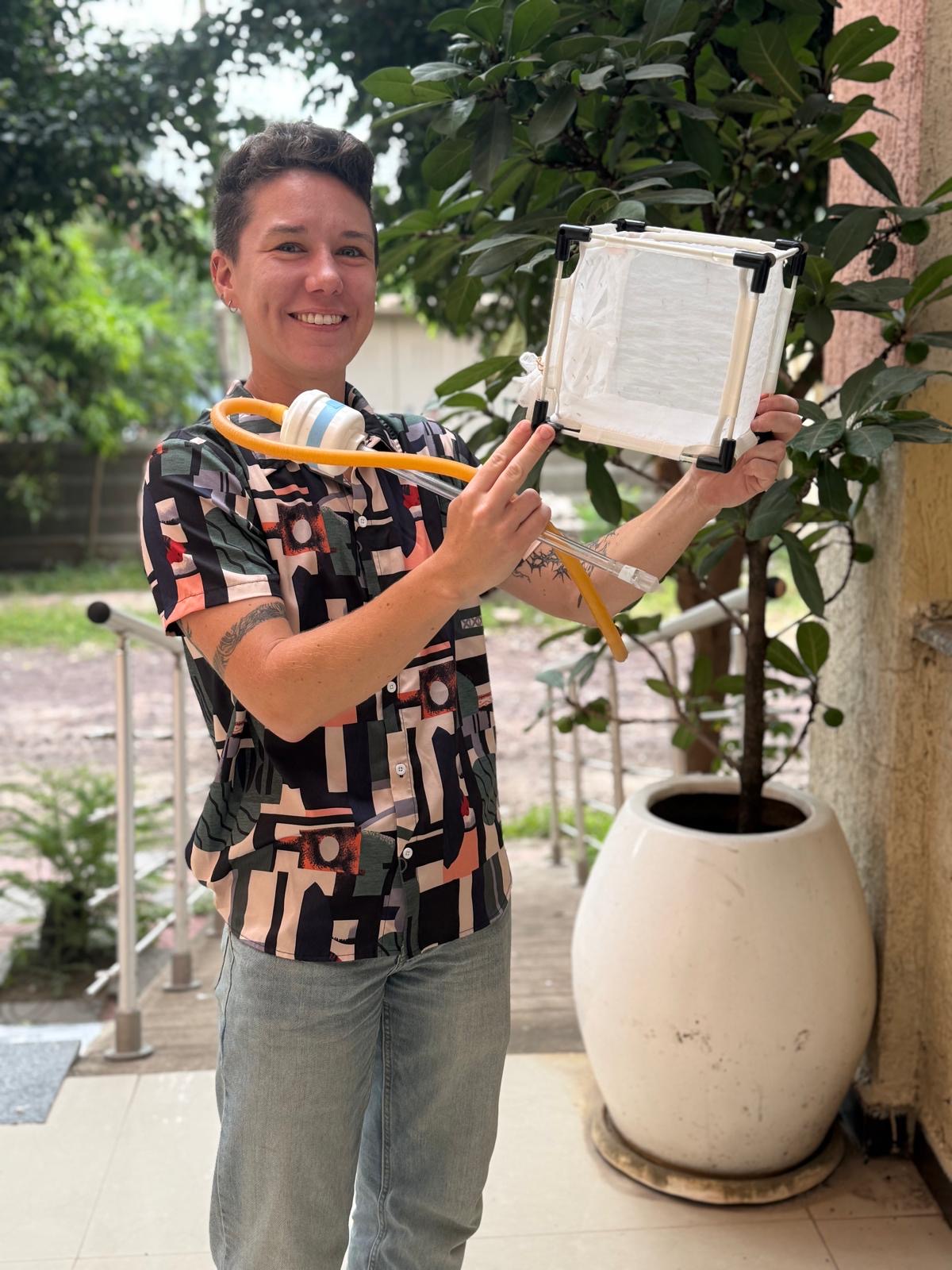
Q: Can you share a little about your professional background?
A: I performed my Ph.D. and my postdoctoral work at Harvard University with Prof. Flaminia Catteruccia, who is a pioneer of mosquito transgenesis technology, and is now at the forefront of efforts to uncover the biology of mosquito stages of malaria parasites. In her lab, I conducted work on Wolbachia, insecticide resistance, and mating biology in Anopheles mosquitoes, and continue to work with collaborators at the Armauer Hansen Research Institute in Ethiopia to investigate antimalarial compounds that can be targeted to mosquitoes to block malaria transmission. Most recently before starting as an Assistant Professor at MSU, I was awarded a K99 Pathway to Independence Award to investigate interactions between Wolbachia and Anopheles mosquitoes.
Q: What first sparked your interest in entomology?
A: When I first learned about Wolbachia bacteria and their natural ability to manipulate insects in so many intricate ways, including limiting the spread of pathogens in insect populations, I was absolutely fascinated and wanted to learn more and contribute to that research. In particular I was motivated by the activities of the World Mosquito Program’s community-driven approaches to using Wolbachia to curb dengue transmission, and wanted to drive efforts for similar approaches in the malaria control space.
Q: What specific area(s) of entomology do you concentrate on, and what drew you to that focus?
A: I mainly focus on malaria transmission by Anopheles mosquitoes - I was interested in infectious diseases after my undergraduate degree in Microbiology and was drawn to the understudied role of the mosquito vector in malaria. At that time, the genomes for these vectors were quite recently annotated, and there were a lot of new avenues to explore. It remains true that there is a lot of fundamental molecular biology that’s not very well characterized in mosquitoes.
Q: Can you tell us about your recent appointment—what your role will entail and what you hope to accomplish here at MSU?
A: My role will largely be research-focused with some teaching as well. My goals are equally to conduct impactful research on mosquito borne disease, and to support the next generation of scientists. In my research I hope to identify components of mosquito and parasite biology that can be exploited to generate new tools to curb malaria transmission.
Q: What broader questions in science or society do you hope your work will help address?
A: I am motivated by the goal to improve health for all, and to combat transmission of preventable diseases. Malaria still kills hundreds of thousands of people each year, despite drugs that work, partly because of limited access to healthcare, and partly because malaria vectors are incredibly dense and difficult to manage in many rural areas in sub-Saharan Africa. In my work, I want to innovate sustainable malaria control strategies, knowing that these need to be cost-effective to be deployed in the field.
Q: What has been a particularly memorable or formative experience in your career so far?
A: I’ve been very lucky to have several opportunities to do fieldwork in malaria-endemic countries. Early on in my graduate degree I had a really incredible experience as part of a project studying natural mating swarms in Burkina Faso. I traveled to villages where the malaria prevalence was exceptionally high throughout the transmission season – when we conducted surveillance for malaria in these regions, often more than 50% of children are positive for the parasite. In these villages, the density of mosquitoes at night when we went to go capture couples from swarms was striking, and seeing several of these dense swarms of thousands of mosquitoes within an area about the size of my living room, I began to appreciate the scale of malaria at a different level. It was also inspiring to see the community engagement in this research – as part of the University’s research program they trained villagers to capture the couples from the swarms, which is no simple feat. Altogether it made a huge impression on me to shape my perspectives on malaria and what it takes to have an implementable and sustainable strategy to manage malaria that communities will get on board with.
Q: Will you be teaching and/or bringing on any graduate students? If so, what courses/who?
A: I will start teaching Medical Entomology (ENT 460) next year. I certainly plan to bring grad students on board by Fall 2027 if not sooner, so trainees should reach out to me if they may be interested in joining!
Q: What role does teaching and mentorship play in your approach as a faculty member?
A: There is no science without mentorship, and having the opportunity to share my scientific passions with trainees is one of the most exciting parts of this job. In my approach to mentorship, I will emphasize for my students and trainees to design their own testable scientific questions within a framework that I can help them to shape. The projects that I’ve been a part of where I’ve had the chance to lead or be part of a team have been the most rewarding, because more brains are always better than one, and so I aim to have my laboratory be a cooperative and collaborative space where everyone’s strengths are utilized and shared.
Q: Outside of your academic work, what personal interests or hobbies do you enjoy?
A: I enjoy anything that gets me outside and active – running, cycling, hiking in all seasons, and CrossFit are some of my main hobbies, and where I find a lot of community as well. I’m two hikes away from completing the 48 peaks >4,000 feet in New Hampshire, and plan to run a marathon in spring.