Northwest Michigan fruit update – April 21, 2026
 Print
Print Email
EmailThe overnight low dropped to 23.1 degrees Fahrenheit April 19-20, and we are evaluating status of the buds on crops across the region.
Weather report
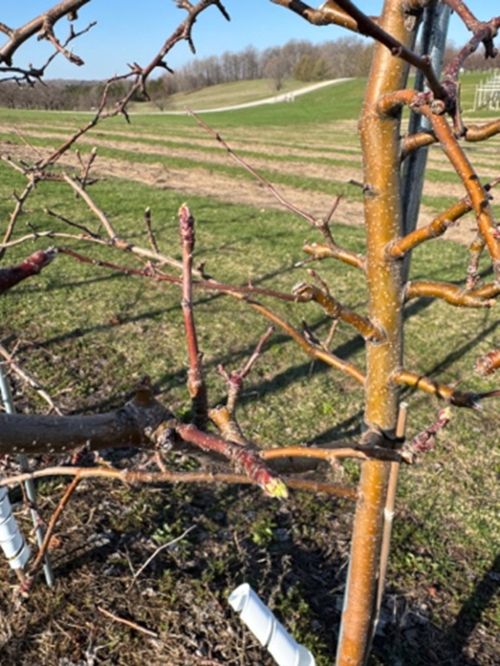
The biggest news on growers’ minds is the overnight low temperatures on Sunday night into Monday morning, April 19-20. The lowest temperature reported at the Northwest Michigan Horticulture Research Center was 23.1 degrees Fahrenheit. Based on the stage of development of all the tree fruit crops, the buds should have been able to withstand some low colds. We are at green tip in sweet cherries, and based on the cold temperature charts, we anticipate 10% damage at 25 F and 90% damage if the overnight temperatures dropped down to 14 F. We are also at green tip in Montmorency, and the chart predicts 10% damage at 26 F and 90% damage at 22 F. We are evaluating if the cold temperatures caused any damage here at the Northwest Michigan Horticulture Research Center.
Spring seems to be coming on slowly here in northwest Michigan, especially compared to the southern part of the state. Southwest Michigan is considerably further ahead this season, and we have only seen isolated days with temperatures above 60 F; we did hit 70.3 F on April 17. We have accumulated 166.6 growing degree days (GDD) base 42 and 60.8 GDD base 50. These numbers are still slightly ahead of our 36-year average: 138.8 GDD base 42 and 55.1 GDD base 50.
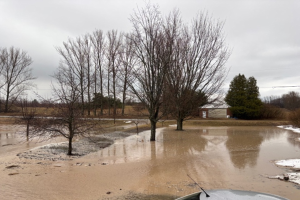
The weather has dried off after Saturday’s rains. The Northwest Michigan Horticulture Research Center Enviroweather station recorded less than a quarter inch of rain, but even that small amount of rainfall is notable with all the recent rains. The Northwest Michigan Horticulture Research Center received over 6.5 inches of rain since Jan. 1. We have more standing water in orchards this year compared to any other year I can remember. Growers have been challenged to get into the orchards because of the excess moisture in the fields.
Jeff Andresen’s forecast is predicted to be variably cloudy and warmer on Tuesday, April 21. Wednesday and Thursday, April 22-24, will be mild and dry. There are some isolated thunderstorms developing in the west on Friday and moving east. Sunday, April 26, will be dry and cool with more rain in the forecast for next Monday. The medium range forecast generally calls for near to below normal mean temperatures and normal to above normal precipitation totals. The latest seasonal outlook calls for the equal changes of both temperature and precipitation totals for the month of May and through mid-summer.
Crop report
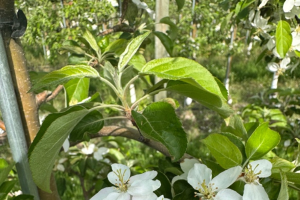
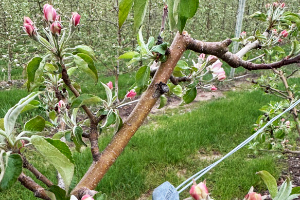
We have had up and down temperatures over the past week, and crops have not moved as much as I anticipated. Compared to other parts of the state, we are not far along. In southwest Michigan, peaches, pears, tart cherries, sweet cherries were all in bloom during the cold night. Pear bloom started on April 19. Apples are just beginning in southwest, and apples are anywhere from pink to first bloom depending on variety. Michigan State University Extension predicts full bloom in apples in three to four days.
In west Michigan, pears are at first white, and growers are thinking about fire blight. There are no open apple blossoms. Growers throughout the state are evaluating the cold temperatures from Sunday night into Monday morning.
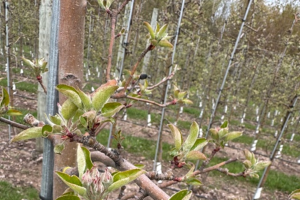
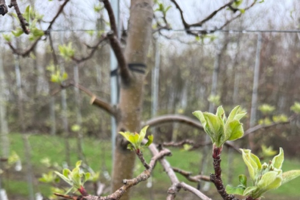
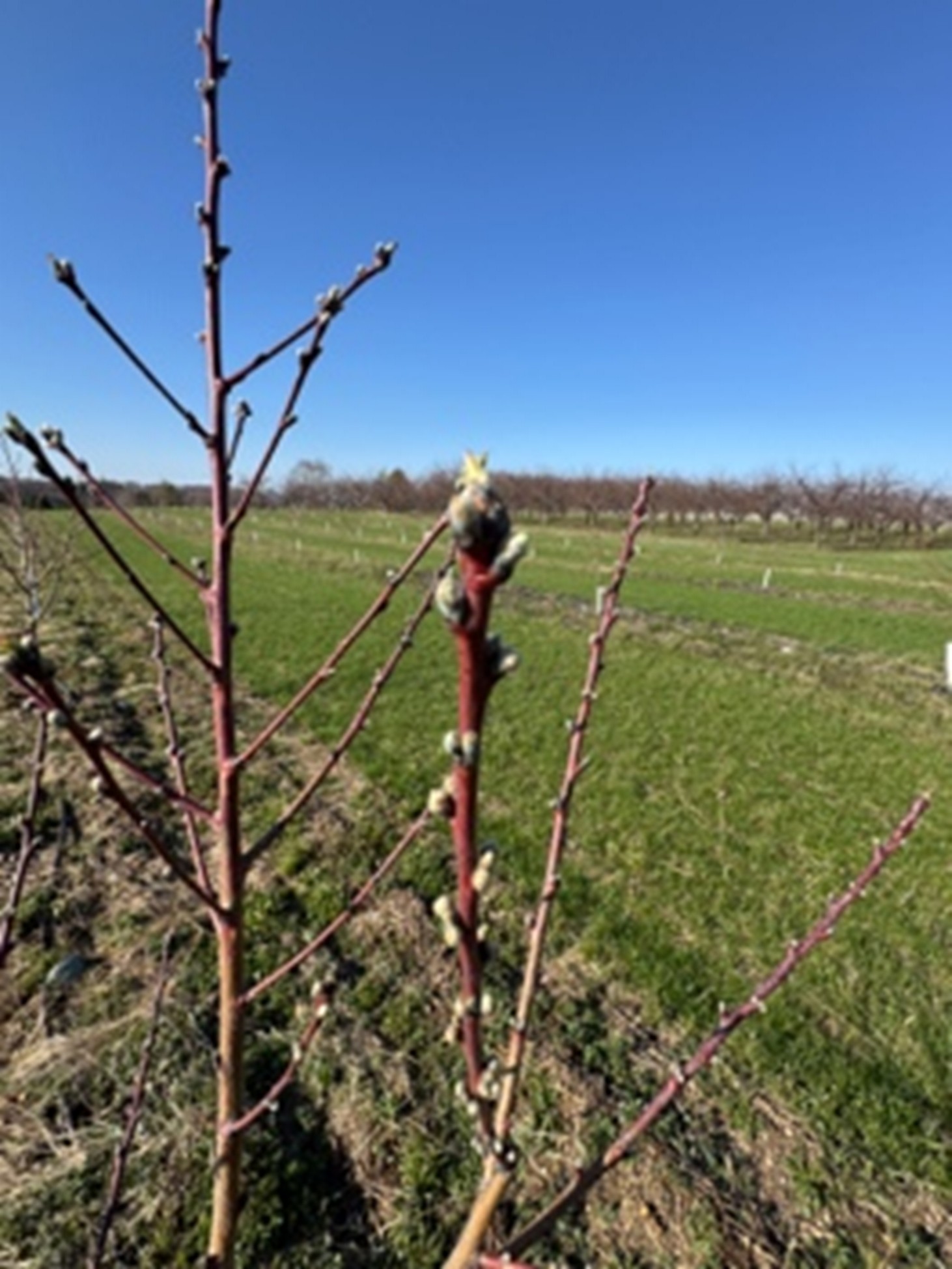
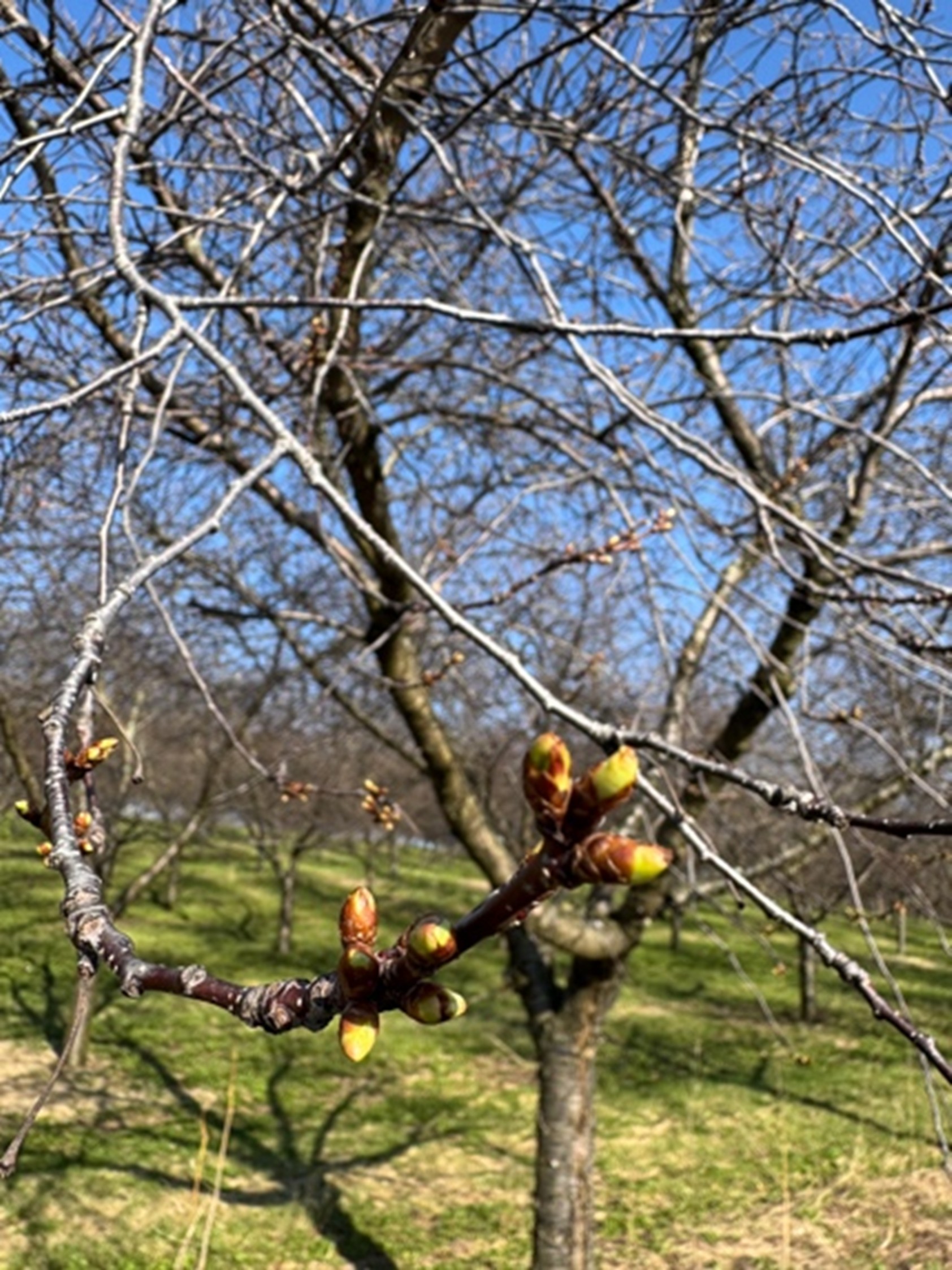
In northwest Michigan, we are at bud swell in pear and green tip in Balaton and Montmorency tart cherries. Montmorency was at green tip at this same time last week, so no movement over the week in this variety. Emperor Francis and Gold are at green tip, and we are at side green in Ulster. We are at green tip in Honeycrisp and at quarter-inch green in Gala.
Disease report
Apple scab is still on growers’ minds this week, especially with all the rain. We do not have much green tissue showing, but Galas are at quarter-inch green, and this tissue will need to be protected. There is rain in the forecast on Thursday but only 35%; the likelihood of rain increases on Friday, April 25 to 75% in Traverse City. Growers will need to be covering for scab before that rain event. There is also higher temperatures in the forecast: today is predicted to be 65 F and we may hit over 70 F on Thursday, so trees will be growing and this tissue will need to be protected. Amy Irish-Brown collected over 650 spores over the past wetting event on the Ridge, and she is also recommending protecting against scab prior to the next rain event.
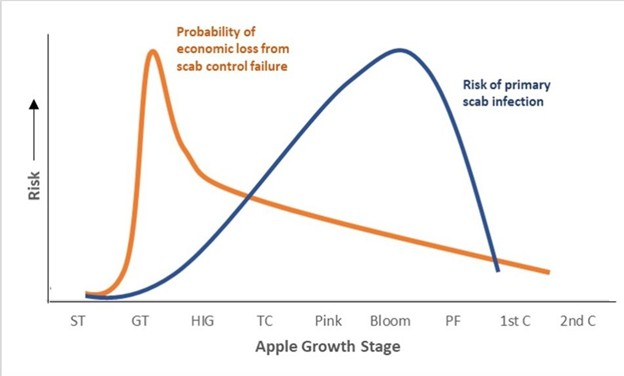
The above graph is always a good reminder for growers regarding apple scab. David Rosenberger, PhD, of Cornell University shows that the risk of scab is relatively low at green tip and increases as we approach bloom. However, the probability of developing an early scab infection is high at the green tip timing, and as we are at green tip to half-inch green on many varieties, we recommend actively protecting against apple scab prior to the next rain event.
Insect report
This week, this early timing is appropriate for targeting insects with a dormant oil application. San Jose scale and woolly apple aphid are two insects that benefit from early season oil applications. Early oil sprays targeting San Jose scale can be applied in apple and sweet cherry. Sweet cherries are susceptible to oils, so watch the green tissue before applying oil in cherry. “Early season reminders for key application timings of dormant and delayed-dormant fruit sprays” is a great article that guides growers through early oil sprays. Additionally, avoid applying sulfur or Captan within several days of oil application as this will also cause phytotoxicity. Watch out for freezing temperatures before or after an oil application.
We caught green fruitworm this week even with the cooler temperatures: one, five and six moths in each of our three traps. We did not catch American plum borer, oriental fruit moth or black stem borers.
Rufus Isaacs, PhD, passed along this video that guides how growers can assess a colony for its strength without opening the hive box. This measurement is useful for Extension, growers or crop consultants. It was developed for a blueberry SCRI project, but the approach to assessing strength is relevant for all fruit crops. We are guiding blueberry growers to look for their colonies to have more than 50 returning bees per minute.
This work is supported by the Crop Protection and Pest Management Program [grant no 2024-70006-43569] from the USDA National Institute of Food and Agriculture. Any opinions, findings, conclusions, or recommendations expressed in this publication are those of the author(s) and do not necessarily reflect the view of the U.S. Department of Agriculture.