Northwest Michigan fruit update – May 12, 2026
 Print
Print Email
EmailCold weather continues across the region. Crop development is slow. Sweet cherry bloom is beginning, but honey bee activity to pollinate the cherries is minimal with the cool conditions.
Weather report
The cold weather continues. It is starting to feel like spring will never come to northwest Michigan. We have had cold days with daytime temperatures in the 40s and 50s, and we have seen overnight temperatures dip below freezing. The coldest sites in northwest Michigan have been the Omena and East Leland MSU Enviroweather stations. The Omena MSU Enviroweather station dropped down to 27 degrees Fahrenheit on the morning of May 12. The East Leland station recorded an overnight low of 25.7 F on May 10. There have been frost fans operating nearly every night with these cold conditions. There is one more night of cold weather in the forecast, and the weather is predicted to change and finally be warm.
We have accumulated 314.8 growing degree days (GDD) base 42 and 129.8 GDD base 50. These numbers are finally behind our 36-year average: 326.8 GDD base 42 and 145.5 GDD base 50. Each week, our averages have been slightly ahead of the 36-year average, but the weather certainly has not felt warmer; growing degree days are indicating that 2026 has had a cold start to the spring.
There is rain in the forecast today (Tuesday, May 12), although the percentages vary among weather forecasts. As I work on this report, there is some rain falling at the Northwest Michigan Horticulture Research Center. There is a slight chance of rain again tomorrow, but the current forecast is predicting only a 35% chance of rain.
Jeff Andresen’s forecast is predicted to be variably cloudy with scattered showers spreading northwest to southeast across the state today. Wednesday is predicted to be the coolest day of the week. There is still frost in the forecast for this evening and again on Wednesday night into Thursday morning, May 13–14. The medium range outlook is calling for a return of warmer and wetter for the remainder of May.
Crop report
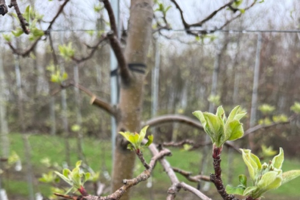
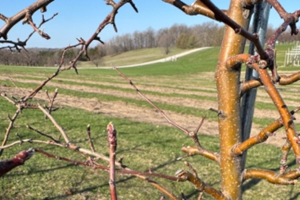
Crop development is slow with the cold conditions.
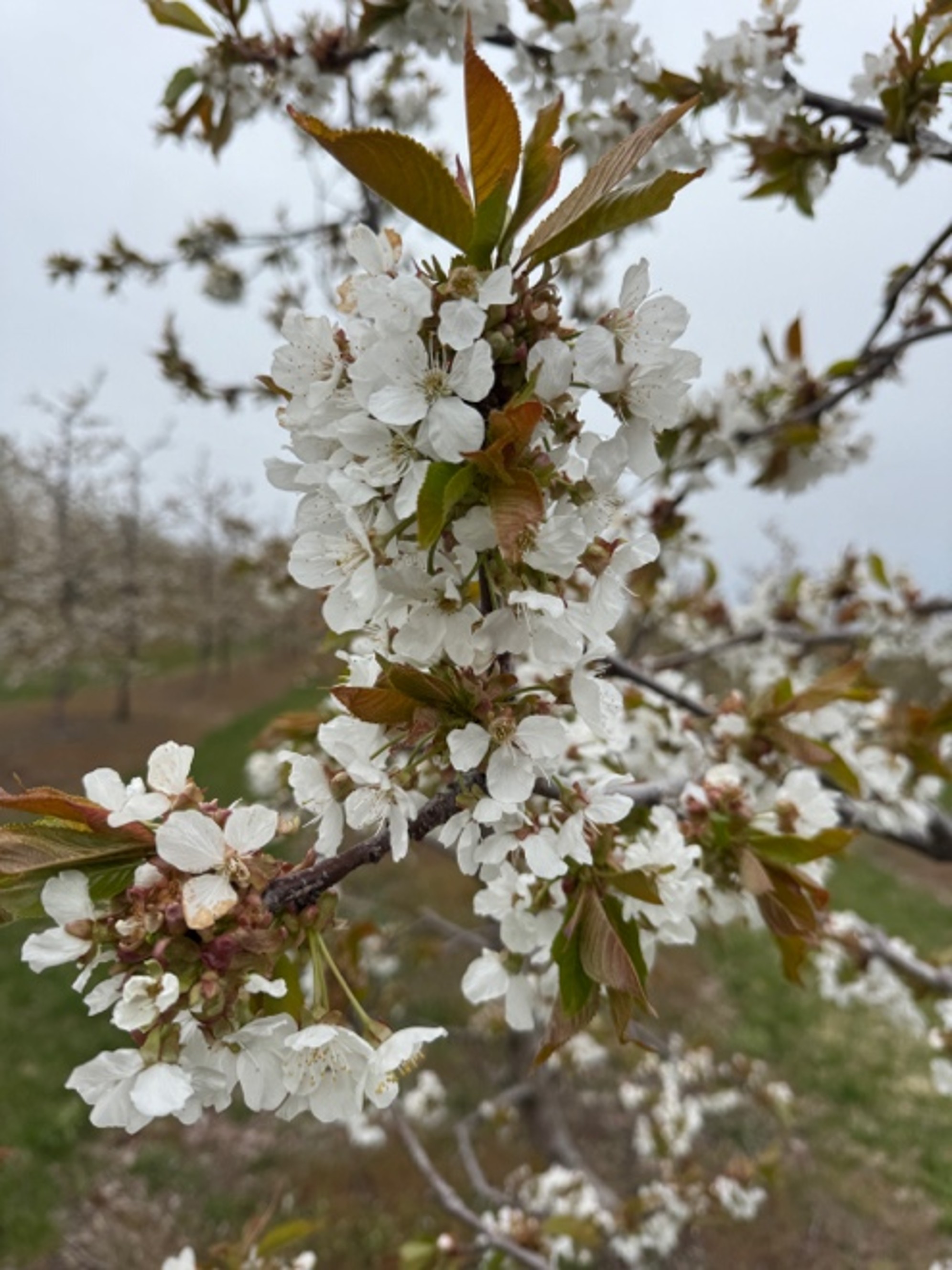
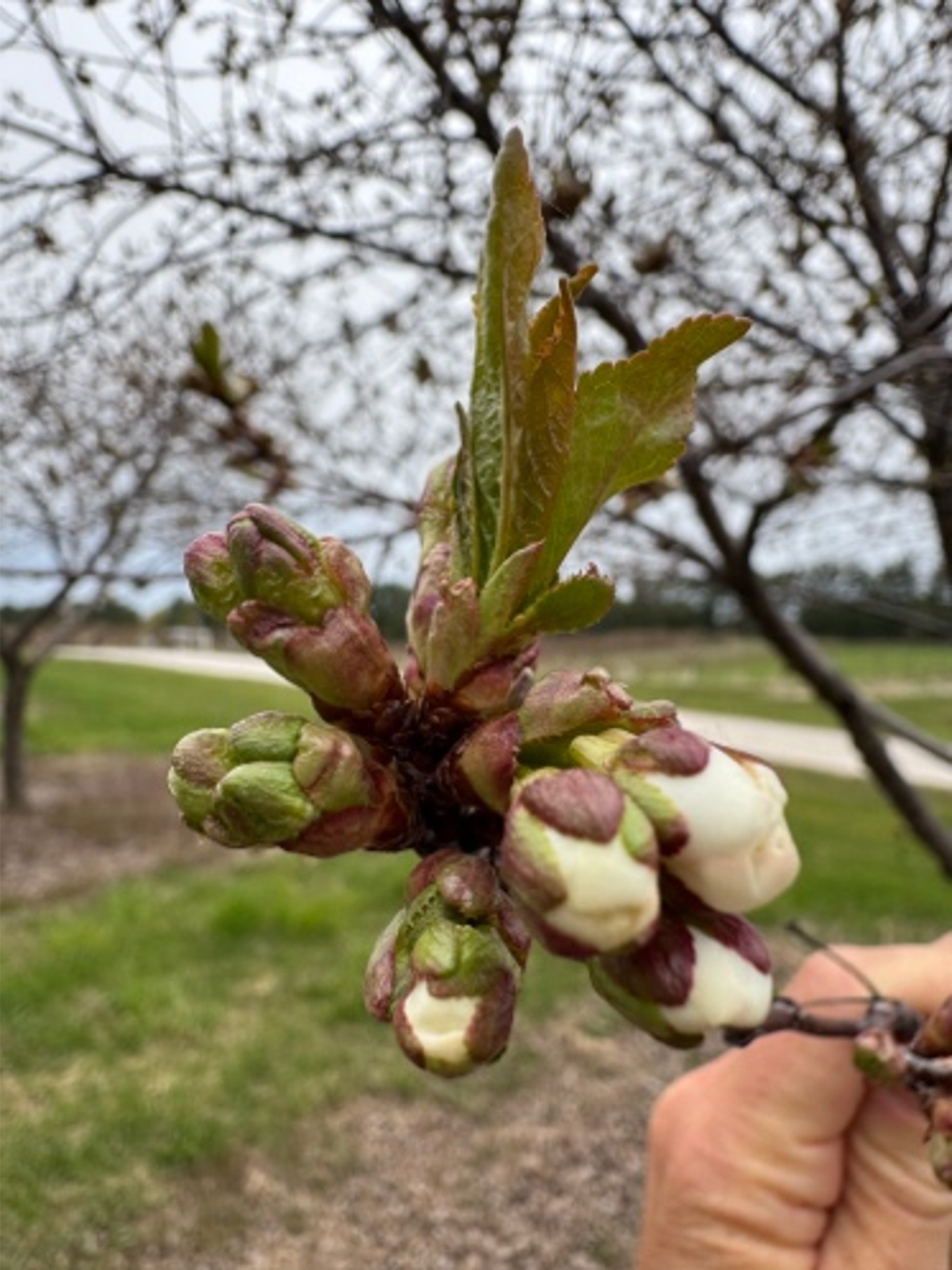
Sweet cherry bloom is starting at the Northwest Michigan Horticulture Research Center. Emperor Francis is at 40% bloom, Gold is at 30% bloom and Ulster has its first blossoms opening. Unfortunately, honey bee activity is minimal with the cold weather. Temperatures are predicted to warm up by the weekend, and hopefully we can get a pollination window with open sweet cherry blooms and good honey bee activity. Bumble bees are active in cold conditions, and we hope these native pollinators are helping set fruit in this weather.
Pears are at late open cluster.
Balaton tart cherries are at white bud and Montmorency are at early white bud.
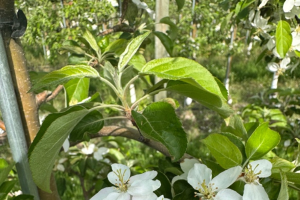
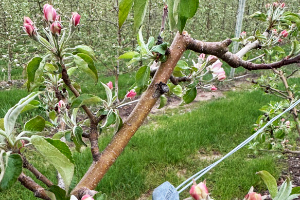
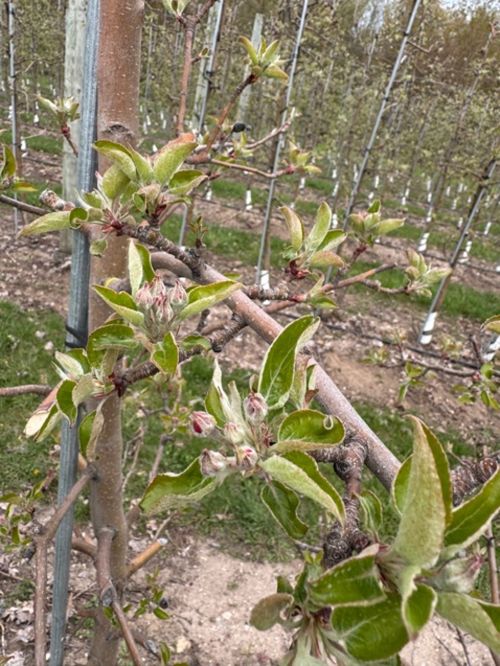
Honeycrisp and Gala apples are at early pink.
Disease report
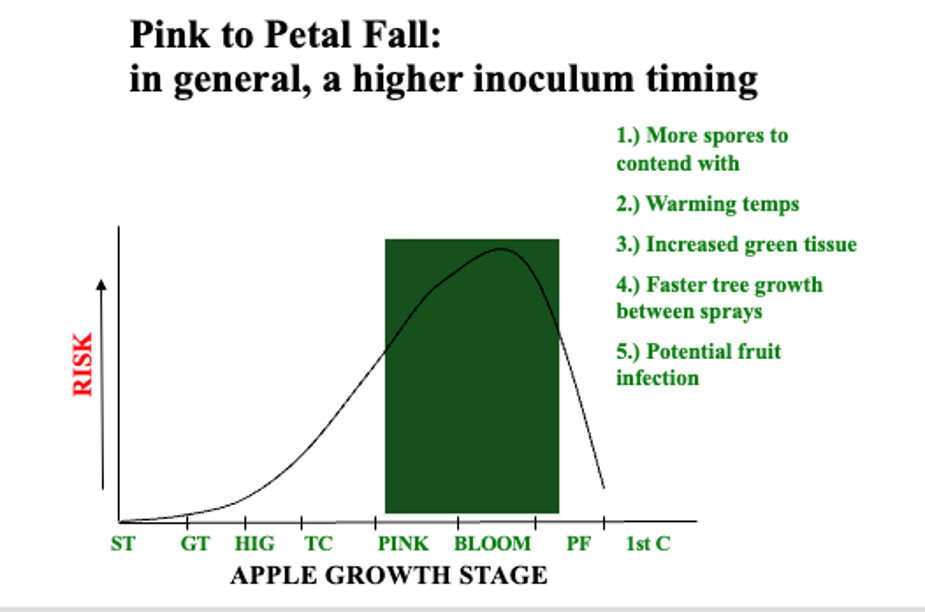
Apple scab is still on growers’ minds this week, especially as we approach the pink stage. From pink to petal fall is the time for higher scab inoculum. We have more spores at this time, and we will have warmer temperatures this weekend. We also will likely see increased growth of green tissue that will need to be protected.
We had a window of dry conditions, but growers will need to be out spraying for scab before the next rainfall. According to RIMPro, just under 50% of the spores are mature. The Enviroweather scab model is predicting 49% of the spores are mature, and 21% of spores are dispersed. This number is predicted to jump by May 18, when the model predicts 80% of the spores will be mature and 49% will be dispersed.
Insect report
The cold weather has minimized insect activity again this week. I hypothesize that as soon as it gets warm, we are going to see a huge flush of insects.
Be on the lookout for ambrosia beetles. We caught a single beetle last week and this week, but with the weather warming, we suspect a big flight of these beetles this weekend. Growers that have had problems with ambrosia beetles in the past, mostly in high density apples, should be prepared to spray this weekend if the weather does warm. The following table of effective insecticides for ambrosia beetles was put together by Heather Leach in the Department of Entomology at Michigan State University.
|
IRAC |
Product |
Active ingredient |
Relative non-target toxicity |
|---|---|---|---|
|
3A |
Brigade |
Bifenthrin |
High |
|
3A |
Danitol |
Fenpropathrin |
High |
|
3A |
Warrior II, Lamcap II, etc. |
Lambda-cyhalothrin |
High |
|
3A |
Perm-up, Permethrin, etc. |
Permethrin |
High |
|
UN |
Surround |
Kaolin clay |
Low |
This work is supported by the Crop Protection and Pest Management Program [grant no 2024-70006-43569] from the USDA National Institute of Food and Agriculture. Any opinions, findings, conclusions, or recommendations expressed in this publication are those of the author(s) and do not necessarily reflect the view of the U.S. Department of Agriculture.