Regionalizing Michigan’s Small Grains: Highlights from the 2026 Food-grade Grains Field Day
 Print
Print Email
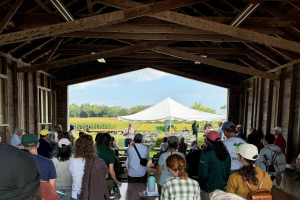
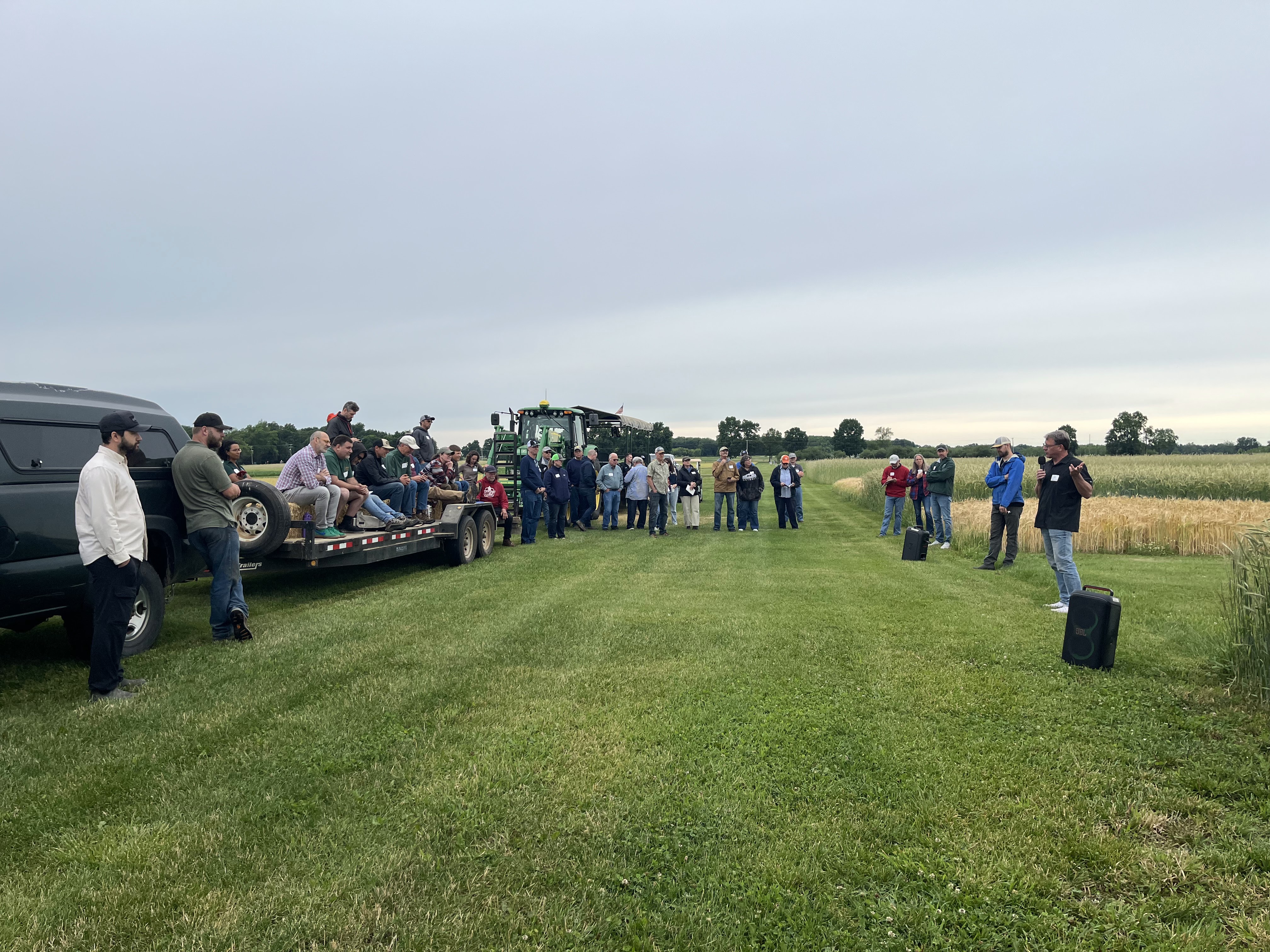
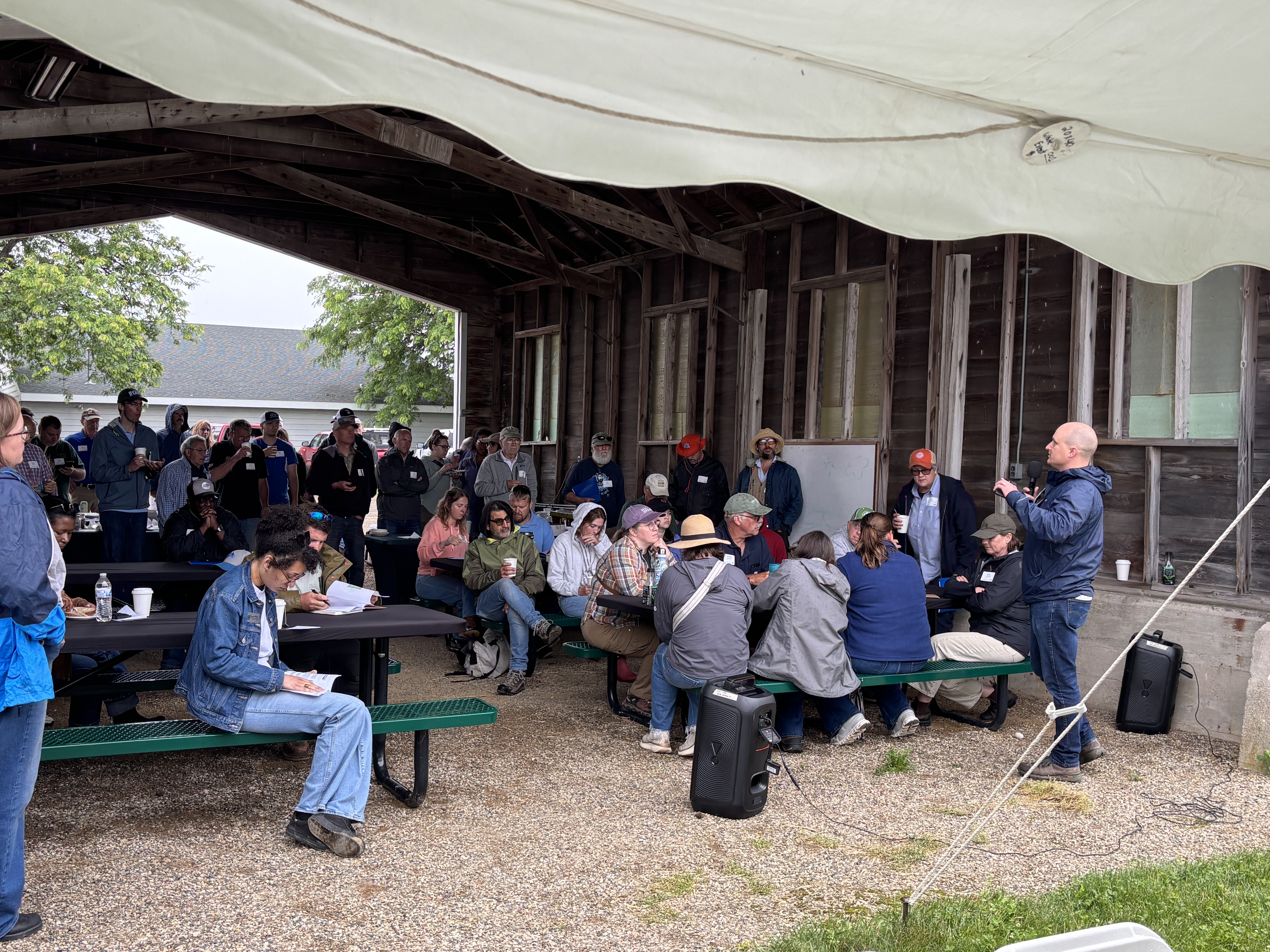
EmailThe 2026 Food-grade Grains Field Day at MSU’s Kellogg Biological Station on June 17 attracted over 80 participants interested in learning how to make locally grown wheat, barley, rye, and canola available to Michigan bakeries, breweries, and distilleries.
“How do we connect local farmers and buyers?” is a perennial question, and one that Michigan farmers, millers, bakers, distillers and more asked at the Third Annual Food-grade Grains Field Day. Food is the centerpiece of our lives, and eating good food – sourced locally, grown regeneratively – takes skill and care across the supply chain. This year’s field day highlighted pairs of individuals working with rye, barley, wheat, and canola throughout the state and region. Participants enjoyed two delicious examples of these dedicated pairs: freshly baked pastries and bread from Zingerman’s Bakehouse, made with Goetz Farm grain from Riga, MI, and lunch by Field & Fire, using local grain from Melody Bee Farms.
The Food-grade Grains Field Day was co-organized by Michigan Agriculture Advancement (MiAA), MSU Extension, and the KBS Long-Term Agroecosystem Research (LTAR) program. It was generously supported by the Artisan Grain Collaborative, Michigan Craft Beverage Council, and Star of the West Milling Company.
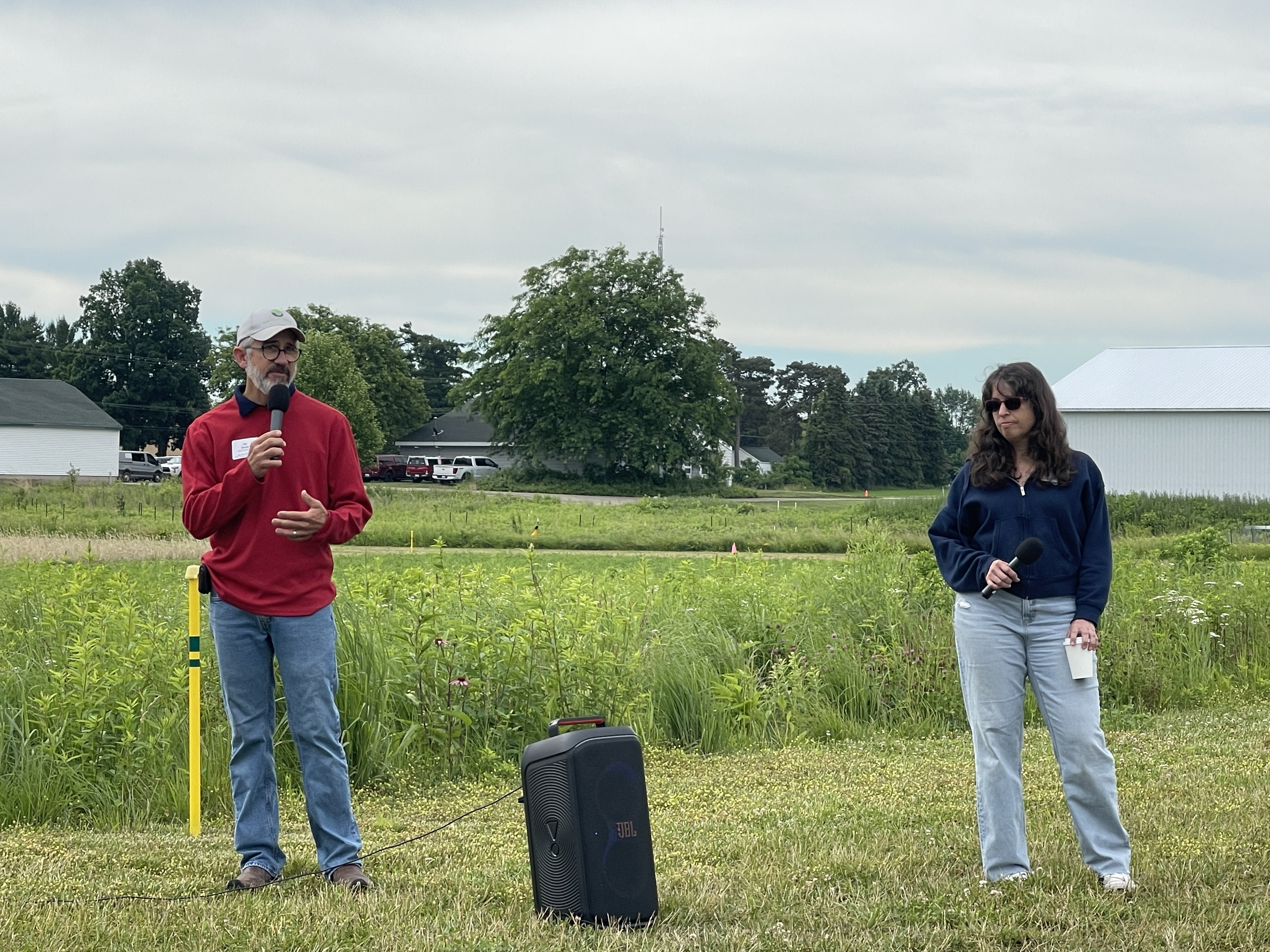
Keynote speakers: Jay Brandt & Doris Bozzi
The field day began by featuring a farmer-miller duo from Central Ohio, Jay Brandt of Brandt Family Farms, and Doris Bozzi of Local Millers. Their partnership started as an unexpected connection that has grown into a 12-member network of local farmers and millers known as the Ohio Grain Hub. During the Covid-19 pandemic, Doris and her husband started baking sourdough bread, and when their interest grew, they bought a mill and looked for local expertise to set up their millhouse. Luckily for them, they discovered Jay, who had years of experience milling local grain for bakeries and distilleries. Since then, their collaboration allows them to navigate the challenges of growing local wheat in the Midwest.
Bakers and millers like Doris and Joe Bozzi are interested in older, heirloom varieties of wheat because they provide unique flavors and grain characteristics; however, they face challenges in cultivation and baking. Jay explained that modern agronomic management doesn’t work well on heirloom varieties because their varieties are not well adapted to today’s agronomic conditions and pest pressures. Further, a lack of modern breeding and development causes older varieties to lack consistency farm-to-farm and year-to-year. Ultimately Jay and Doris would like hard red wheat varieties that have consistent crop and baking performance. Until then, creating a hub of heirloom wheat growers and millers sustains their mission by having a community of knowledge and support. Jay reflects that “Before, we didn’t know anyone who grew these grains. Now we have people reaching out when we have a shortage or lower quality – this provides resilience.”
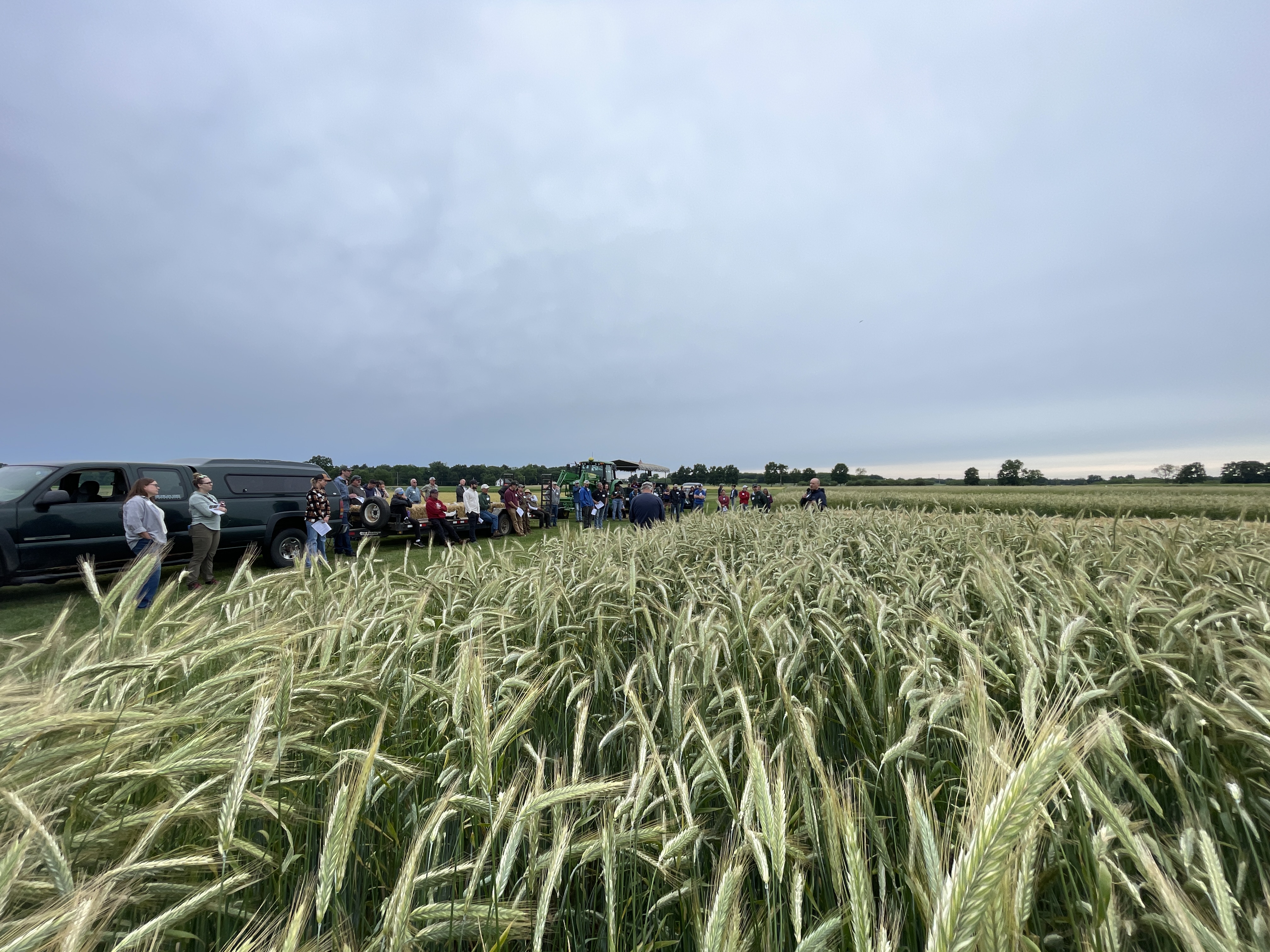
Rye
In the Midwest, rye is often thought of as a cover crop, but James DeDecker, Director of the Upper Peninsula Research and Education Center (UPREC) in Chatham, Michigan, highlighted rye’s opportunity to be the cash crop in a rotation. He noted that there are multiple varieties of rye commercially available, and some of the best performing in Michigan include Hazlett, Danko, Rosen, and KWS Serafino. James, Brook Wilke, and others at MSU have led nearly a decade of cereal rye variety trials with commercial and experimental varieties tested for agronomic performance and grain quality. James noted that using open-pollinated versus hybrid seeds leads to differences in yield and quality performance, especially when distilled. Hybrids tend to have more uniform grain heads, require lower seeding rates, and have higher yields, but higher yielding rye could reduce flavor. Another tradeoff depends on the end use. In general, bakers prefer different flavor profiles and characteristics than distillers. James’ next research steps are to assess this tradeoff between productivity and flavor: “Striking the balance between quality and yield is where we need to go.”
Chad Munger, CEO of Mammoth Distilling, spoke after James and shared his dream to see Michigan rye used to craft Kentucky whiskey, forming a grain trail across Michigan. Doug Burke makes this happen at Mammoth Distilling, as their sourcing manager. He explained that he looks for farmers growing rye on small acres who can maintain crop quality and store the grain separately. This helps them take advantage of the unique flavor of local grain in each whiskey barrel.
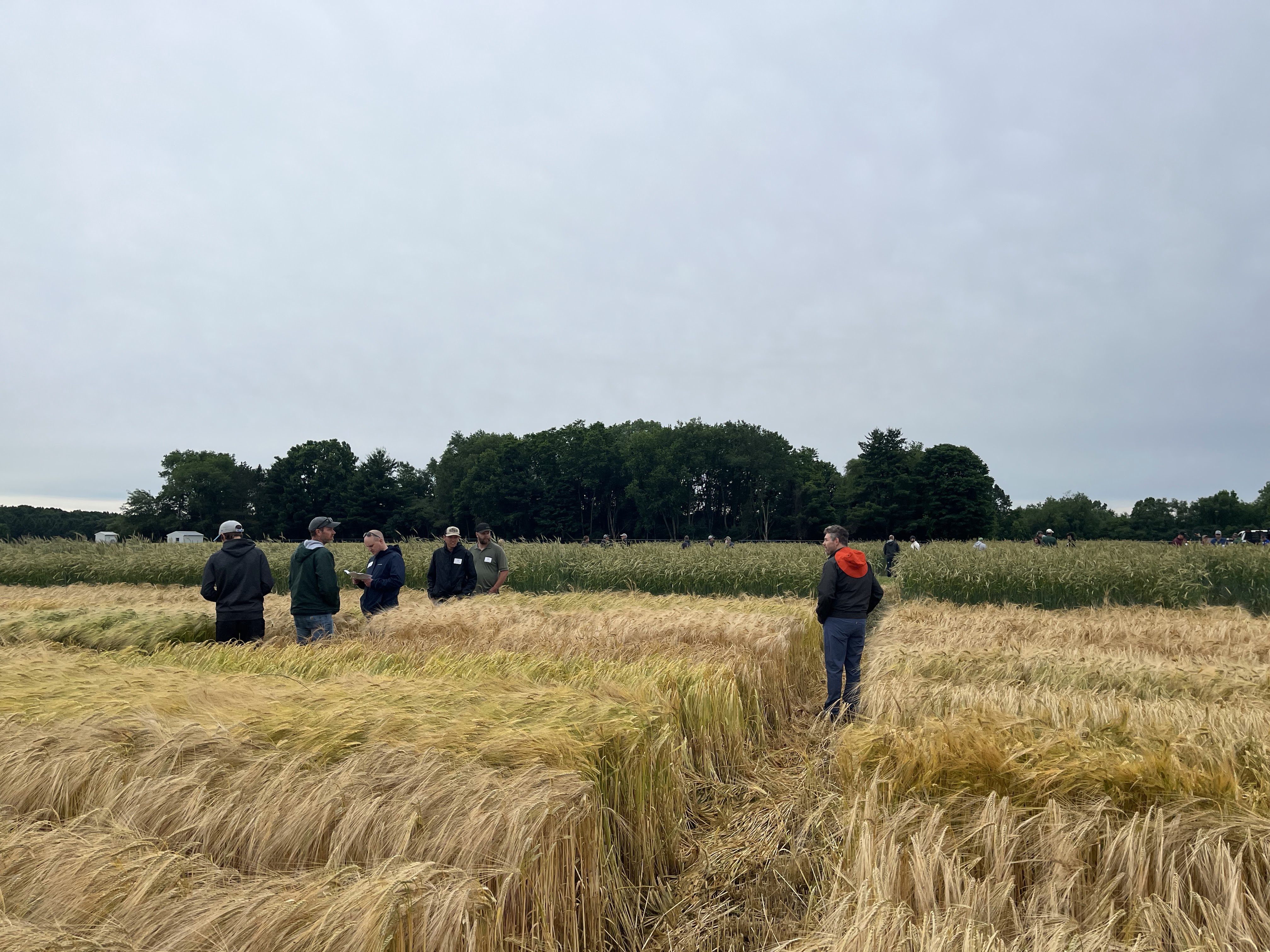
Barley
Each small grain has its own ideal agronomic management. Manni Singh, MSU Associate Professor of Cropping Systems Agronomy, shared winter barley research results comparing different planting dates and seeding rates. Some key results show that winter barley is more sensitive to delayed planting than winter wheat. Barley also seems to be responsive to higher seeding rates than wheat, with an optimal rate of 1.6 million seeds per acre. Importantly, uniform barley stands help achieve high barley grain quality (high protein, low vomitoxin content). Jeff Malkiewicz, co-founder of Great Lakes Malting Company, emphasized the opportunity for Michigan barley to be served in Michigan beer: “Currently, only 5% of 15 million pounds of barley used by Michigan brewers are Michigan grown.” We’ve got a lot of room to grow!
Wheat
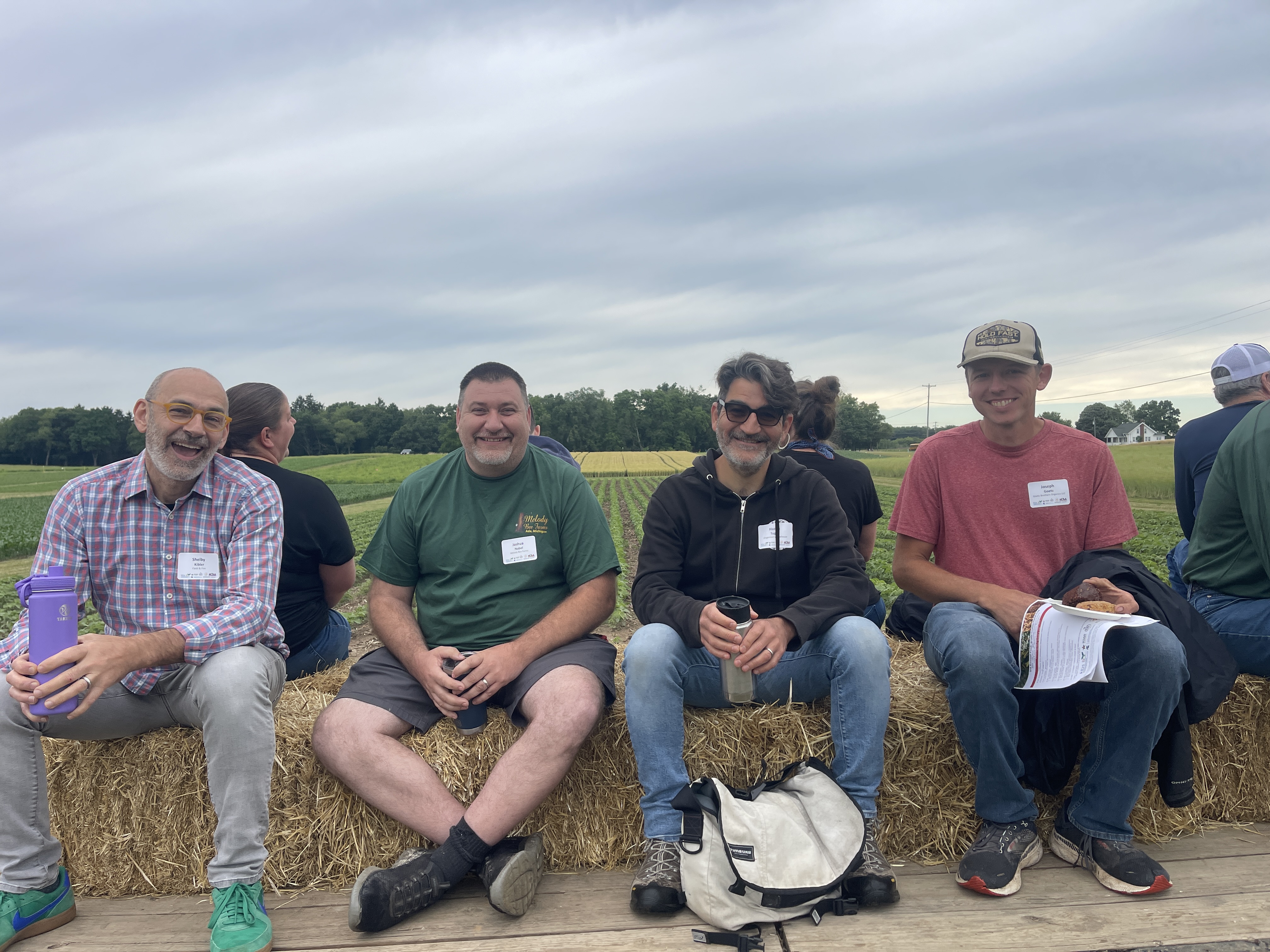
For any baker, flour is the most essential ingredient. For Zingerman’s Bakehouse, it’s the backbone of their business: they use close to 1.5 million pounds of flour each year to create traditional artisan breads and pastries. Hazim Tugun, bread specialist at Zingerman’s, shared that the bakehouse has a longstanding mission to source locally. They currently acquire about 20% of their grains, or 170,000 lbs annually, as close to the bakery as possible. One of their farmer partners, Joe Goetz, of Goetz Family Farm (Riga, MI), grows organic wheat, which is of consumer interest and comes with additional challenges to supply, since organic management can make grain quality (including mycotoxin levels) more inconsistent.
Between growing and baking, Hazim noted that keys to their success of achieving benchmarks for locally sourced grain have been acquiring an on-site stone mill, working with local millers, increasing the diversity of projects and products, and collaborating with new farmers . Looking forward, Hazim shares what the industry can do to continue supporting a regional wheat: shifting consumer demand towards less familiar products, expanding and improving local hard red wheat production (in addition to soft reds), and “absorbing the abundance of grain coming our way.”
Eric Olson, MSU Associate Professor of Wheat Breeding & Genetics, spoke after Hazim, and expressed his confidence that we can research, breed, and develop hard red wheat varieties that meet agronomic and grain quality needs. Eric notes that bakers would love to source hard red wheat from Michigan. Currently, most of the state’s 500,000 wheat acres are soft red and white varieties used for baking crumbly crackers, cookies, and pastries. Hard red wheat, grown more frequently in the Great Plains where it is drier and cooler at night, is a challenge in Michigan. Eric shares the there are opportunities to improve hard red wheat production in the Midwest using genetics, despite climatic challenges.
Canola
The field day ended with a post-lunch session on canola production, led by Bryan Caldbeck (Caldbeck Consulting), Tom Butcher (ADM), Zach Wagner (local farmer), and Brook Wilke (KBS-LTAR). They shared their experiences growing canola – a relatively new row crop in Michigan – from planting to harvest. With an available market in Windsor, Ontario, canola is a viable commodity crop and provides benefits to crop rotations as a fall-planted, brassica species. Some common challenges with canola production are timing the crop post-soybean and developing herbicide appropriate for canola, which has fewer herbicide options compared to corn, soybeans, and wheat. Despite challenges, having the winter canola variety trial at KBS and canola planted for five years at the KBS-LTAR allows farmers to learn how to meet the agronomic needs of the crop.
Resources and partners
- MSU-Extension Resources:
- The Great Lakes Yield Enhancement Network (YEN) program for wheat
- Midwest cover crops council cover crops selector tool
- Artisan Grain Collaborative – resources and guides regional grain map of grain network in the Midwest