Smart trap study points to more precise codling moth management
 Print
Print Email
EmailResearchers found that automated camera traps detected codling moth activity earlier than conventional monitoring, offering a more precise way to track pest movement in apple orchards.
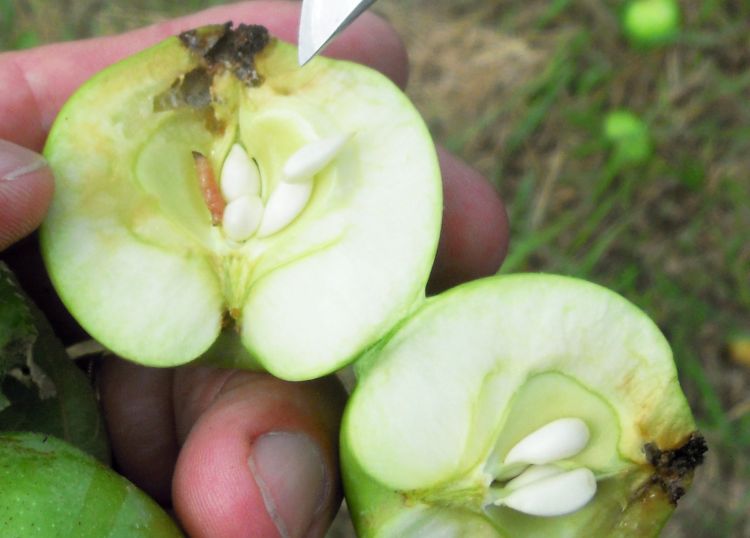
Researchers from Michigan State University’s Department of Entomology found that automated camera traps often detected codling moth activity in orchards several days earlier than standard monitoring methods, potentially helping growers make more precise pest management decisions.
Codling moth (Cydia pomonella) is a major pest of apples and can cause significant crop losses if not managed effectively. Growers rely on a biological benchmark known as a "biofix," the point at which sustained moth flight begins, to start degree-day models that guide insecticide application timing.
Traditionally, biofix is estimated using pheromone traps checked weekly and weather-based prediction models. However, because these approaches do not provide continuous observations, they may not capture moth activity as precisely as newer technologies.
The research team included Heather Leach and Julianna Wilson of Michigan State University, along with Frank Becker, Arnol Gomez and Ashley Leach of The Ohio State University. The researchers evaluated automated camera traps (CropVue™) in commercial apple orchards in Michigan and Ohio and compared their performance with conventional pheromone traps checked weekly and weather-based predictive models. The team also analyzed data from 599 monitoring sites to compare model predictions with field observations.
The researchers found that automated camera traps consistently detected codling moth activity approximately three to seven days earlier than standard traps. This shift in detection timing resulted in different recommended insecticide spray windows. They also found that weather-based models predicted codling moth activity anywhere from seven days early to 12 days late compared with field detections.
Researchers concluded that the higher-resolution monitoring provided by camera traps better captured field-level pest activity and may improve pest forecasting systems in the future.
“By improving how precisely we detect when codling moth activity actually begins, we can better align management decisions with what’s happening in the field,” Leach said. “That means growers can time sprays more effectively, reduce unnecessary applications and make better use of softer chemistries that depend on precise timing.”
Even small differences in pest monitoring methods can have meaningful consequences for apple production. Shifts of just a few days in spray timing can affect treatment effectiveness, production costs and the success of reduced-risk insecticides that require precise application timing.