Southeast Michigan fruit update – August 4, 2026
 Print
Print Email
EmailRed Haven harvest is starting, and brown marmorated stink bugs are emerging.
Welcome to the 19th in-season fruit article update for Southeast Michigan for the 2026 season. Throughout the season these updates will include information about the weather in the past week and the upcoming week, a fruit-by-fruit guide to current conditions with appropriate pest and disease updates, and other relevant observations.
General observations
The last week continued the pattern seen throughout much of July, with persistent heat and humidity and little rainfall aside from the storms that moved through on Sunday, Aug. 2. We are expecting that to change this week with scattered storms expected from Thursday, Aug. 6, through the weekend and into early next week. High temperatures will stay in the 80s for the next week while overnight lows will stay in the 60s.
More growers have picked their first Red Haven peaches and Japanese style plums have mostly been harvested. Blueberry harvest is entering its later phase and the first fall raspberries are starting along with early apples like Pristine and Vista Bella. Powdery mildew is the biggest disease risk this week and spotted wing drosophila continues to be a concern in berry crops.
At this point in the season for apples we are continuing the normal pattern of summer cover sprays, though we’re getting to the part of the season where we see an increase in brown marmorated stink bug populations. Japanese beetle populations are declining but still present in the region. Michigan State University Extension recently published a new article about controlling Japanese beetle in orchards and vineyards.
The Cyclospora outbreak in the country continues. While this does not appear to be linked to Michigan farms, this is a good opportunity to review on-farm produce safety guidelines in this MSU Extension video: How to Keep Cyclospora from Ruining Your Season.
MSU Extension educators recently published the 2026 apple maturity prediction dates, including the apple harvest prediction dates for southeast Michigan.
Fruit-by-fruit conditions
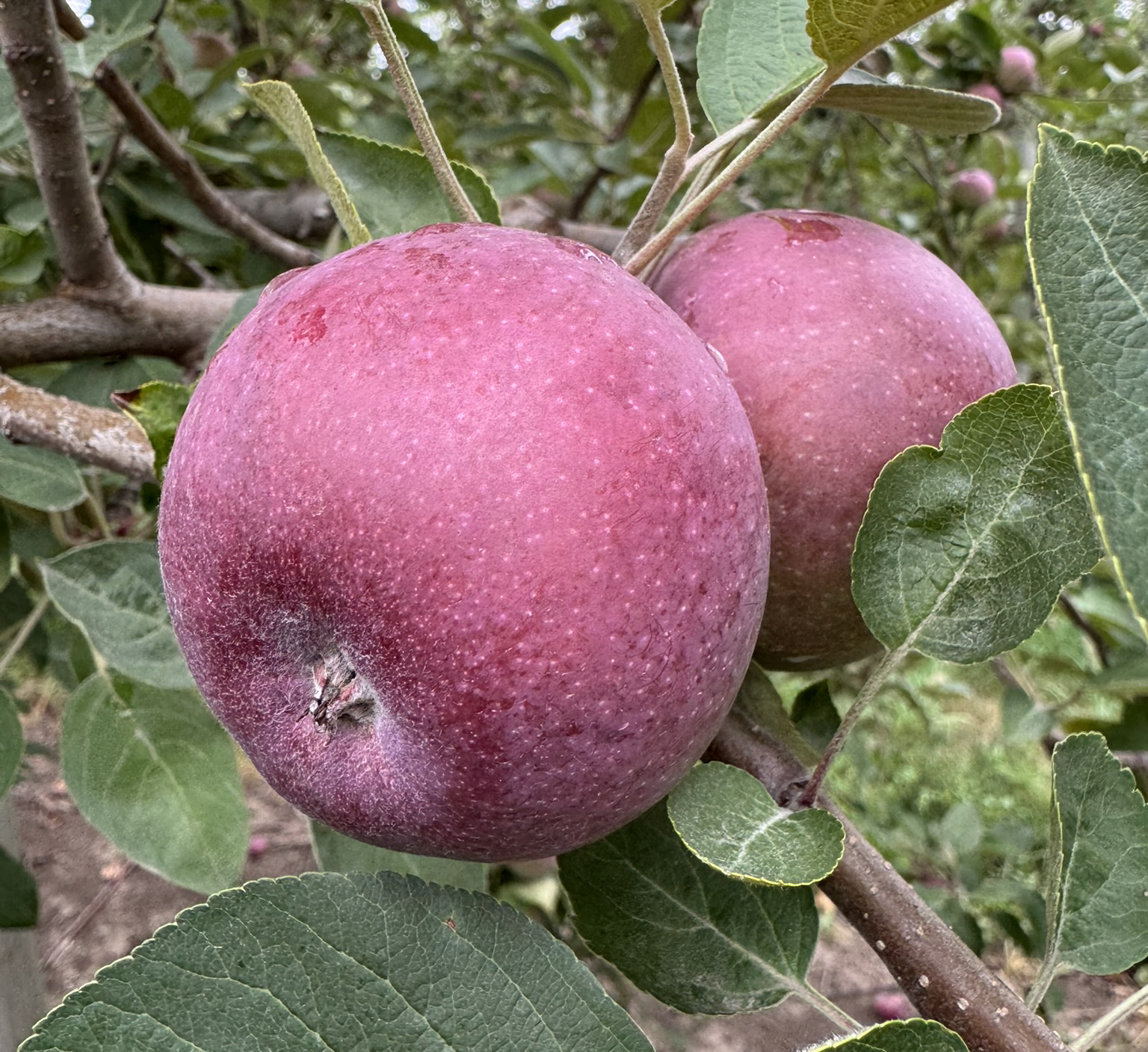
Apples: Apples in the region are starting to take on color. We are in the main pattern of summer cover sprays. Early cultivars like Pristine and Vista Bella have been harvested. Our main concerns this time of year are powdery mildew, apple maggot, brown marmorated stink bug and codling moth.
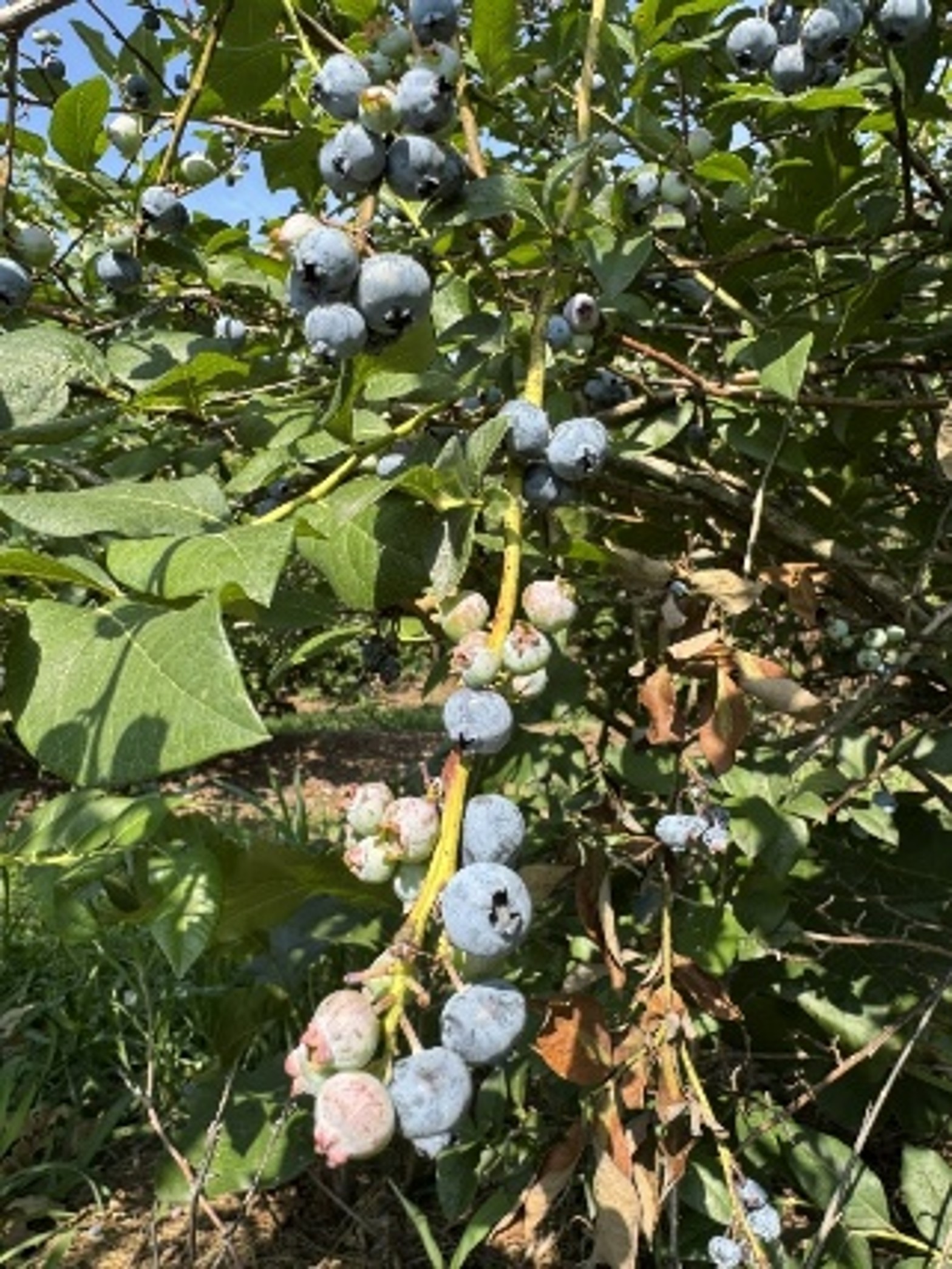
Blueberries: The main harvest season continues. Spotted wing drosophila and fruit rot management are priorities.
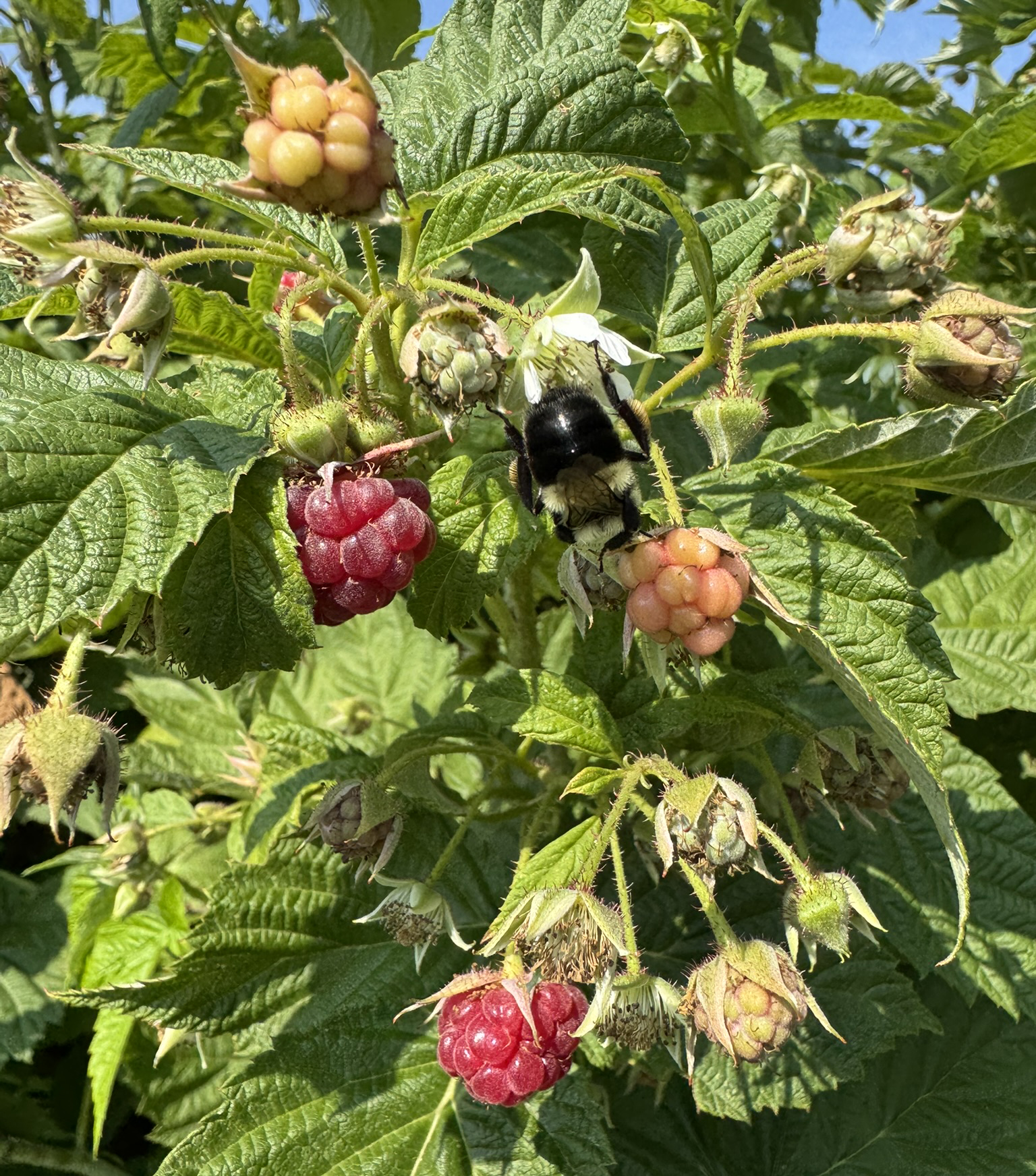
Brambles: The first fall raspberries are being picked along with some blackberries. Poor pollination and crumbly berries have been seen at some sites in fall raspberries, which may be due to unsuitable weather conditions during bloom. Fruit rots and spotted wing drosophila management are the main concerns for production.
Cherries: Harvest has wrapped up in both sweet and tart cherries at farms that decided to harvest this year. Unharvested fruit can be a reservoir for spotted wing drosophila (SWD), so if you have other crops that are susceptible to SWD, like blueberries and brambles, you may want to remove them.
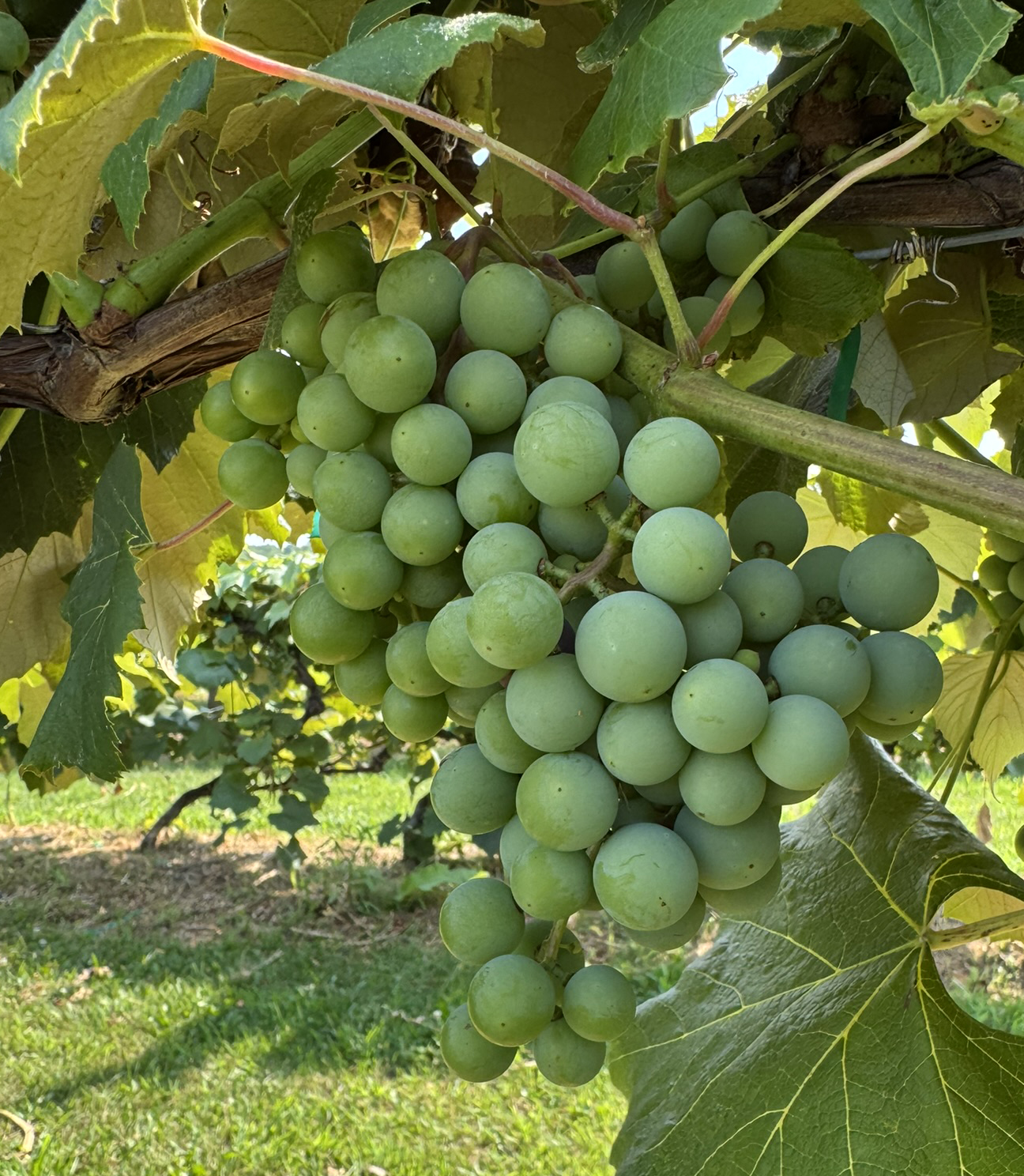
Grapes: Veraison has started in early hybrid wine grapes like Marquette, while other cultivars like Concord remain green.
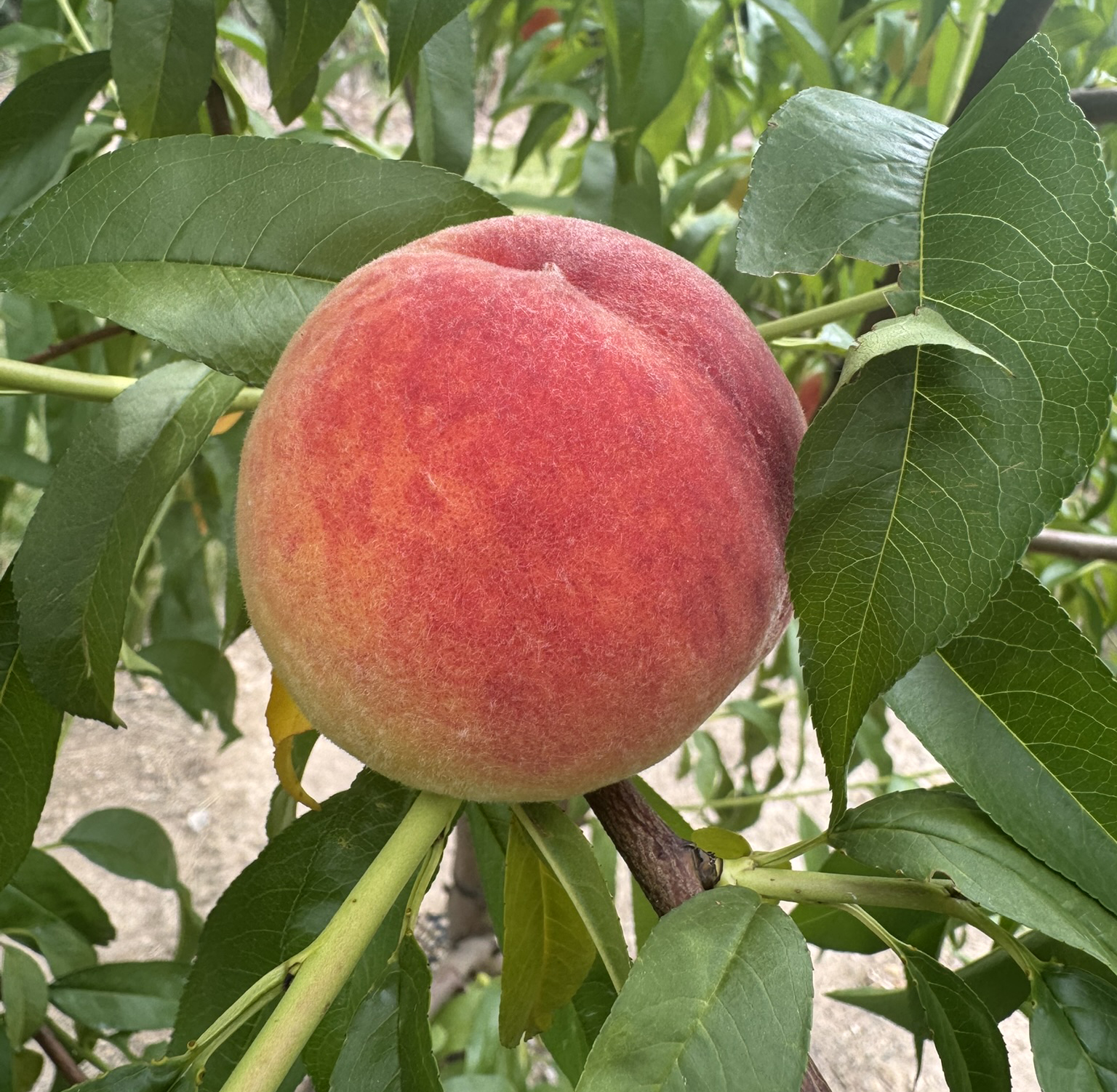
Peaches and nectarines: Red Haven harvest has started. For late cultivars there is still time to do some brown rot control, but check your pre-harvest intervals.
New bulletin: “Best Practices for Peach Orchards with Reduced Crop Load”
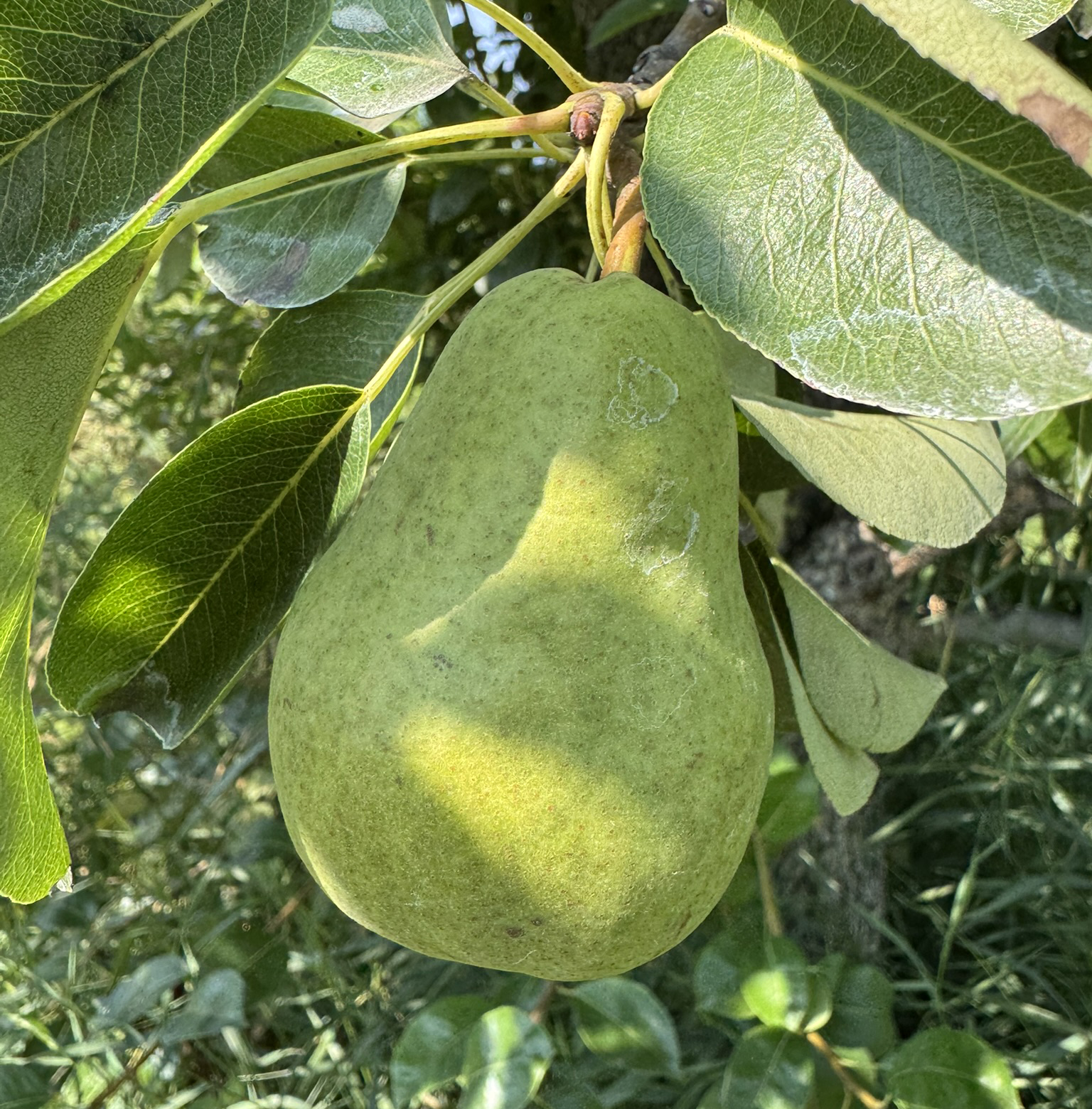
Pears: Pears are sizing up in the region. Local scouts have continued to report sightings of pear psylla adults in orchards.
Plums: European style plums are starting to color, and almost all Japanese style plums have been harvested.
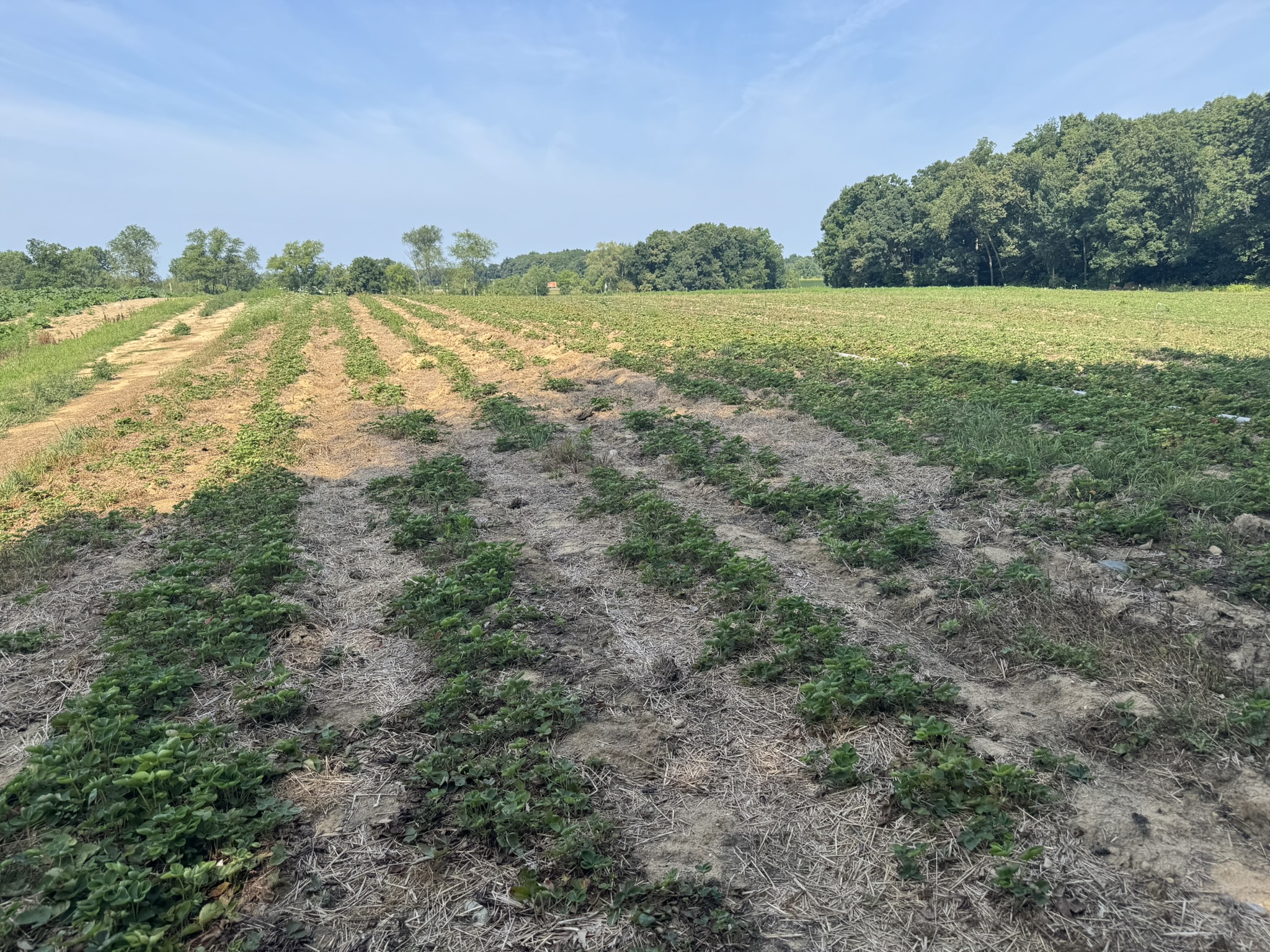
Strawberries: Harvest is done and most growers have already renovated.
Insect conditions
More in-depth information can be found by watching the latest weekly fruit meetings on MSU’s Kaltura Media Space (these may take a few days to upload after the meetings).
New MSU article: “Don't trust the calendar: Why trapping matters during unusual weather”
New MSU fact sheet: Managing Ambrosia Beetles in Apples
Aphids: Woolly apple aphid populations in apple are moving towards terminals, but populations seem low.
Apple maggot: Continued catches of low numbers have been reported in the region (2-3 per ball) for the last 4 weeks. First catch was reported at Fennville.
Blueberry maggot: No catch reported in Fennville.
Borers: Catch of greater peachtree borer is stable and an increase in lesser peachtree borer have been reported in Fennville.
Brown marmorated stink bug: Adults usually emerge in August. Because adults are active so close to harvest, you need to pay close attention to your pre-harvest intervals.
Cranberry fruit worm: No catch reported in Fennville.
Codling moth: Adult catches are stable regionally and in Fennville, including some sites over threshold.
Grape berry moth: Counts in Fennville have remained stable.
Japanese beetle: Counts have been declining regionally and in Fennville, though they are still causing problems. Kaolin clay can be a deterrent and perimeter sprays can also be effective for keeping them under control.
Mites: Mite counts have been dropping regionally. European red mites and rust mites are responsible for some bronzing in orchards. Two spotted spider mites will be evidenced by webbing.
Oriental fruit moth: Counts have declined at sites in Southeast Michigan and Fennville.
Pear psylla: Increased adult and nymph activity has been observed in orchards again.
San Jose scale: We are seeing waxed up scales in the region, meaning that the control window has shut.
Spotted lanternfly: Look for nymphs in parts of the state that have documented populations (Detroit, Monroe County, Oakland County).
Spotted wing drosophila: Consistent counts in traps in Southeast Michigan and down in Fennville. This pest often prefers fruit to the traps, so low trap counts do not necessarily mean low risk in fruit.
Disease conditions
Apple scab: We anticipate some risk for secondary scab infections From Aug. 6-8.
Cherry leaf spot: We anticipate moderate risk this week from Aug. 6-8. See this 2024 article on cherry leaf spot management.
European brown rot: Stone fruits are susceptible to infection around three weeks after shuck split and again three weeks before harvest through the harvest period. We do not expect risk this week.
Fire blight: Since we have moved out of bloom there is low risk in apples and pears, however if there is hail damage, growers should spray for fire blight.
Grape black rot: Control for grape black is most important immediately pre-bloom and during bloom. See this 2014 article for grape black rot management options and consult E-154. We do not anticipate risk this week.
Grape downy mildew: We anticipate slight risk from Aug. 6-7.
Grape powdery mildew: We are expecting moderate to severe for the entire week.
Phomopsis: In blueberries, the Phomopsis fungus is active from bud swell until after harvest.
Powdery mildew of apple and pear: We are expecting severe risk from Aug. 5-6 and Aug. 9-11.
Seasonal weather update
In the last week, Southeast Michigan has seen an average of 10.7 hours of rain accumulating to 0.5 inches of precipitation.
| Liquid Precipitation Accumulation Mar. 1- August 4, 2026, issued August 4, 2026 | ||||
|---|---|---|---|---|
| Station (County) | Rainfall Total (in.) Current | Hours with Rainfall Current | Rainfall Total Average (5 Yr.) | Hours with Rainfall Average (5 Yr.) |
| Commerce (Oakland) | 16.5 | 229 | 15.8 | 252 |
| Deerfield (Monroe) | 20.1 | 226 | 14.9 | 240 |
| East Lansing MSU Hort (Ingham) | 17.2 | 247 | 15.1 | 245 |
| Emmett (St. Clair) | 17.3 | 260 | 14.7 | 248 |
| Flint (Genesee) | 16.1 | 237 | 15.6 | 255 |
| Freeland (Saginaw) | 17.6 | 217 | . | . |
| Hudson (Lenawee) | 17.5 | 240 | 15.1 | 245 |
| Ithaca (Gratiot) | 18.9 | 244 | 13.5 | 231 |
| Lapeer (Lapeer) | 16.1 | 248 | 15.4 | 257 |
| Linwood (Bay) | 19.5 | 250 | 13.4 | 231 |
| Pigeon (Huron) | 16.4 | 256 | 12.9 | 245 |
| Richville/Frankenmuth (Tuscola) | 18.6 | 229 | 14.8 | 227 |
| Romeo (Macomb) | 18.2 | 230 | 17.1 | 241 |
| Sandusky (Sanilac) | 15.9 | 227 | 13.5 | 255 |
| Average of stations in this region: | 17.6 | 238.6 | 14.8 | 244.0 |
| Difference in Liquid Precipitation Accumulation from Mar. 1 observed July 28 and August 4, 2026; issued August 4, 2026 | ||||||
|---|---|---|---|---|---|---|
| Rainfall Total (in.) | Rainfall Total (in.) | Hours with Rainfall | Hours with Rainfall | |||
| Station (County) | 28-Jul | 4-Aug | Difference | 28-Jul | 4-Aug | Difference |
| Commerce (Oakland) | 16.2 | 16.5 | 0.3 | 219 | 229 | 10.0 |
| Deerfield (Monroe) | 19.0 | 20.1 | 1.2 | 214 | 226 | 12.0 |
| East Lansing MSU Hort (Ingham) | 16.8 | 17.2 | 0.4 | 230 | 247 | 17.0 |
| Emmett (St. Clair) | 16.8 | 17.3 | 0.5 | 249 | 260 | 11.0 |
| Flint (Genesee) | 15.6 | 16.1 | 0.4 | 228 | 237 | 9.0 |
| Freeland (Saginaw) | 17.2 | 17.6 | 0.4 | 207 | 217 | 10.0 |
| Hudson (Lenawee) | 16.9 | 17.5 | 0.6 | 232 | 240 | 8.0 |
| Ithaca (Gratiot) | 18.3 | 18.9 | 0.6 | 228 | 244 | 16.0 |
| Lapeer (Lapeer) | 15.5 | 16.1 | 0.5 | 238 | 248 | 10.0 |
| Linwood (Bay) | 18.9 | 19.5 | 0.6 | 238 | 250 | 12.0 |
| Pigeon (Huron) | 16.0 | 16.4 | 0.3 | 247 | 256 | 9.0 |
| Richville/Frankenmuth (Tuscola) | 18.3 | 18.6 | 0.3 | 221 | 229 | 8.0 |
| Romeo (Macomb) | 17.5 | 18.2 | 0.7 | 219 | 230 | 11.0 |
| Sandusky (Sanilac) | 15.6 | 15.9 | 0.3 | 220 | 227 | 7.0 |
| Average of stations in this region: | 17.0 | 17.6 | 0.5 | 227.9 | 238.6 | 10.7 |
In the short term, we are expecting scattered storms and showers to come in on Friday and stick around over the weekend. Highs for the next week will be stable in the mid-80s while overnight lows will be in the mid-60s for most of the week.
In the next month, we are expecting August to exhibit normal to above normal temperatures and normal to below normal precipitation.
Our regional average growing degree day accumulation for the season are about seven days ahead of the long-term normals and about three days ahead of the five-year average. In the last week, we accumulated on average 203 growing degree days (GDD) at 42 F, 182 GDD at 45 F and 147 GDD at 50 F (see table below). Read this Michigan State University Extension article to learn more about degree days: Understanding growing degree-days.
| Degree Day Accumulation Mar. 1-August 4, 2026 Forecast from Aug. 5-11, 2026; issued August 4, 2026 | |||||||||
|---|---|---|---|---|---|---|---|---|---|
| Station (County) | Degree Days Base 42°F Current | Degree Days Base 42°F Average (5 Yr.) | Degree Days Base 42°F Forecast | Degree Days Base 45°F Current | Degree Days Base 45°F Average (5 Yr.) | Degree Days Base 45°F Forecast | Degree Days Base 50°F Current | Degree Days Base 50°F Average (5 Yr.) | Degree Days Base 50°F Forecast |
| Commerce (Oakland) | 2721 | 2609 | 2947 | 2361 | 2259 | 2566 | 1806 | 1723 | 1976 |
| Deerfield (Monroe) | 3005 | 2855 | 3216 | 2621 | 2487 | 2811 | 2025 | 1923 | 2180 |
| East Lansing MSU Hort (Ingham) | 2796 | 2671 | 3013 | 2427 | 2315 | 2624 | 1860 | 1773 | 2021 |
| Emmett (St. Clair) | 2515 | 2474 | 2732 | 2169 | 2128 | 2366 | 1643 | 1603 | 1805 |
| Flint (Genesee) | 2862 | 2761 | 3092 | 2499 | 2403 | 2708 | 1938 | 1855 | 2113 |
| Freeland (Saginaw) | 2619 | 2622 | 2827 | 2270 | 2273 | 2457 | 1731 | 1742 | 1883 |
| Hudson (Lenawee) | 2887 | 2752 | 3105 | 2517 | 2396 | 2714 | 1947 | 1853 | 2108 |
| Ithaca (Gratiot) | 2805 | 2741 | 3018 | 2446 | 2386 | 2639 | 1891 | 1842 | 2049 |
| Lapeer (Lapeer) | 2679 | 2587 | 2900 | 2327 | 2239 | 2527 | 1787 | 1709 | 1952 |
| Linwood (Bay) | 2397 | 2426 | 2600 | 2058 | 2088 | 2240 | 1544 | 1577 | 1691 |
| Pigeon (Huron) | 2454 | 2460 | 2667 | 2116 | 2122 | 2308 | 1598 | 1610 | 1755 |
| Richville/Frankenmuth (Tuscola) | 2698 | 2673 | 2912 | 2344 | 2320 | 2538 | 1800 | 1778 | 1959 |
| Romeo (Macomb) | 2750 | 2633 | 2977 | 2390 | 2280 | 2596 | 1838 | 1741 | 2009 |
| Sandusky (Sanilac) | 2563 | 2515 | 2775 | 2220 | 2173 | 2410 | 1692 | 1655 | 1848 |
| Average of stations in this region: | 2697 | 2627 | 2913 | 2340 | 2276 | 2536 | 1793 | 1742 | 1954 |
| Difference in Degree Day Accumulation from Mar. 1, 2026 observed July 28 and August 4, 2026; issued August 4, 2026 | |||||||||
|---|---|---|---|---|---|---|---|---|---|
| Station (County) | Degree Days Base 42°F | Degree Days Base 42°F | Degree Days Base 42°F | Degree Days Base 45°F | Degree Days Base 45°F | Degree Days Base 45°F | Degree Days Base 50°F | Degree Days Base 50°F | Degree Days Base 50°F |
| 28-Jul | 4-Aug | Difference | 28-Jul | 4-Aug | Difference | 28-Jul | 4-Aug | Difference | |
| Commerce (Oakland) | 2516 | 2721 | 205.4 | 2176 | 2361 | 185.2 | 1657 | 1806 | 149.5 |
| Deerfield (Monroe) | 2793 | 3005 | 211.7 | 2430 | 2621 | 190.6 | 1869 | 2025 | 155.6 |
| East Lansing MSU Hort (Ingham) | 2595 | 2796 | 200.7 | 2248 | 2427 | 179.0 | 1715 | 1860 | 144.8 |
| Emmett (St. Clair) | 2319 | 2515 | 195.8 | 1995 | 2169 | 174.4 | 1504 | 1643 | 139.5 |
| Flint (Genesee) | 2650 | 2862 | 211.6 | 2308 | 2499 | 190.6 | 1783 | 1938 | 155.4 |
| Freeland (Saginaw) | 2418 | 2619 | 201.1 | 2090 | 2270 | 180.1 | 1586 | 1731 | 145.3 |
| Hudson (Lenawee) | 2685 | 2887 | 201.7 | 2336 | 2517 | 181.0 | 1801 | 1947 | 146.2 |
| Ithaca (Gratiot) | 2595 | 2805 | 210.5 | 2257 | 2446 | 189.3 | 1737 | 1891 | 154.3 |
| Lapeer (Lapeer) | 2478 | 2679 | 200.7 | 2148 | 2327 | 179.3 | 1643 | 1787 | 144.4 |
| Linwood (Bay) | 2205 | 2397 | 192.2 | 1886 | 2058 | 171.7 | 1408 | 1544 | 136.2 |
| Pigeon (Huron) | 2260 | 2454 | 194.4 | 1943 | 2116 | 172.9 | 1460 | 1598 | 138.4 |
| Richville/Frankenmuth (Tuscola) | 2499 | 2698 | 198.7 | 2167 | 2344 | 177.0 | 1658 | 1800 | 142.0 |
| Romeo (Macomb) | 2539 | 2750 | 211.3 | 2200 | 2390 | 190.1 | 1682 | 1838 | 155.7 |
| Sandusky (Sanilac) | 2360 | 2563 | 203.5 | 2037 | 2220 | 183.4 | 1544 | 1692 | 148.2 |
| Average of stations in this region: | 2494 | 2697 | 203 | 2159 | 2340 | 182 | 1646 | 1793 | 147 |
Watch Jeff Andresen's weekly agricultural weather forecast reports
More information and reports on normal weather conditions and departures from normal can be found on the NOAA Climate Prediction Center website, NOAA U.S. Climate Normals website, NOAA Climate Normals Quick Access Page (which may be searched by region), and Midwest Regional Climate Center website.
This work is supported by the Crop Protection and Pest Management Program (grant no 2024-70006-43569) from the USDA National Institute of Food and Agriculture. Any opinions, findings, conclusions, or recommendations expressed in this publication are those of the author(s) and do not necessarily reflect the view of the U.S. Department of Agriculture.