Without M-AAA, Michigan ag industries would be ‘more desperate’ searching for research and education
 Print
Print Email
EmailFor more than a decade, M-AAA has helped MSU researchers and educators generate over $960 million in economic impacts for Michigan.
EAST LANSING, Mich. — For over a decade, Michigan State University (MSU) AgBioResearch and MSU Extension have helped to administer the Michigan Alliance for Animal Agriculture (M-AAA), a state-funded partnership among MSU, Michigan’s animal ag and allied industries, and the Michigan Department of Agriculture and Rural Development (MDARD).
The initiative’s aim is to advance and find solutions for key sectors of Michigan agriculture — a $125.8 billion industry for the state, according to MDARD.
Based on an economic analysis conducted at MSU, M-AAA funding has been used by MSU AgBioResearch scientists and MSU Extension educators and specialists for more than 10 years to generate over $960 million for Michigan in immediate economic impacts.
Likewise, for every $1 invested into M-AAA, there’s been a 2-to-1 return of additional grant dollars from other funding agencies into MSU research and outreach activities.
Public investments like this made into research and outreach done by Michigan’s land-grant institution are essential for helping keep farms profitable, sustainable, and — in some cases — operational.
What makes M-AAA effective and relevant is that commodity organizations set the priorities needed to be addressed through research and outreach. In other words, MSU AgBioResearch scientists and MSU Extension educators aren’t doing research and outreach activities for the sake of doing them. They’re doing them because they’ve been earmarked by Michigan’s agricultural leaders as what’s needed to benefit the communities MSU is entrusted to serve.
“M-AAA has always been about serving the partners and addressing their needs,” said James Averill, who oversees M-AAA as associate director of MSU AgBioResearch. “From my time providing input as an MDARD representative on the M-AAA committee tasked with setting industry priorities and selecting which projects to fund to now helping lead and administer the initiative, M-AAA has been a perfect example of what it looks like to carry out the land-grant mission, with proven results that back up its success.”
From beef and dairy cattle to horses, chickens, pigs and soybeans — yes, soybeans — MSU researchers, specialists and educators have delivered for Michigan’s animal ag and allied industries through M-AAA over the last decade, highlighted in the below excerpts.
Improving milk production and reducing feed costs for dairy farmers, while creating new opportunities for soybean farmers and agribusinesses
Adam Lock, a professor in the MSU Department of Animal Science and interim chair of the MSU Department of Large Animal Clinical Sciences, has used M-AAA funding to study how feeding soybeans that are high in oleic acid to dairy cows can improve milk components and lower feed costs for dairy farmers.
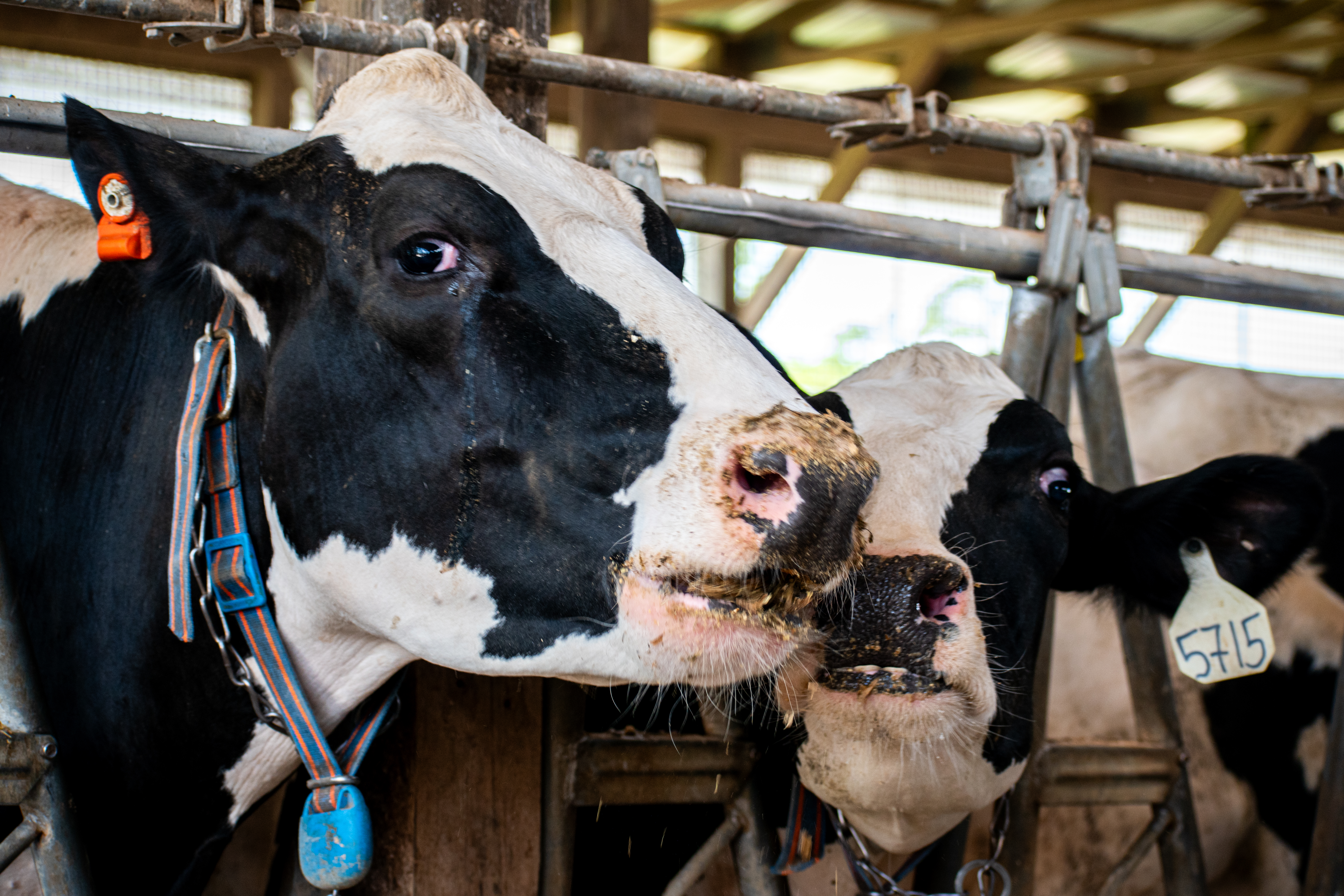
After connecting with Lock in 2023 and hearing about the promises of high oleic soybeans, Brian Preston, who runs his family’s fourth-generation 1,000 cow dairy farm — Preston Dairy — in Quincy, Michigan, implemented Lock’s research within the operations of his farm, which now grows, roasts and feeds high oleic soybeans.
The results were immediate.
By feeding dairy cows high oleic soybeans, Preston increased the butterfat percentage in his cows’ milk (which increased his farm’s paychecks) and slashed the costs of having to import expensive palmitic and oleic acids from overseas.
“It wound up being a well over $1-per-head-per-day change,” Preston said. “And on a dairy farm, we’ll try something to get maybe 5-6 cents more per cow per day. We operate on tight margins like every other business, and when you can do $1-$1.20 more per cow per day, that’s an unheard-of change. That’s a once-in-a-generation change.”
At the same time, Vincenzina Caputo, a professor and Homer Nowlin Chair in Consumer and Food Economics in the MSU Department of Agricultural, Food and Resource Economics, has incorporated M-AAA funding to study how soybean farmers and agribusinesses can benefit from a demand increase for high oleic soybeans.
Originally touted for their prospects of producing a healthy, human-grade oil comparable to olive oil, high oleic soybeans and the potential they’ve shown to be used as dairy feed created new opportunities for soybean farmers and agribusinesses looking to market them.
Caputo and Lock concluded from their research that farmers who’ve started growing and incorporating these beans have shown how local partnerships between dairy and soybean professionals can create closed-loop systems that bolster supply chains, foster shared value and build resilience within Michigan agriculture.
For soybean farmers like PJ Feldpausch, a third-generation farmer of Pat Feldpausch Farms in Fowler, Michigan, high oleic soybeans can be sold in Michigan at a premium ranging from $0.50-$1.50. Feldpausch said these premiums, as well as MSU research backed by M-AAA, have helped him make informed decisions when it comes to growing high oleic soybeans.
“If research like this wasn’t available, it would be a step back for us,” Feldpausch said. “There are some farms capable of doing this research, but getting it published and having it be trusted is a much more difficult thing to do. When it’s seen in a university’s eyes, we know the study was done with the utmost care to take out certain variabilities, test the correct metrics, and try to find all the answers — not just one.”
Read more about how this work is helping Michigan’s dairy industry.
Read more about how this work is helping Michigan’s soybean and agribusiness industries.
Strengthening Michigan pork through solutions to state-specific needs
Through M-AAA-backed research, the Michigan pork industry has gained a competitive edge nationally with solutions to state-specific challenges.
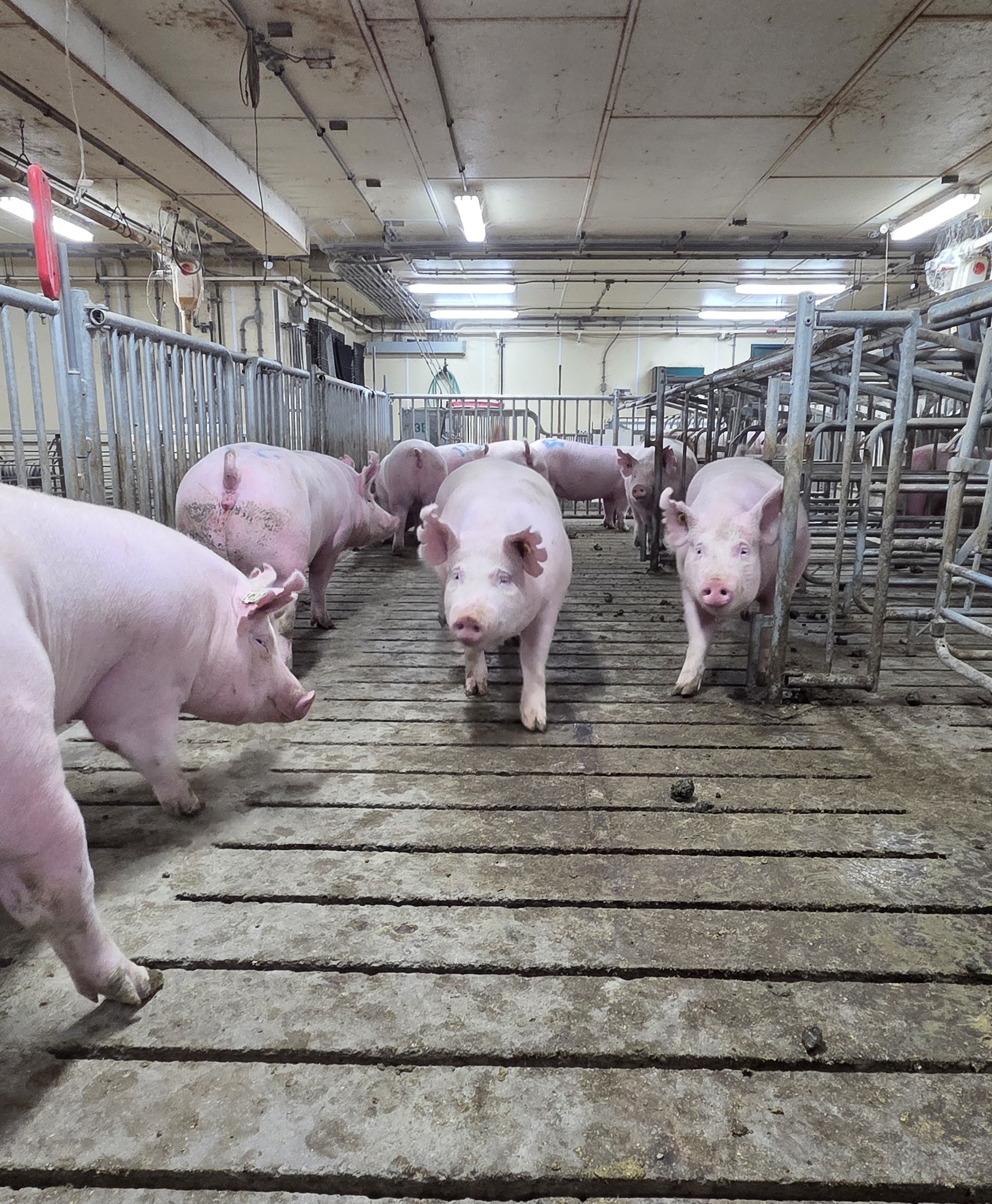
For example, MSU researchers, including Catherine Ernst, a professor and chair of the MSU Department of Animal Science, have used M-AAA funding to study how farmers can house pregnant sows (female pigs) in group settings to follow recent adaptations made to Michigan law.
When housed together, pigs can become territorial, but not all states require their farmers to house their pigs in this way. Mary Kelpinski, CEO of the Michigan Pork Producers Association (MPPA), said her industry has been able to “remain competitive in the pork industry nationally” through MSU research addressing state-specific needs like this.
In addition to research, outreach done by MSU Extension educators, including Beth Ferry, has helped the state’s pork industry prepare for emergencies.
Ferry has used M-AAA funding to create Michigan’s Secure Pork Supply (SPS) Taskforce. If an animal disease outbreak, such as African Swine Fever, were to occur in Michigan, 75% of pigs in the state are now covered by an SPS on-farm biosecurity plan, helping bolster supply chains to ensure they can continue moving during disruptive times.
Without M-AAA funding, Kelpinski said it’d be harder for her industry, which MPPA estimates contributes approximately $500 million annually to the state’s economy, to manage state-specific issues.
“It would be difficult, that's for sure,” Kelpinski said. “MPPA isn’t a large association, and we don’t have a lot of funding. Our funding comes from a national pork checkoff, and it really doesn’t allow us to spend a whole lot on research, so we really do look to the university. There are organizations that do research nationally, which certainly is a benefit to the pork industry, but having MSU and having the ability to have state-specific research done is important.”
Read more about how this work is helping Michigan’s pork industry.
Building a national model for laying hen research
Over 10 years ago, legislation was passed by the Michigan Legislature that modified the requirements necessary for housing laying hens and other farm animals. At the time, there was no public research facility in the U.S. that was equipped with the capacity and technology to answer the questions arising from egg producers about logistical ways to follow this regulation change.
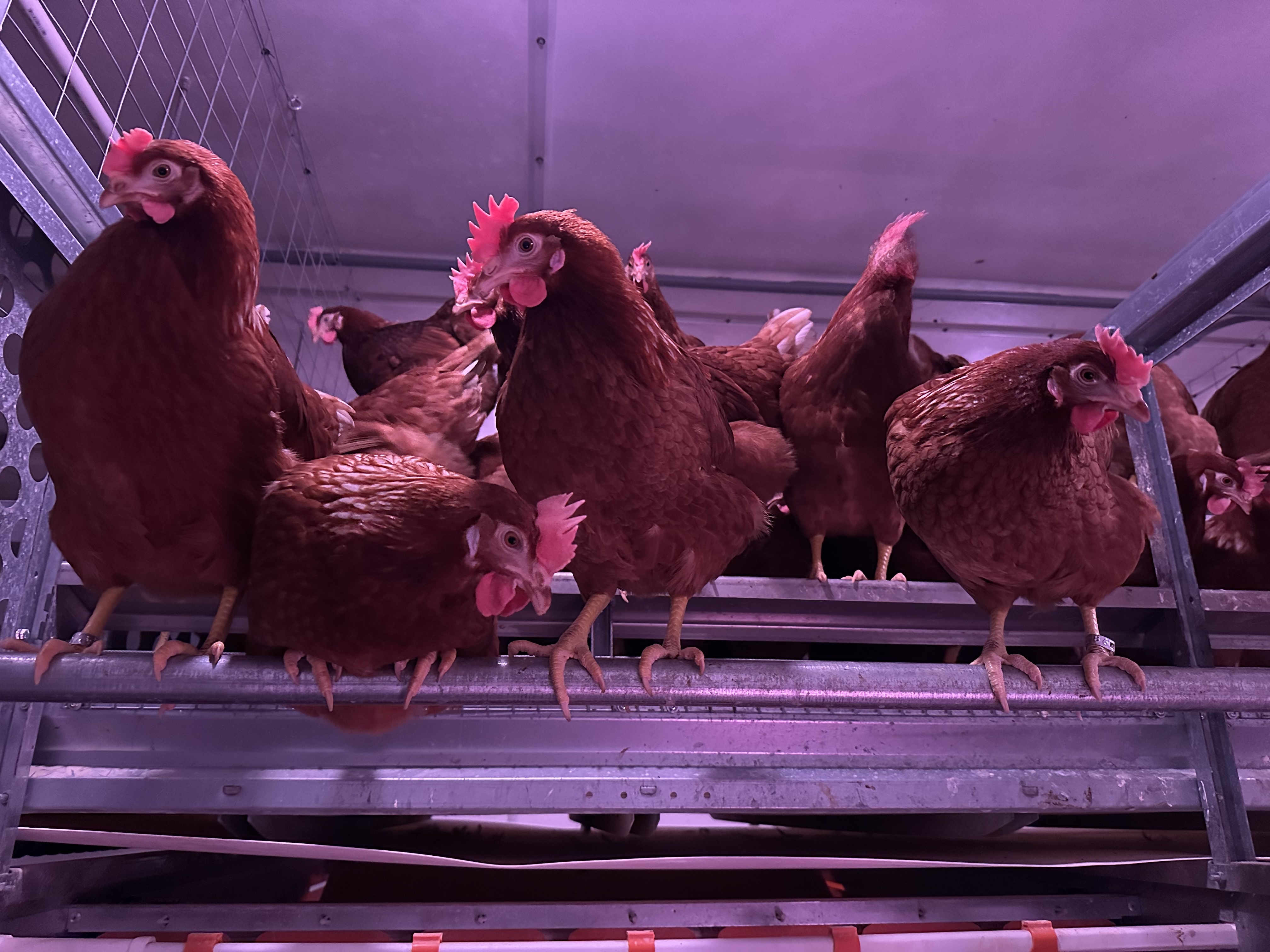
MSU leaders helped convene representatives from the allied poultry industries across the state — which ranks seventh in the country for egg production with 300-400 million eggs produced annually — and with support from them and the Animal Agriculture Initiative (now known as M-AAA), the laying hen research facility was built at the MSU Poultry Teaching and Research Center.
Since then, additional M-AAA funding has helped to further update the facility in response to Michigan legislation passed in 2019 that called for more widespread adoption of cage-free housing systems starting in 2025.
M-AAA has also helped fund the research taking place in this facility. Janice Siegford, a professor and associate chair for graduate programs and research in the MSU Department of Animal Science, has used M-AAA funding to study the impacts of aviary design and management on laying hen production and welfare.
Nancy Barr, executive director of the Michigan Allied Poultry Industries, said it’s hard to fully know what the impact would be of losing M-AAA because of how engrained it’s been within Michigan animal agriculture over the years.
“It’s a hard question to answer because M-AAA has always been there,” Barr said. “It’s like saying, ‘What if this tool you use all the time in your business is suddenly not there for you?’ You’re going to have to go someplace else to find it. We’re going to be more desperate in terms of looking for research in other places.”
Read more about how this work is helping Michigan’s allied poultry industries.
Powering discoveries that advance dairy cow fertility and farm success
Research from J. Richard Pursley, a professor in the MSU Department of Animal Science, is trailblazing an area within dairy cattle management that farmers say is essential to keep farms profitable: dairy cattle reproduction.
Reproduction is the key driver of lactation for dairy cows. After a cow gives birth, a new lactation begins. Timely calvings are essential for sustaining high milk production on Michigan dairy farms.
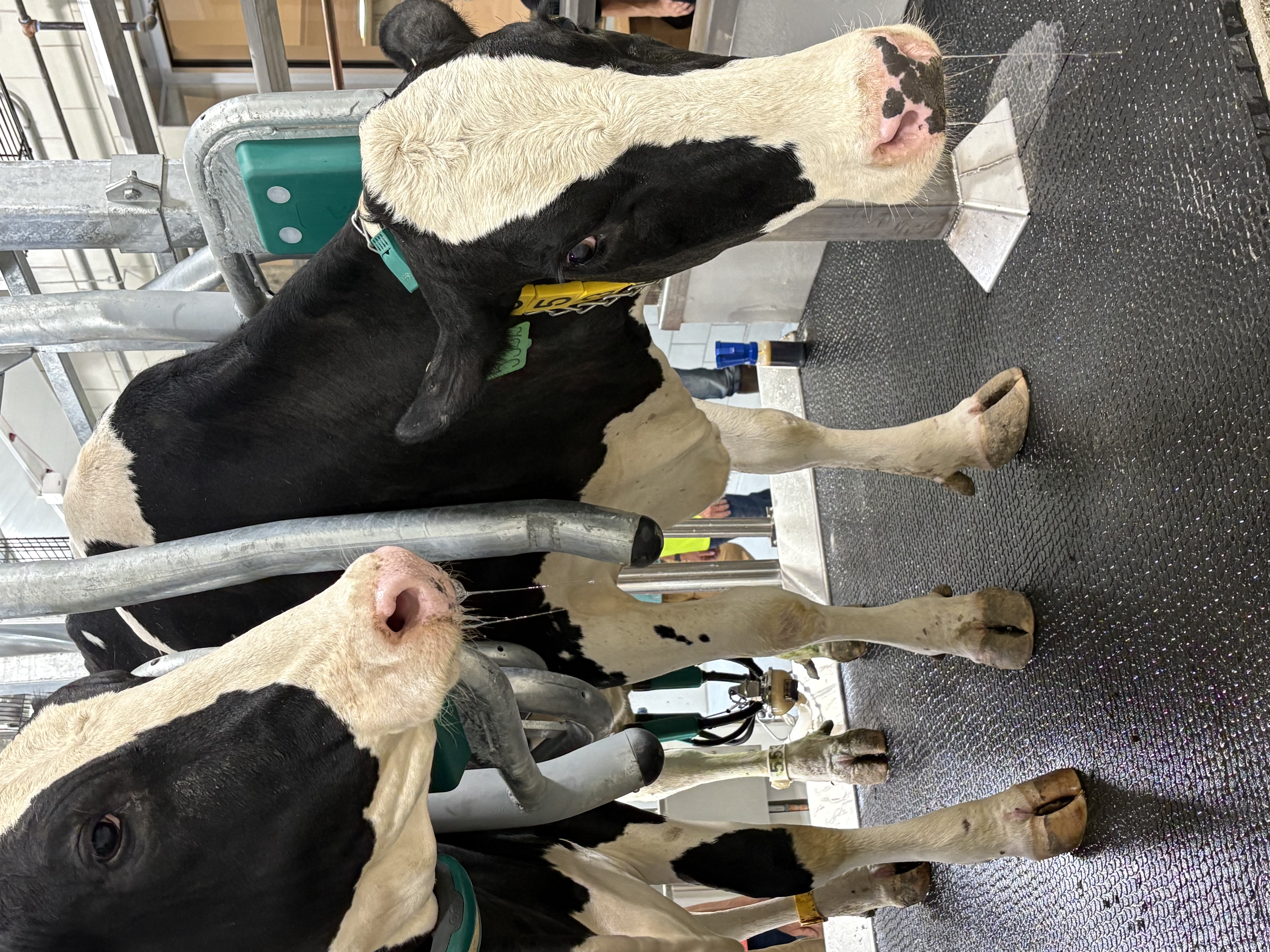
While Michigan dairy farmers rank first in the country for milk production per cow, leading Michigan agriculture by generating roughly $15.7 billion for the state’s economy each year, many operate on tight margins, and the cost of replacing cows not producing milk can become financially burdensome.
"I'm certain for most farms that most cows are culled out of a herd because of reproductive failures, and then farmers end up having to replace them,” said Wendell Van Gunst, owner of Country Dairy, a fourth-generation, 1,200-cow dairy farm in West Michigan. “Today, a replacement animal is about $4,000, so every time you cull a cow, that's the impact. This means that if you're culling 40% of your herd every year, anything you can do to reduce that down to 34%-35% is just money in your pocket."
Using M-AAA funding, Pursley has fine-tuned a synchronized artificial insemination fertility program for dairy cows he co-developed in 1995 known as Ovsynch.
These efforts, Pursley said, have allowed farms to go from conception rates of below 30% to 50% and higher. This has increased profitability on a 1,000-cow dairy farm by about $135,000 each year.
Recent M-AAA-backed studies have also revealed that 90% of cows artificially inseminated through Ovsynch become pregnant, but only 50% remain pregnant weeks after artificial insemination.
“Once we figure out what’s causing all these losses to happen, then we can start to figure out how to fix this issue, and that’ll have the biggest impact we’ve seen yet,” Pursley said.
For past studies, Pursley worked jointly with Ken Nobis, formerly of Nobis Dairy Farms in St. Johns, Michigan, and conducted research on his farm. Nobis, who previously served as president of the Michigan Milk Producers Association, currently is a Michigan farmer ambassador for the Farm Journal Foundation.
He said the loss of M-AAA would make it harder for advances to be made in U.S. food production and hurt MSU’s status as a leader in dairy research.
“This country led the world in ag research for many, many years, and today China is ahead of us, the EU is ahead of us — I don’t think there’s much difference between us and Brazil, to be honest with you,” Nobis said. “We won’t continue to lead the world in food production if we don’t do the research. Maybe we don’t have to increase it dramatically, but we can’t keep going downhill — we’ll go backwards. It doesn’t just happen. If you don’t do the research, you’re not going to get new results.
"I just have to put it in plain language: If funding went away, it wouldn’t happen overnight, but MSU wouldn’t continue to be the leader in dairy research that it is today.”
Read more about how this work is helping Michigan’s dairy industry.
Driving equine safety and welfare forward in Michigan and beyond
Keeping horses and equestrians safe has been a key pillar of Brian Nielsen’s M-AAA research for almost a decade. Nielsen, a professor in the MSU Department of Animal Science, homed in on this objective after hearing stories of former horses he rode and jockeys he knew dying after a horse would break down during a race.
“There’s no good reason a horse breaks a leg, other than when you’re hiding problems,” Nielsen said.
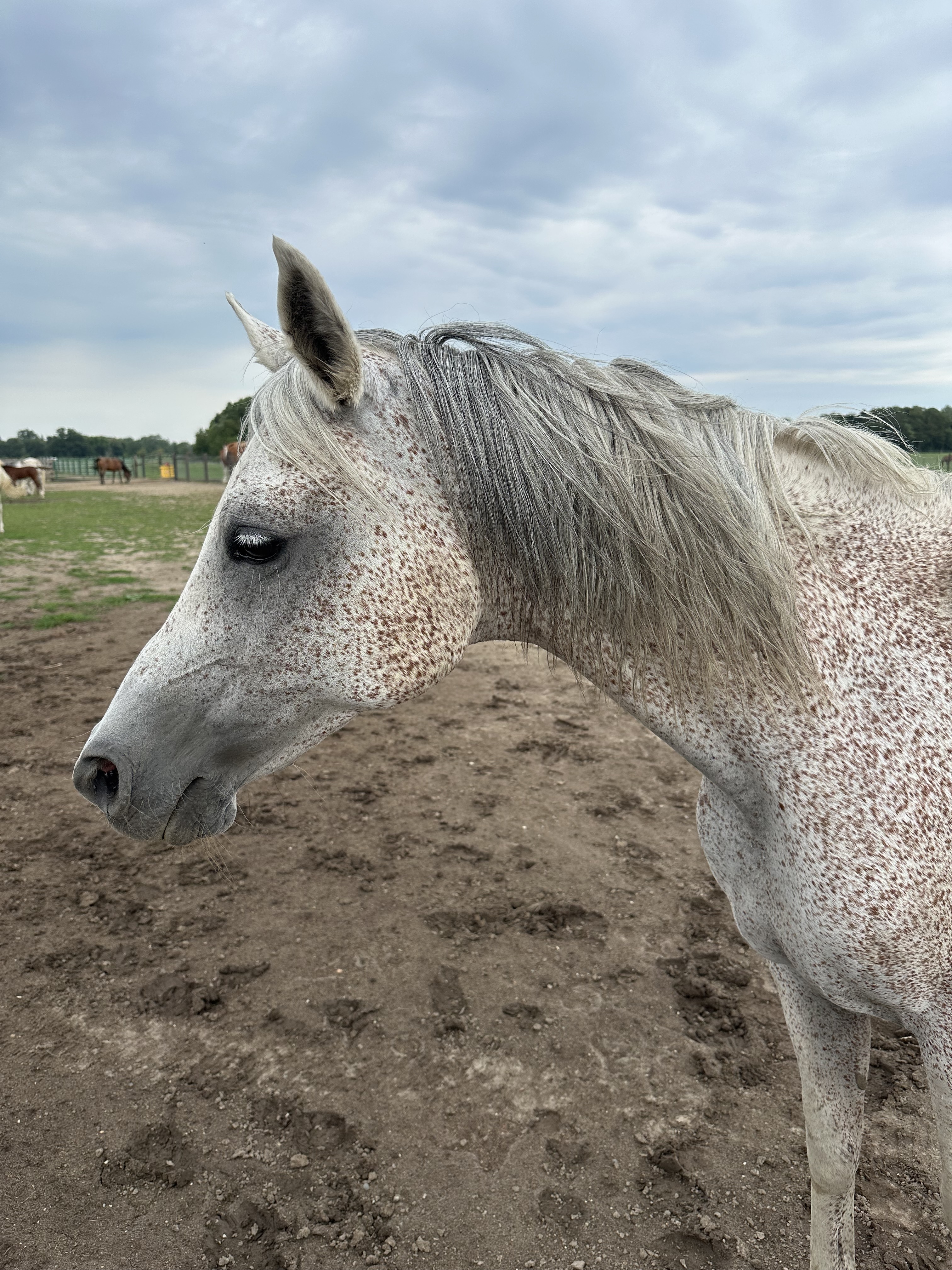
Early projects of his funded by M-AAA focused on the importance of exercising juvenile horses to improve bone strength. From 2017-2019, he found that sprinting calves about 75 yards for just one day per week over a six-week period increased bone-breaking strength by 25%.
Nielsen and his team have also used M-AAA funding to study the efficacy of joint supplements when treating joint issues in horses. They found no true differences in joint functionality between horses that received joint supplements and horses that didn’t receive them, a finding that had been hinted at in previous literature on the subject.
He received his latest funding from M-AAA in 2024 to study a topic that builds off the research done on joint supplements. In addition to joint supplements, corticosteroids are a common treatment for joint problems and are used to quickly alleviate issues — comparable to how ibuprofen treats pain in humans. However, the long-term effects they have on joints aren’t extensively known. Nielsen said this can pose a serious risk to horses and jockeys when racing, especially if the injections are masking problems rather than solving them.
Leesa Massman, a former 20-year head coach of the MSU equestrian team who’s shown horses, judged horses, bred horses and run her own equestrian facility for over 30 years based in Mason, Michigan, said M-AAA research has given Michigan’s horse industry trusted, unbiased answers to pressing questions facing the equestrian community. Not having MSU research supported by M-AAA would leave horse owners in Michigan and beyond susceptible to more biased research, she said.
“Without M-AAA funding and collaboration, we (the Michigan horse industry) are left to be victimized — and that’s a strong word — by strong marketing, hearsay and very poor science,” Massman said. “The horse people have been victimized by that for decades, so we really need this solid, unbiased research, and without it, I don’t know where that’s going to come from.”
Read more about how this work is helping Michigan’s horse industry.
Michigan State University AgBioResearch scientists discover dynamic solutions for food systems and the environment. More than 300 MSU faculty conduct leading-edge research on a variety of topics, from health and agriculture to natural resources. Originally formed in 1888 as the Michigan Agricultural Experiment Station, MSU AgBioResearch oversees numerous on-campus research facilities, as well as 15 outlying centers throughout Michigan. To learn more, visit agbioresearch.msu.edu.