CANR students recognized with MSU Graduate Student Awards for Community Engagement Scholarship
 Print
Print Email
EmailTwo graduate students from the CANR, Rafael Lembi and Jennifer Roedel, have been selected for MSU’s 2026 Graduate Student Awards for Community Engagement Scholarship.
Two graduate students from the College of Agriculture and Natural Resources (CANR) have been selected for Michigan State University’s 2026 Graduate Student Awards for Community Engagement Scholarship. The annual awards honor graduate and professional students whose community-engaged scholarship creates meaningful and mutually beneficial impact.
The CANR honorees, Rafael Lembi of the Department of Community Sustainability and Jennifer Roedel of the Department of Entomology, are two of only four students recognized university-wide this year.
Recipients will be honored at the MSU Outreach and Engagement Awards Ceremony on March 12. The program is jointly sponsored by the Office of the Vice Provost for University Outreach and Engagement and the MSU Graduate School.
Community-Engaged Research: Rafael Lembi

Rafael Lembi, a doctoral candidate in the Department of Community Sustainability, has been selected for the Graduate Student Award for Community Engagement Scholarship in community-engaged research. He is in the final year of his Ph.D., with a defense expected in spring 2026. His dissertation is rooted in long-term partnerships, field-based inquiry and collaboration with communities in the Brazilian Amazon.
Lembi describes himself as a transdisciplinary sustainability scholar and critical systems thinker. His research focuses on just energy transitions, knowledge co-production and the social and environmental dimensions of sustainability transformations.
“My goal as a scholar is to co-create research that advances our understanding of how sustainability transformations happen while contributing to community-led change,” Lembi said.
His dissertation examines how Indigenous and traditional households experience access to photovoltaic (solar) energy systems and how these systems shape possibilities for just energy transitions in the lower Tapajós River region of Santarém, Pará, Brazil. His work takes place in close collaboration with community leaders from Amazonian communities of Cachoeirinha do Mentai, Jari do Socorro, Alto Jari, and Arapiranga, and with energy practitioners from NGO Projeto Saúde e Alegria and the Renewable Energy Laboratory at the Federal University of Western Pará.
Lembi’s involvement in the region began in 2022 when he joined an interdisciplinary MSU-led team partnering with local universities and engineers to install small-scale solar technologies. Through workshops, surveys and community discussions, he helped residents identify their energy needs and explore options for long-term system management. These early experiences shaped the foundation of his dissertation, which compares national, top-down solar installations with community-driven projects that reflect local priorities.
“Being in places where people have only a few hours of electricity or none at all made me realize how foundational energy access is for a good quality of life,” he said.
Months of fieldwork in communities accessible only by boat gave Lembi firsthand insight into how participatory approaches strengthen local autonomy. Community-driven projects often include training on how systems work and how to perform basic repairs. Government-led installations, by contrast, may not align with local decision-making traditions or provide opportunities for capacity building, and they often introduce a new customer-provider relationship unfamiliar to many Indigenous communities.
“With top-down approaches, officials may show up, install the technology and leave,” he said. “Communities receive equipment without the knowledge needed to manage it, and when problems arise, many do not have phone reception to reach a provider.”
“These communities rely on each other and make decisions collectively. The bottom-up projects honor that. They strengthen sovereignty by teaching people how to care for their systems and giving them the autonomy to be self-sufficient. That matters when you live far from the city and cannot call someone to fix a problem.”
Lembi is also studying how communities responded to an extreme drought in 2024. The drought disrupted travel, access to resources and daily routines, giving him an additional lens to understand how environmental change intersects with energy security and social-ecological resilience.
Partnership is central to Lembi’s work, and he emphasizes the collaborators' expertise, which has long served the region.
“Even though I am from Brazil, I am still a foreigner in the Amazon,” he said. “The local partners, including universities, NGOs and the communities themselves, are the real experts. Doing this work means working in collaboration with the people who live and operate there.”
For Lembi, the award affirms the time, adaptability and trust-building needed to conduct meaningful community-engaged research.
“Community-engaged research takes more time and resources, but it gives me a sense of purpose to do research that is usable and meaningful beyond academia,” he said. “Having the university recognize this approach really matters.”
Community-Engaged Teaching and Learning: Jennifer Roedel
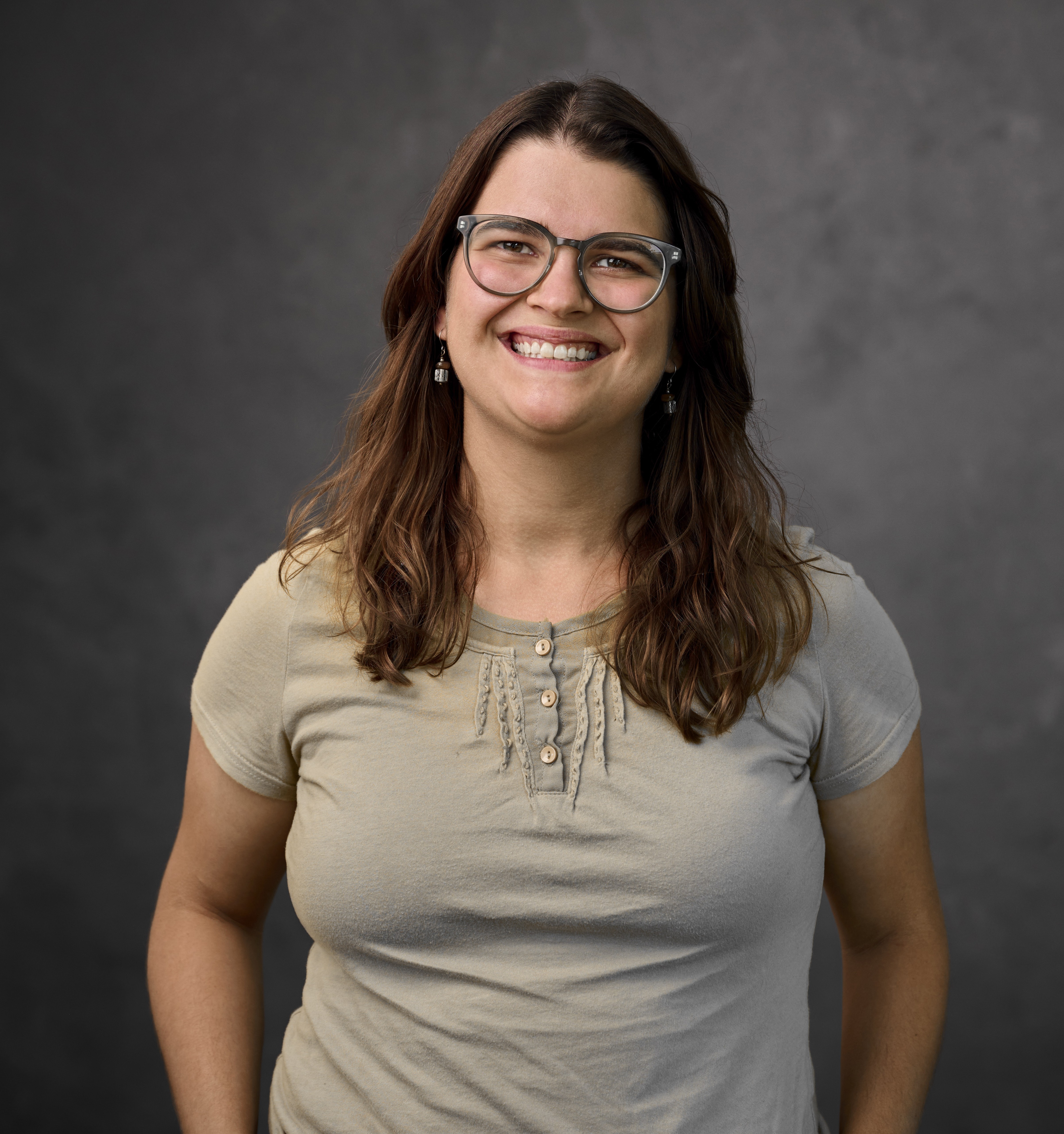
Jennifer Roedel, a doctoral student in the Department of Entomology, has been selected for the Graduate Student Award for Community Engagement Scholarship in community-engaged teaching and learning.
Roedel works in Zsofia Szendrei’s lab and studies how habitat management strategies can support beneficial insects while limiting pest pressures in agricultural systems. Her work brings science, community partnership and accessible education together to support small-scale and urban growers who often lack equal access to agricultural resources.
Roedel began her academic journey at MSU in 2018 as a research technician in Rufus Isaacs’ lab, where she first became interested in pollination research. She later completed a master’s degree focused on asparagus beetle management, which gave her extensive field experience and strengthened her commitment to grower-informed research.
“Working with farmers during my master’s showed me how important it is to stay connected to grower needs,” Roedel said. “Smaller and urban farmers often do not have the same level of extension support, and I really wanted to help bridge that gap in my Ph.D.”
Roedel leads the Bee Urban Growers (BUG) Project, a North Central Region SARE-funded research and education initiative that supports pollinator conservation and urban agriculture. The project partners with nine farms in the Detroit and Lansing areas, including community gardens, youth-led farms and small commercial operations. The BUG Project focused on farms growing cucurbit crops, such as squash and pumpkins, which rely heavily on insect pollination.
In 2024, the BUG Project installed native wildflower plantings on each partner farm, adding 250 plants across 15 native species to enhance pollinator habitat. The team surveyed urban farmers about their perspectives on pollinator management, studied native bee communities and launched a community science initiative on iNaturalist to document bee species across the Great Lakes region. The project will continue through 2026.
“Urban farmers are incredibly passionate, but many do not have access to the same resources as larger farms,” she said. “They know pollinators are important, but they often do not know how to install or maintain habitat. I wanted to give them the tools and support they need.”
Roedel collaborated with partners including the Xerces Society for Invertebrate Conservation, Detroit Butterfly Nursery, Detroit Hives, Detroit artist Joseph Ferraro and the Detroit Partnership for Food, Learning and Innovation (DPFLI), along with nonprofits and Extension professionals. Through these partnerships, the team created presentations, on-farm demonstrations, online educational content and materials tailored specifically to urban farming conditions.
Two pollinator management field days in 2024 and 2025 provided hands-on learning opportunities through workshops, poster sessions and collaborative plantings. DPFLI hosted the events, helping Roedel’s team connect with local growers and community groups.
Roedel also served as the lead author of the project’s “Native Bee Habitat Management of Urban Farms in the Great Lakes Region” pocket guide. She emphasized the essential role that community-based collaborators played throughout the process.
“Working with partners who were already rooted in these communities made a tremendous difference,” Roedel said. “They helped us connect with farmers, reach people we could not have reached on our own and make our resources more useful for growers.”
Throughout the project, Roedel prioritized relationship-building and open communication with growers. She facilitated regular surveys, advisory board meetings and ongoing feedback loops to ensure the project remained aligned with what farmers wanted to learn.
“Working with growers helped me understand how important it is to meet people where they are,” Roedel said. “It guided me to focus on what farmers want to learn and what will genuinely support them.”
Roedel expressed gratitude for her advisor, Zsofia Szendrei, and for research technician Karma Thomas, who played a central role in fieldwork, plantings and outreach activities.
She hopes the award helps elevate the value of community-engaged work within graduate education and agricultural research more broadly.
“There is a natural interest among graduate students to do outreach, but it is often treated as something you do in your spare time,” she said. “Recognizing this work shows that it is valuable and worth supporting. I hope it inspires more students and advisors to make outreach part of their programs.”